8 Motorcycle Electronics Upgrades Riders Swear By
Cardo’s Packtalk Edge leads rider communication with mesh intercom that keeps a group connected at speed. The Garmin zumo XT2 is the strongest dedicated navigation unit, and the Quad Lock Motorcycle Handlebar Mount Pro carries a phone the most securely.
Riders kitting out a bike get the clearest communication from the Cardo Packtalk Edge, the most reliable navigation from the Garmin zumo XT2, and the most secure phone mount from the Quad Lock Motorcycle Handlebar Mount Pro. Charging, dash cam and tire pressure gear round out a complete setup.
Constant vibration, rain, glove operation and a battery that sits idle while parked separate motorcycle electronics from ordinary consumer gear. Plenty of highly rated devices fail all four tests within a season on a bike. We ranked these seven using published ingress protection ratings, mounting design, power requirements and what owners report about vibration damage and cold weather battery performance.
How to pick the right one
Why vibration destroys more gear than weather does Engine and road vibration attacks solder joints, camera stabilization modules and mount arms constantly, and a device that survives fine in a car can fail within a season on a bike. Purpose-built motorcycle gear gets designed and tested for that environment specifically. Mounting a phone without a vibration dampener between the mount and the bar is a real risk, not an upsell, especially on single-cylinder and large twin engines.
What does an IP rating actually mean for motorcycle gear? Dust and water resistance get spelled out precisely in an IP rating, unlike the vague word waterproof. An IP67 rating covers dust-tight construction and temporary immersion, which comfortably handles riding through heavy rain. IPX4 means splash resistance only, not enough for a device left on the bike during a downpour. Comms units and navigation devices here publish those ratings, while consumer electronics claiming water resistance in marketing copy usually do not.
How to plan the power supply before installing anything A motorcycle electrical system carries less headroom than a car’s, and accessories left on an unswitched supply flatten the battery within a week of parking. Taking power from a switched source, or fitting a fuse block with a relay, avoids that problem. Adding up the current draw of everything planned for the bike matters before installation starts, and a maintainer like the Battery Tender Junior covers the winter gap.
Can you actually operate this gear wearing gloves? The best feature list means nothing if it cannot be operated at 60 miles per hour in winter gloves. Jog dials, large physical buttons, magnetic mounts and voice control all exist for that reason. Glove-capable touchscreens, like the one on the Garmin zumo XT2, use resistive or specially tuned panels rather than standard capacitive glass. Sitting on the bike in full kit before committing to a setup confirms every control stays reachable.
The best picks, ranked

Cardo Packtalk Edge
Mesh networking sets this comms unit apart, letting riders drop out of range and rejoin the group automatically with no repairing at the next stop. A magnetic Air Mount attaches far more easily with gloves on than older sliding designs, and JBL speakers cut through wind noise well. Owners report the voice command system holds up reliably at motorway speeds.
Pros
- Mesh network rejoins automatically after dropouts
- Magnetic mount is glove friendly
- Clear audio above typical wind noise
Cons
- Premium price for the category
- Full mesh benefit needs other Cardo units

Sena 50S
Mesh intercom sits alongside standard Bluetooth on the 50S, backed by Harman Kardon speakers and a jog dial that stays usable in thick winter gloves. This is the main alternative to Cardo, and often the better choice when a riding group already runs Sena units. Fast charge support helps when a lunch stop is the only charging window available.
Pros
- Jog dial works well with thick gloves
- Both mesh and Bluetooth intercom modes
- Quick top up charging on stops
Cons
- Bulkier on the helmet than slimmer units
- Firmware updates are occasionally needed to fix pairing

Garmin zumo XT2
Phones work for navigation until rain hits the screen, the sun overheats the case, or a wet glove stops registering touches. This unit is built for exactly those conditions, with a bright transflective display, glove-capable touch and adventure routing that favors interesting roads. Owners report offline maps justify the cost on trips where coverage disappears.
Pros
- Readable in direct sunlight
- Works with wet gloves unlike phone screens
- Offline maps for areas with no signal
Cons
- Expensive next to using a phone
- Interface takes time to learn
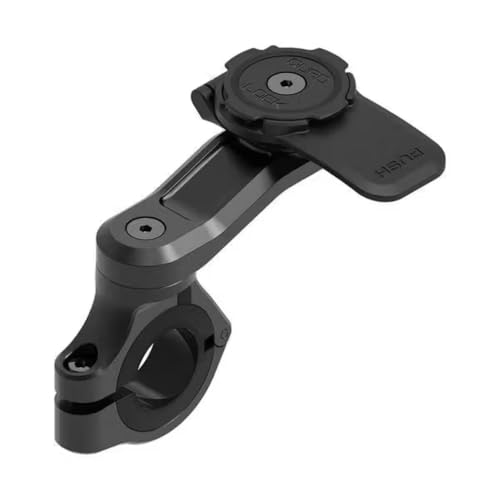
Quad Lock Motorcycle Handlebar Mount Pro
A twist-lock system holds a phone far more securely than spring clamps here, and the Pro handlebar version adds a stiffer arm that cuts wobble. Vibration dampening matters just as much, since engine frequencies can damage phone camera stabilization over time. Treating that dampener as required, not optional, makes sense on any bike with a big single or twin engine.
Pros
- Very secure hold compared with clamp mounts
- Quick one handed attach and release
- Wide accessory range including wireless charging
Cons
- Requires a specific case for each phone
- Vibration dampener is a separate purchase
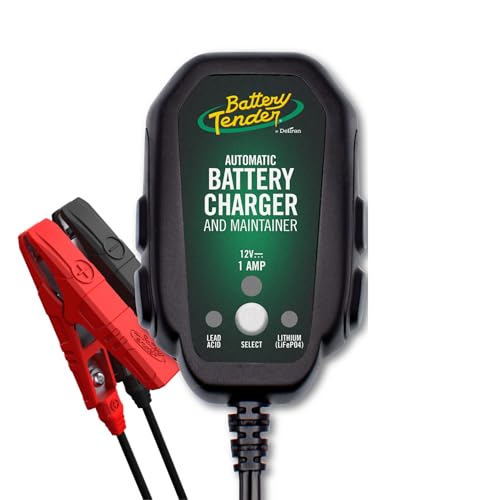
Battery Tender Junior 800mA Charger
The least glamorous item on this list probably saves the most money, since a motorcycle battery left through a cold winter often will not come back. Float mode kicks in automatically once the battery is charged, so this unit can stay connected for months without risk. A supplied ring terminal lead allows quick hookup without removing bodywork each time.
Pros
- Safe to leave connected all winter
- Ring terminal lead makes hookup quick
- Small enough to leave mounted in a garage
Cons
- Slow charge rate for a fully flat battery
- Not suitable for all lithium batteries

Innovv K5 Motorcycle Dash Camera
Permanent installation, not a suction cup, is the design goal here, with small front and rear cameras wired to a hidden control box. That approach survives on a bike, since anything mounted externally with adhesive eventually vibrates loose. Expect a proper wiring job with a switched power source rather than a plug-and-play afternoon, based on the published specifications.
Pros
- Discreet permanent install with no exposed unit
- Dual channel front and rear coverage
- GPS data logged alongside video
Cons
- Installation takes hours and some wiring skill
- Higher cost than consumer action cameras

FOBO Bike 2 Tire Pressure Monitoring System
Two small contact patches carry an entire motorcycle, which makes a slow puncture far more dangerous than on a car. Sensors screw onto the valve stems here and report to a phone app over Bluetooth, warning riders before pressure loss becomes a problem. Relying on a phone as the display, rather than a dedicated screen, is the main trade-off.
Pros
- Early warning of slow punctures
- Simple screw on installation
- Replaceable sensor batteries
Cons
- Needs a phone running the app to alert you
- Sensors add a small amount of rotating weight
Compared at a glance
| # | Model | Intercom | Best for | Score | Price |
|---|---|---|---|---|---|
| 1 | Cardo Packtalk Edge | Dynamic mesh, multiple riders | Best overall | 9.4 | Check price |
| 2 | Sena 50S | Mesh 2.0 plus Bluetooth | Best for value comms | 9.2 | Check price |
| 3 | Garmin zumo XT2 | Bright transflective touchscreen, glove usable | Best for navigation | 9.0 | Check price |
| 4 | Quad Lock Motorcycle Handlebar Mount Pro | Twist and lock phone mounting | Best for phone mounting | 8.7 | Check price |
| 5 | Battery Tender Junior 800mA Charger | 800 milliamps | Best for battery care | 8.5 | Check price |
| 6 | Innovv K5 Motorcycle Dash Camera | Front and rear, dual channel | Best for dash cam footage | 8.2 | Check price |
| 7 | FOBO Bike 2 Tire Pressure Monitoring System | Two valve stem mounted sensors | Best for tyre pressure | 8.0 | Check price |
Frequently asked questions
Do I need a dedicated GPS or does a phone work fine?
Short urban trips with a good mount work fine on a phone. Long-distance touring favors a dedicated unit such as the Garmin zumo XT2, which handles rain, direct sunlight, overheating and dead zones far better, and it keeps navigating through an incoming call or a low battery.
Can handlebar vibration actually damage a phone?
Optical image stabilization in the camera is a known failure point on bikes with strong engine vibration. A vibration dampener fitted between the mount and the handlebar cuts that risk substantially. Some riders avoid mounting their main phone on high-vibration bikes altogether for this reason.
Can different intercom brands talk to each other on a group ride?
Standard Bluetooth usually connects across brands for basic rider-to-rider intercom. Mesh networking stays brand-specific, so Cardo mesh only talks to Cardo and Sena mesh only talks to Sena. Matching the brand already used by a riding group gives the smoothest experience.
How do you power accessories without draining the battery?
A switched circuit that only lives with the ignition on, or a relay-driven fuse block, keeps parked accessories from draining the battery. Connecting directly to the battery terminals should be avoided for anything that draws current while parked. A maintainer such as the Battery Tender Junior handles seasonal storage without overcharging.
Are motorcycle dash cameras worth the installation effort?
Commuters in traffic often find the footage valuable after an incident, since disputed liability is common in motorcycle collisions. A hardwired dual-channel system like the Innovv K5 holds up far better than an action camera on a stick mount, though it demands considerably more installation effort.
What IP rating should motorcycle electronics have?
IP67 or an IPX7 water rating suits anything permanently mounted, covering heavy rain and washing. IPX4 splash resistance only works for gear removed before rain starts. The number before the X covers dust, and the number after covers water, so IPX7 alone says nothing about dust resistance.
Do tire pressure monitors fit every motorcycle?
Valve stem sensors like the FOBO Bike 2 fit standard valve stems on most bikes, but wheel clearance and sensor weight at speed need checking first. Riders with high-performance wheels sometimes prefer internal sensors fitted during a tire change instead.
Can this motorcycle electronics gear be installed at home?
Comms units, phone mounts and tire sensors are straightforward do-it-yourself jobs. Hardwired dash cameras and powered navigation mounts involve routing cables under bodywork and tapping into the electrical system, which is worth handing to a shop without confidence in identifying and fusing a switched circuit.
Cardo Packtalk Edge vs Sena 50S: which comms unit is better?
Cardo’s mesh network and magnetic Air Mount lead on ease of use and rejoin speed after dropouts. Sena’s 50S counters with a jog dial built for thick gloves and both mesh and Bluetooth modes. Either choice works best when it matches the brand a riding group already owns.
The verdict
The Cardo Packtalk Edge changes group riding the most, since its mesh system holds together in a way older Bluetooth chains never did. Touring beyond mobile coverage calls for pairing it with the Garmin zumo XT2. Adding the Quad Lock Motorcycle Handlebar Mount Pro with its vibration dampener covers phone-based navigation for everyone else.
Tony Russo
Tony trained as an automotive technician and spent years in service and parts retail before moving into writing. He focuses on garage tools, car care products and accessories from a hands-on maintenance perspective.