Which Microphone Actually Fits How You Record?
The Shure MV7+ is the best overall microphone, switching between USB and XLR while rejecting background noise through its dynamic capsule. The Rode NT-USB+ suits detailed solo recording, and the HyperX QuadCast S covers streamers who want plug-and-play USB with RGB lighting.
The Shure MV7+ is the best overall microphone, because its dynamic capsule rejects room noise better than most USB condensers while still offering a simple USB connection alongside XLR. It costs more than a basic USB mic, so anyone recording in a treated, quiet room can get similar clarity from a cheaper condenser instead.
We compared pickup pattern, self-noise and background rejection, connectivity options, and how each microphone performs in untreated rooms, using manufacturer specifications and feedback from podcasters, streamers and musicians.
The best picks, ranked

Shure MV7+
A dynamic capsule shared with Shure’s broadcast lineage rejects ambient room noise more effectively than most USB condensers at a similar price. Built-in touch controls adjust gain and mute without opening software, and the mic switches between USB-C and XLR output depending on the setup.
Pros
- Dynamic capsule handles untreated rooms better than most USB condensers
- Dual USB-C and XLR output covers beginner and studio setups
- Touch controls skip the need for separate software adjustments
Cons
- Costs more than single-connection USB microphones here
- Needs an audio interface to take advantage of the XLR output

Rode PodMic USB
Rode built this dynamic mic specifically for spoken word, giving it the tight cardioid pattern and internal pop filter that podcast voices benefit from most. A USB-C connection skips the need for a separate interface while keeping the broadcast-style metal housing.
Pros
- Internal pop filter reduces plosives without an external screen
- Cardioid pattern tightly focused on a single speaker
- Durable metal housing matches broadcast studio gear
Cons
- No XLR option, limiting future upgrades to a mixer setup
- Heavier than typical USB condenser microphones
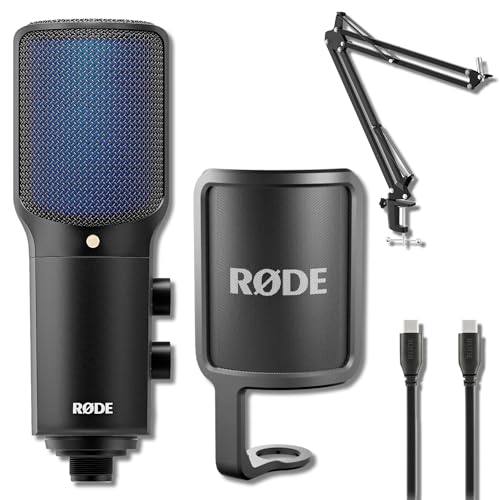
Rode NT-USB+
A larger condenser capsule captures more detail and higher frequencies than typical USB mics, suiting solo voiceover, vocals and acoustic instruments recorded in a treated space. A built-in digital signal processor applies light compression and EQ directly through the APHEX companion software.
Pros
- Captures finer detail than most USB condensers in this range
- Onboard DSP adds usable processing without extra software
- Zero-latency monitoring through the built-in headphone jack
Cons
- Condenser sensitivity picks up more room noise than a dynamic capsule
- Needs a stable mount, since handling noise transmits easily

Blue Yeti X
Four selectable pickup patterns let one microphone cover solo streaming, co-hosted interviews or small group recordings without swapping gear. An LED meter on the body shows real-time input level, which helps streamers avoid clipping on the fly.
Pros
- Four pickup patterns adapt to solo, group or stereo recording
- Visual LED metering helps catch clipping before it happens
- Well-supported software for quick EQ and gain presets
Cons
- Condenser design picks up more background and fan noise
- Bulkier desktop footprint than slimmer USB mics here

Shure SM7B
A long-standing studio and broadcast standard, the SM7B pairs a flat, wide-range frequency response with heavy internal shielding against electrical hum. It requires a clean gain boost from an interface or inline preamp, since its output runs quieter than typical USB mics.
Pros
- Flat frequency response suits vocals, voiceover and broadcast equally well
- Internal shielding keeps electrical hum out of recordings
- Proven long-term reliability across decades of studio use
Cons
- Low output needs a clean gain boost from an interface or inline preamp
- No USB connectivity, requiring additional interface hardware

Audio-Technica AT2020
A long-running entry point into studio-grade condensers, the AT2020 delivers a wide, detailed frequency response at a price well under most competitors here. It requires phantom power from an interface or mixer, which keeps setup cost down compared to USB alternatives with built-in processing.
Pros
- Strong detail and clarity for its price point
- Simple, durable build with minimal moving parts
- Works well for vocals, instruments and voiceover alike
Cons
- Needs a separate audio interface with phantom power
- Condenser sensitivity exposes untreated room noise easily

HyperX QuadCast S
Customizable RGB lighting and a built-in anti-vibration shock mount target streamers who want a plug-and-play mic that also looks the part on camera. A tap-to-mute sensor on top lets a streamer cut audio instantly without reaching for software.
Pros
- Tap-to-mute sensor cuts audio instantly during a stream
- Built-in shock mount reduces desk bump and vibration noise
- Customizable RGB lighting suits on-camera streaming setups
Cons
- Condenser capsule picks up more keyboard and fan noise than a dynamic mic
- Software required to unlock full lighting customization
How they compare
| # | Model | Capsule Type | Best for | Score | Price |
|---|---|---|---|---|---|
| 1 | Shure MV7+ | Dynamic | Best Overall | 9.4 | Check price |
| 2 | Rode PodMic USB | Dynamic | Best for Podcasting | 9.1 | Check price |
| 3 | Rode NT-USB+ | Condenser | Best for Detailed Solo Recording | 8.9 | Check price |
| 4 | Blue Yeti X | Condenser, multi-pattern | Best for Streaming Setups | 8.7 | Check price |
| 5 | Shure SM7B | Dynamic | Best for Studio Vocal Work | 8.8 | Check price |
| 6 | Audio-Technica AT2020 | Condenser | Best Budget XLR Condenser | 8.3 | Check price |
| 7 | HyperX QuadCast S | Condenser, multi-pattern | Best for Gaming and Streaming | 8.2 | Check price |
What to look for
Dynamic Versus Condenser: The Core Decision Dynamic microphones like the Shure MV7+ and SM7B reject background noise aggressively, making them forgiving in untreated rooms with echo, fans or street noise. Condenser microphones like the Rode NT-USB+ and AT2020 capture more detail and a wider frequency range, but they pick up everything in the room along with the speaker’s voice. A quiet, treated space favors a condenser’s extra detail, while most home setups benefit more from a dynamic mic’s noise rejection.
USB Versus XLR Connectivity for Different Setups USB microphones plug directly into a computer and need no extra hardware, which suits anyone just starting out streaming or podcasting. XLR microphones like the SM7B and AT2020 need a separate audio interface or mixer, adding cost and complexity but opening the door to better preamps and more control later. Hybrid options like the Shure MV7+ let a buyer start on USB and move to XLR once their setup grows.
Matching a Microphone to Streaming, Podcasting or Studio Use Streamers benefit from onboard controls and visual feedback, which is why the Blue Yeti X and HyperX QuadCast S include level meters, mute sensors or tap controls built into the mic itself. Podcasters lean toward dynamic capsules like the Rode PodMic USB that reject room echo during longer, unscripted conversations. Musicians and voiceover artists recording in a treated space get more value from a condenser’s wider detail, like the Rode NT-USB+.
Where a Budget XLR Condenser Still Makes Sense The Audio-Technica AT2020 proves a cheaper XLR condenser can still deliver studio-level clarity, provided the room is reasonably quiet and an interface with phantom power is already on hand. Anyone without an existing interface pays more in total once that hardware gets added, which narrows the actual savings versus a hybrid USB/XLR mic. Buyers upgrading from a USB mic they have outgrown get the clearest benefit from this path.
Good to know
What is the difference between a dynamic and a condenser microphone?
A dynamic mic rejects more background noise and suits untreated rooms, while a condenser captures more detail and a wider frequency range but picks up more of the room around it.
Do I need an audio interface for a USB microphone?
No, USB microphones like the Rode NT-USB+ or HyperX QuadCast S connect directly to a computer. An interface is only needed for XLR-only mics like the Shure SM7B.
Which microphone is best for podcasting in a regular room?
A dynamic mic like the Rode PodMic USB or Shure MV7+ rejects echo and background noise better than a condenser in an untreated room.
Is the Shure SM7B good for beginners?
It can work, but its low output needs a clean gain boost from a quality interface or inline preamp, which adds cost and complexity for a first setup.
Can one microphone work for both streaming and music recording?
Multi-pattern condensers like the Blue Yeti X adapt reasonably well across both, though a dedicated studio condenser still captures more detail for serious music work.
Do gaming microphones need special features compared to podcast mics?
Not technically, but streamers often value onboard mute controls, visual level meters and RGB lighting, which gaming-focused mics like the HyperX QuadCast S build in.
Why does the Shure MV7+ cost more than a basic USB condenser?
It combines a broadcast-grade dynamic capsule with both USB and XLR output and onboard touch controls, covering a wider range of future setups than a simple USB mic.
Is a budget XLR condenser like the AT2020 worth it without an interface?
Only if an interface is already planned, since the added interface cost often erases the savings compared to a hybrid USB/XLR microphone.
The verdict
The Shure MV7+ is the strongest overall pick, since its dynamic capsule handles imperfect rooms while still offering a path to XLR later. Anyone recording solo vocals or voiceover in a treated space should choose the Rode NT-USB+ instead, for its extra detail. Streamers who want visual feedback and mute control built into the mic get solid value from the HyperX QuadCast S.
Marcus Chen
Marcus covered consumer electronics for enthusiast tech publications for six years before joining ChoiceCrest. He specializes in translating manufacturer spec sheets into plain-language buying advice, with a focus on audio, computing accessories and smart-home gear.