Boom Arms That Keep a Mic Out of Camera Frame
The Rode PSA1+ offers the most reach and weight capacity for most desk setups. Streamers who want a cleaner cable routing should look at the Elgato Wave Mic Arm LP, while anyone on a tight budget can still get solid support from the Neewer NB-35.
The Rode PSA1+ earns the top spot for supporting heavier microphones at a longer reach than most competing boom arms, without drooping over time. Its main limitation is a larger desk footprint than low-profile arms built for small desks. Buyers with limited desk space or lighter microphones have better-suited options below.
We compared published reach measurements, weight capacity ratings, internal cable routing design and clamp mounting style rather than running our own load testing over time.
What to look for
What to check before buying a microphone boom arm Weight capacity determines which microphones an arm can hold without drooping, with heavier dynamic mics needing a higher rating than light USB mics. Reach affects how far the arm can extend from a desk clamp to position a mic near the mouth without crowding a keyboard. Cable routing, whether internal or external, affects how clean the final desk setup looks on camera or in person.
Matching weight capacity to your microphone Heavier broadcast dynamic microphones need an arm rated at least 2.5 lbs, which the Rode PSA1+ and Heil Sound PL-2T both provide. Lighter USB microphones common in streaming setups work fine on lower-capacity arms like the Elgato Wave Mic Arm LP. Mismatching a heavy microphone to a low-capacity arm causes sagging and repeated readjustment over weeks of use.
Internal versus external cable routing Internal routing, used on the Rode PSA1+, Heil PL-2T, Blue Compass and Elgato Wave Mic Arm LP, hides the mic cable entirely inside the arm for a cleaner look. External clip routing, found on the Gator Frameworks, InnoGear and Neewer NB-35 arms, costs less to manufacture but leaves cable visible along the arm. Streamers and video creators who show their desk on camera benefit most from internal routing.
Desk space and visibility considerations Low-profile arms like the Elgato Wave Mic Arm LP stay closer to the desk and less visible on camera, suited to streaming setups where the mic should not dominate the frame. Taller, more visible tube-style arms like the Blue Compass suit broadcast studios where the equipment itself is part of the visual setup. Smaller desks benefit from compact arms like the InnoGear model, which trade reach for a smaller footprint.
The shortlist, ranked
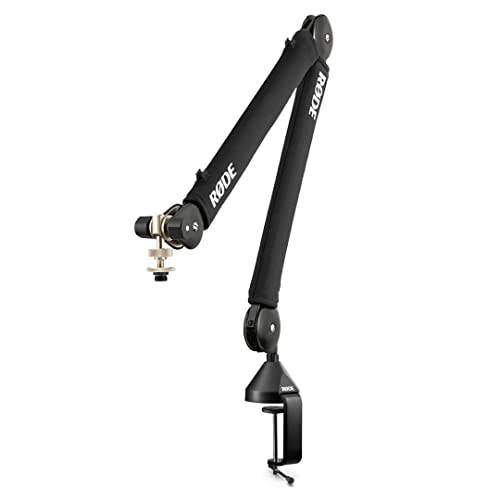
Rode PSA1+
An updated internal spring mechanism on this boom arm holds heavier microphones in position without sagging, a common complaint on older boom arm designs. Full 360 degree rotation at both joints gives flexibility to position a mic exactly between keyboard and mouth. Internal cable routing keeps the mic cable hidden inside the arm instead of dangling loose across the desk.
Pros
- Holds heavier microphones without sagging over time
- Internal cable routing keeps the desk looking clean
- Full 360 degree rotation at both joints for flexible positioning
Cons
- Larger footprint than compact low-profile arms
- Costs more than basic desk boom arms without internal cable routing
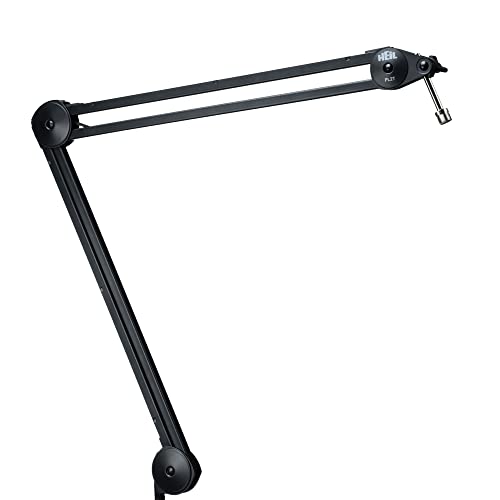
Heil Sound PL-2T
Heil builds this boom arm for broadcast and podcast studios running heavier dynamic microphones that lighter arms struggle to support. A longer reach than most desk arms lets it extend from a desk edge or wall mount into the center of a recording space. The tradeoff is weight and size, since this arm is bulkier than consumer-focused options built for smaller desks.
Pros
- Highest weight capacity among the boom arms in this list
- Longest reach, useful for larger recording spaces
- Wall mount option adds flexibility beyond desk clamping
Cons
- Bulkier and heavier than desk-focused consumer boom arms
- Costs more than most streaming-focused arms here

Blue Compass Premium Tube-Style Boom Arm
Unlike the enclosed spring arms elsewhere in this list, the Compass uses an exposed tube-style frame that broadcast studios often prefer for its visual look on camera. A soft-touch coating resists fingerprints and desk scuffs better than bare metal arms. Internal cabling still routes the mic cable out of sight despite the open frame design.
Pros
- Tube-style frame gives a distinct broadcast studio look
- Soft-touch coating resists fingerprints and scuffs
- Internal cabling despite the open tube design
Cons
- Weight capacity trails the Rode PSA1+ and Heil PL-2T
- Exposed frame style is bulkier than enclosed low-profile arms

Elgato Wave Mic Arm LP
Elgato designed this arm specifically for streamers who want a mic positioned close to frame without a bulky arm visible on camera. A low-profile hinge keeps the arm closer to the desk surface than taller broadcast-style arms. It pairs well with smaller USB microphones common in streaming setups, though its lower weight capacity means it is not built for heavier dynamic mics.
Pros
- Low-profile design stays less visible on camera
- Compact size suits smaller streaming desk setups
- Internal cable routing matches pricier broadcast arms
Cons
- Lower weight capacity limits it to lighter USB microphones
- Shorter reach than broadcast-focused boom arms

Gator Frameworks Deluxe Desk-Mounted Boom Stand
Gator Frameworks offers reach and weight capacity close to premium arms at a noticeably lower cost. An adjustable tension knob lets users tune how much resistance the arm has when repositioning, useful for finding a balance between easy movement and staying put. Cable management uses external clips rather than fully internal routing, a visible tradeoff for the lower price.
Pros
- Lower cost than premium internal-routing boom arms
- Adjustable tension knob tunes movement resistance
- Reach and weight capacity close to pricier options
Cons
- External cable clips look less tidy than internal routing
- Finish feels less premium than the Rode or Heil arms
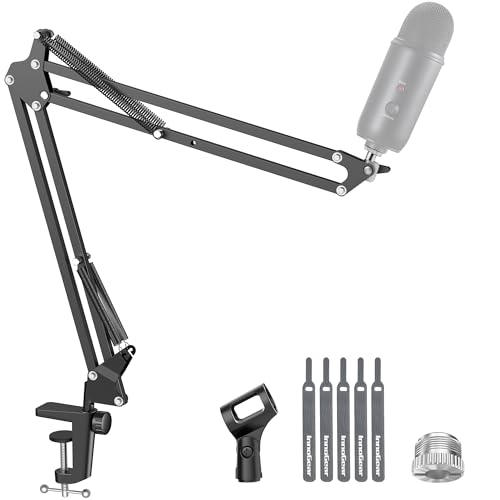
InnoGear Microphone Boom Arm
This arm keeps both size and cost down, suited to home desks without much spare surface area. A shorter maximum reach than full-size arms still covers typical single-monitor desk setups. External cable management uses basic clips, keeping cost low but offering less polish than internal-routing arms higher in this list.
Pros
- Compact size suits smaller home desk setups
- Lower cost than full-size broadcast-style boom arms
- Weight capacity handles common USB and small condenser mics
Cons
- Shorter reach than full-size desk or broadcast arms
- External cable clips are less tidy than internal routing

Neewer NB-35 Boom Arm
Neewer keeps cost lowest in this list while still covering a reasonable reach and weight capacity for lighter USB and small condenser microphones. A basic spring tension system holds position adequately, though it requires more frequent adjustment than premium spring designs over months of use. It suits buyers setting up a first microphone arm without a large budget.
Pros
- Lowest cost among the boom arms in this list
- Reach and capacity suit light USB and condenser mics
- Simple setup for first-time microphone arm buyers
Cons
- Spring tension needs more frequent readjustment over time
- Weight capacity is too low for heavier dynamic microphones
How they stack up
| # | Model | Max Reach | Best for | Score | Price |
|---|---|---|---|---|---|
| 1 | Rode PSA1+ | Approximately 32 inches | Best Overall | 9.3 | Check price |
| 2 | Heil Sound PL-2T | Approximately 39 inches | Best for Heavy Broadcast Microphones | 9.0 | Check price |
| 3 | Blue Compass Premium Tube-Style Boom Arm | Approximately 35 inches | Best Tube-Style Design for Visible Setups | 8.8 | Check price |
| 4 | Elgato Wave Mic Arm LP | Approximately 23 inches | Best Low-Profile Streaming Arm | 8.7 | Check price |
| 5 | Gator Frameworks Deluxe Desk-Mounted Boom Stand | Approximately 30 inches | Best Value Full-Size Arm | 8.4 | Check price |
| 6 | InnoGear Microphone Boom Arm | Approximately 20 inches | Best for Compact Home Desks | 8.1 | Check price |
| 7 | Neewer NB-35 Boom Arm | Approximately 25 inches | Best Budget Pick | 7.9 | Check price |
Good to know
What weight capacity do I need for a boom arm?
It depends on the microphone. Heavy dynamic broadcast mics need at least 2.5 lbs capacity, like the Rode PSA1+ offers, while light USB mics work fine on arms rated around 1 to 1.5 lbs.
Is internal cable routing worth paying more for?
For a cleaner on-camera look, yes. Internal routing hides the cable fully, while external clips leave cable visible along the arm’s length.
Can a boom arm hold a heavy broadcast microphone without drooping?
Arms built for that purpose, like the Heil Sound PL-2T and Rode PSA1+, use stronger internal springs rated specifically for heavier dynamic microphones.
How far can a microphone boom arm reach?
Reach varies from around 20 inches on compact arms like the InnoGear to nearly 39 inches on broadcast-focused arms like the Heil Sound PL-2T.
Do I need a desk clamp or a grommet mount for a boom arm?
Most desks work with a clamp mount, which most arms in this list include, while a grommet mount requires a hole already drilled through the desk surface.
Will a boom arm fit on a thin gaming desk?
Most clamp mounts adjust for desk thickness within a standard range, though extremely thin or thick desks should be checked against the specific listing first.
Can I mount a boom arm to a wall instead of a desk?
Some arms, including the Heil Sound PL-2T, support wall mounting in addition to a desk clamp, which most other arms in this list do not offer.
How do I stop a microphone boom arm from sagging?
Choosing an arm rated above the microphone’s actual weight, like the Rode PSA1+ for heavier mics, prevents the sagging that undersized arms develop over time.
Are cheaper boom arms worth buying for a first setup?
For light USB or small condenser microphones, a budget arm like the Neewer NB-35 works fine, though it may need more frequent tension adjustment than premium arms.
The bottom line
The Rode PSA1+ is the strongest overall pick for most desk setups thanks to its reach, weight capacity and hidden cable routing. Anyone running a heavier broadcast dynamic microphone should choose the Heil Sound PL-2T instead for its higher weight rating and longer reach. Buyers on a tighter budget with a light USB microphone can skip the premium arms and still get reliable support from the Neewer NB-35.
Marcus Chen
Marcus covered consumer electronics for enthusiast tech publications for six years before joining ChoiceCrest. He specializes in translating manufacturer spec sheets into plain-language buying advice, with a focus on audio, computing accessories and smart-home gear.