How to Pick Microfiber Towels That Won’t Scratch Paint
The Rag Company Eagle Edgeless 500 is the top overall pick for its dense, edgeless weave and strong absorbency. The Chemical Guys Professional Grade multipack is the best value, and the Meguiar’s Supreme Shine towel stands out for everyday detailing versatility.
For most car owners, The Rag Company Eagle Edgeless 500 is the safest all-around towel, backed by the Chemical Guys Professional Grade multipack for value and the Meguiar’s Supreme Shine towel for everyday versatility.
Microfiber towels look interchangeable on a shelf but are not, since a rough weave, hard stitched edges or a thin GSM can drag grit across paint and cause the swirl marks you were trying to avoid. We compared weave density, GSM, edge design and owner feedback, favoring plush, edgeless or soft-bordered towels that lift dirt and water safely instead of grinding it into the clear coat.
How to choose
What does GSM mean on a microfiber towel? GSM, or grams per square meter, measures how dense and plush a towel feels. Lower GSM cloths around 200 to 350 run thin and suit interiors, glass and dirty jobs. High GSM towels above 1000 carry enough loft to soak up water for drying. Mid-range towels around 400 to 600 GSM sit in the versatile middle ground for buffing and general detailing, which is why several picks here land in that range.
Which towel edges are safe for paint? A towel’s border matters as much as its weave. Hard stitched edges can drag across a clear coat and leave fine marks, so paint-safe towels use edgeless laser-cut borders or soft silk-banded edges instead. Anything touching a car’s finish should stick to edgeless or soft-bound designs like the Eagle Edgeless 500. Save cheaper stitched-edge cloths for wheels, engine bays and interior surfaces where the risk to paint runs lower.
Should I use one towel for every detailing step? No single towel handles every job well. A thick waffle-weave or plush drying towel such as the Woolly Mammoth or Adam’s Great White excels at pulling water off after a wash, while a mid-pile edgeless towel suits buffing wax and quick wipe-downs better. Keeping a small rotation of dedicated towels stops a greasy wheel cloth from ever touching paint.
How should microfiber towels be washed? Microfiber lasts far longer with the right laundering. Wash towels apart from cotton, which sheds lint, and skip fabric softener, since it clogs the fibers and kills absorbency. A gentle detergent and warm rather than hot water work best, followed by air drying or a low tumble cycle. Keeping drying towels separate from grimy shop rags also stops grit from migrating onto cloths that touch paint.
The best picks, ranked

The Rag Company Eagle Edgeless 500 Microfiber Towel
A dense, dual-pile weave and a fully edgeless, laser-cut border define the Eagle Edgeless 500, removing any hard seam that could touch paint. Detailers reach for it during buffing, quick wipe-downs and clearing product residue. Its balanced 500 GSM pile covers most detailing steps without needing a second towel.
Pros
- Edgeless laser-cut border protects paint
- 500 GSM pile lifts residue cleanly
- Works across most detailing steps
Cons
- Costs more per towel than bulk packs
- Not sized for drying a full vehicle

Chemical Guys MIC_506_06 Professional Grade Microfiber Towels
Several soft, silk-banded towels ship in one pack here, so a fresh cloth is always ready for the next step. Silk-banded edges add a layer of paint safety over cheap stitched borders. At roughly 320 to 365 GSM, the pile absorbs well without the bulk of a dedicated drying towel.
Pros
- Low cost per towel in a multipack
- Silk-banded edges are gentler than stitching
- One towel per task keeps cross contamination down
Cons
- Thinner than premium single towels
- Not built as a primary drying towel

Meguiar’s X2010 Supreme Shine Microfiber Towel
A deep pile absorbs wax and water well, and wide retail availability makes replacement easy. Owners keep this towel in rotation for wipe-downs, waxing and buffing between full details. Rolled soft edges trade some of the margin of a fully edgeless design for a lower price.
Pros
- Deep pile absorbs product well
- Widely stocked and easy to restock
- Handles multiple detailing steps
Cons
- Rolled edges are less refined than edgeless towels
- Standard size limits large drying jobs
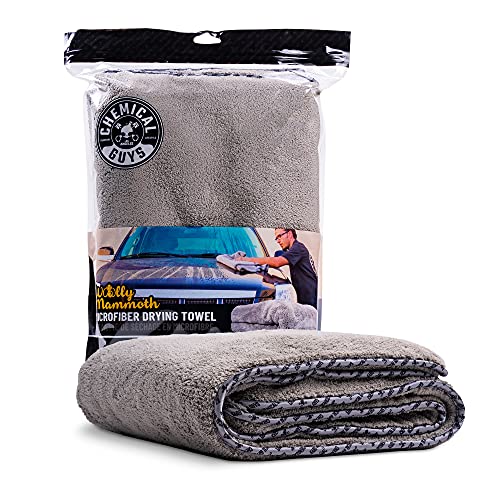
Chemical Guys Woolly Mammoth Microfiber Drying Towel
At 1100 to 1500 GSM, the Woolly Mammoth soaks up sheeting water in fewer passes than a standard towel. Owners report drying a full vehicle with noticeably less wringing. Its plush loft cushions grit away from the paint while it works.
Pros
- High GSM speeds up drying
- Large size covers big panels
- Plush loft cushions grit
Cons
- Bulky and slow to air dry
- Overkill for small wipe-downs

Adam’s Polishes Great White Microfiber Drying Towel
A waffle-weave pattern pulls water off paint and glass with a streak-free finish. Its 550 to 600 GSM pile balances absorbency against a manageable size for hand drying after every wash. A soft-bound border keeps hard edges away from the clear coat.
Pros
- Streak-free waffle-weave drying
- Manageable size for hand drying
- Soft border protects paint and glass
Cons
- Premium price per towel
- Less plush than dedicated buffing towels
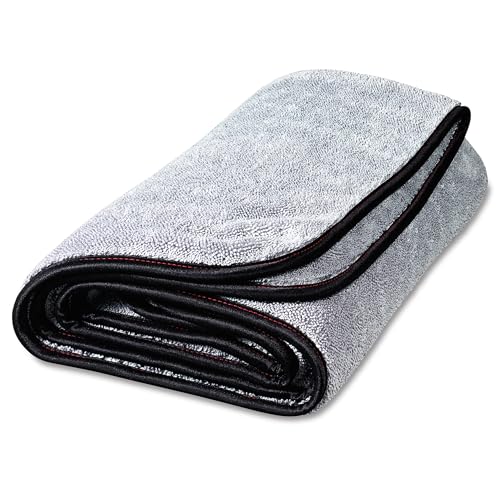
Griot’s Garage PFM Terry Weave Drying Towel
A thick terry weave near 1000 GSM holds a large amount of water, making single-pass drying realistic on smooth panels. Softness against the paint takes priority here over quick laundering. A soft-bound border matches the gentle character of the pile.
Pros
- Very soft, thick pile
- Holds plenty of water per pass
- Gentle on delicate finishes
Cons
- Takes longer to launder and dry
- Bulky for tight spaces

Amazon Basics Microfiber Cleaning Cloths
Large bulk packs keep the per-towel cost low here, which suits interior wiping, wheels and general cleanup. A thinner, roughly 220 to 250 GSM weave was not built for painted surfaces. Stitched borders make these better suited to dirtier jobs around the garage than to a clear coat.
Pros
- Very low cost in bulk packs
- Plenty on hand for dirty jobs
- Useful around the whole garage
Cons
- Thinner weave and stitched edges
- Better kept away from clear-coat paint
The lineup, side by side
| # | Model | GSM | Best for | Score | Price |
|---|---|---|---|---|---|
| 1 | The Rag Company Eagle Edgeless 500 Microfiber Towel | About 500 | Best overall | 9.4 | Check price |
| 2 | Chemical Guys MIC_506_06 Professional Grade Microfiber Towels | About 320 to 365 | Best value multipack | 9.1 | Check price |
| 3 | Meguiar’s X2010 Supreme Shine Microfiber Towel | About 470 | Best for everyday detailing | 8.9 | Check price |
| 4 | Chemical Guys Woolly Mammoth Microfiber Drying Towel | About 1100 to 1500 | Best drying towel | 8.7 | Check price |
| 5 | Adam’s Polishes Great White Microfiber Drying Towel | About 550 to 600 | Best premium | 8.5 | Check price |
| 6 | Griot’s Garage PFM Terry Weave Drying Towel | About 1000 | Best plush drying | 8.3 | Check price |
| 7 | Amazon Basics Microfiber Cleaning Cloths | About 220 to 250 | Best budget bulk | 8.1 | Check price |
Frequently asked questions
What GSM microfiber towel should I buy?
It depends on the job. Thin cloths around 200 to 350 GSM suit interiors, glass and dirty work, mid-range 400 to 600 GSM towels handle buffing and general detailing, and thick 1000-plus GSM towels are made for drying. Many owners keep a mix on hand.
Are edgeless microfiber towels really safer for paint?
Edgeless and soft-bound towels remove the risk of hard stitched borders dragging across a clear coat and leaving fine marks. For anything touching painted surfaces, edgeless towels like the Eagle Edgeless 500 are a safer choice than cheap stitched-edge cloths.
How do I wash microfiber towels?
Wash them separately from cotton, use a gentle detergent, and skip fabric softener, which clogs the fibers and reduces absorbency. Warm water and low-heat or air drying help the towels last. Keeping paint towels apart from grimy rags prevents grit transfer.
Can I use the same towel for drying and buffing?
You can, but dedicated towels work better. Thick, high-GSM towels like the Woolly Mammoth are built to absorb water for drying, while mid-pile edgeless towels suit buffing wax and detailing better. Many owners keep separate towels for each step.
Why does my microfiber towel leave streaks?
Streaking is often caused by a towel that has lost absorbency, usually from fabric softener buildup or being overloaded with product. Washing correctly without softener, using a clean towel, and choosing a waffle-weave drying towel like the Adam’s Great White all help reduce streaks.
Do cheaper microfiber cloths damage paint?
Budget cloths with stitched edges and thinner weaves carry more risk of leaving fine marks on a clear coat. They work fine for wheels, interiors and general cleanup, but for painted surfaces, plush edgeless or soft-bound towels are the safer pick.
How long do microfiber towels last?
With proper washing and care, quality microfiber towels hold up through many uses over a long stretch of time. Avoiding fabric softener, high heat and grit contamination extends their life. Owners typically retire a towel once it feels rough or stops absorbing well.
What is a waffle-weave towel best for?
Waffle-weave towels like the Adam’s Great White excel at streak-free drying of paint and glass. The textured weave holds water while gliding smoothly, which many owners prefer for a clean finish after a wash.
Chemical Guys Woolly Mammoth vs Adam’s Great White: which drying towel is better?
The Woolly Mammoth trades size and weight for maximum absorbency at 1100 to 1500 GSM, best for drying a full vehicle in fewer passes. Adam’s Great White is a lighter waffle-weave towel built for a streak-free finish and easier hand drying. Pick the Woolly Mammoth for speed, the Great White for control.
The verdict
For most car owners The Rag Company Eagle Edgeless 500 offers the strongest blend of softness, absorbency and paint safety, while the Chemical Guys Professional Grade multipack wins on value. Reach for a dedicated drying towel like the Chemical Guys Woolly Mammoth when fast, gentle drying matters most.
Tony Russo
Tony trained as an automotive technician and spent years in service and parts retail before moving into writing. He focuses on garage tools, car care products and accessories from a hands-on maintenance perspective.
You might also need
How to Pick a Microfiber Towel That Won’t Scratch Paint

Microfiber Mitts That Won’t Scratch Your Paint
