Which Tape Measure Locks Right and Reads True?
For general carpentry and framing, the Milwaukee STUD 25 ft tape leads on blade durability and long standout. Sewing and craft projects call for the flexible Singer 60 inch cloth tape instead. Budget minded buyers get reliable, auto locking results from the Komelon SL2825.
A tape that bends or misreads ruins a cut before the saw even starts. Long unsupported reaches favor the Milwaukee STUD tape, which holds a straight edge better than rivals and suits framing work. Sewing calls for the opposite quality, so the Singer 60 inch tape bends around curves instead. Budget jobs are covered well by the Komelon SL2825.
Rigid metal blades and soft cloth tapes serve completely different tasks, so no single tape wins every category. We compared blade standout distance, lock reliability and marking legibility against owner reports of hook wear and case cracking.
What to look for
What to look for in a measuring tape Blade length sets the ceiling for what one pull can measure without repositioning. Lock type decides whether a measurement holds still while you mark it or slips back. Hook design affects accuracy at the very start of a pull, since a loose hook compensates for its own thickness. Case durability matters most on a jobsite where drops happen daily.
Metal tape or cloth tape: which do you need? A rigid metal blade holds its shape for straight line measurements on wood, drywall and framing. Cloth and fiberglass tapes bend around curves, which a metal blade cannot do without kinking. Sewing, upholstery and fitting work all call for the flexible option. Construction and remodeling almost always call for a locking metal blade instead.
Best tape measure for cabinetry and finish work A flat backed case like the FastCap model lets the blade sit flush against a cabinet interior for a truer reading. Standard framing tapes read slightly differently against a flat surface because of hook thickness. Finish carpenters who need repeatable precision benefit from this design over a standard jobsite tape. General framing rarely needs this level of accuracy.
Best tape measure for long outdoor distances Fencing, decking and property line work regularly exceed what a 25 foot pocket tape covers in one pull. A 100 foot reel tape like the Johnson Level model handles these runs without repositioning multiple times. Indoor trim and framing work has no real use for this much length. Match tape length to the actual job instead of buying the longest option available.
The shortlist, ranked
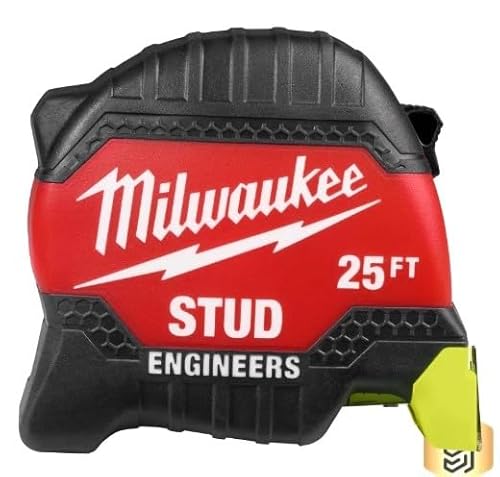
Milwaukee 48-22-9925 STUD 25 ft Tape Measure
A wide steel blade stands out over 11 feet unsupported before buckling, cutting down on needing a second person for long measurements. Finger stop and thumb lock work together for one handed use. Framers and remodelers rate the blade coating as slower to fade than typical tapes.
Pros
- Long standout reduces need for a second set of hands
- Markings stay legible after months of jobsite use
- Rubber overmold survives regular drops
Cons
- Heavier than a compact tape for pocket carry
- Costs more than basic hardware store tapes

Stanley PowerLock 33-425 25 ft Tape Measure
Decades of nearly unchanged PowerLock mechanism design mean it holds a measurement without slipping mid task. A wide blade resists kinking better than thinner budget tapes. Owners often mention keeping the same one for years without the spring weakening.
Pros
- Lock holds a measurement reliably over years of use
- Wide blade resists kinking during retraction
- Widely available replacement parts and cases
Cons
- Standout distance trails premium framing tapes
- Case cracks if dropped repeatedly onto concrete

FastCap PSSHO16 Flatback Tape Measure
A flat backed case lets the blade lie flush against a workpiece for a truer inside measurement, which matters in cabinet and trim work. Both standard and metric markings print on the same blade. Finish carpenters mention fewer transcription errors thanks to the larger print size.
Pros
- Flat back improves accuracy against a flat surface
- Large print reduces misreads on close work
- Metric and standard markings on one blade
Cons
- Shorter length than a full 25 foot jobsite tape
- Costs more than a basic locking tape
DEWALT DWHT34036S Tough Series 25 ft Tape Measure
Rubber overmolding on the case survives drops onto concrete better than a bare plastic housing. Wide blade resists kinking on long pulls, similar to premium framing tapes. Contractors mention the case holding up through daily truck and jobsite abuse longer than earlier tapes they owned.
Pros
- Case survives repeated jobsite drops
- Blade width resists kinking on long pulls
- Belt clip stays secure during movement
Cons
- Slightly bulkier than slim pocket tapes
- Standout falls short of top framing tapes

Singer 68112 60 Inch Soft Tape Measure
A soft fiberglass blade bends around a body, a curved surface or a fabric edge without kinking like a metal tape would. Markings print on both sides, so reading works no matter which way the tape faces. Sewers keep several on hand since the low cost makes replacing a frayed one easy.
Pros
- Bends around curves that a metal tape cannot follow
- Double sided markings read from either direction
- Inexpensive enough to buy several
Cons
- No lock, so it can shift while pulled taut
- Frays at the ends after heavy repeated use

Komelon SL2825 Self Lock 25 ft Tape Measure
Extending the blade locks it automatically, skipping the separate button most tapes need before marking a cut. A magnetic hook attaches to metal studs for one person measuring. Homeowners buying a first tape measure choose this one most often for the low cost.
Pros
- Auto lock skips a manual locking step
- Magnetic hook helps with solo measuring on metal
- Low price for a full 25 foot blade
Cons
- Blade coating wears faster than premium options
- Case plastic feels thinner than name brand rivals
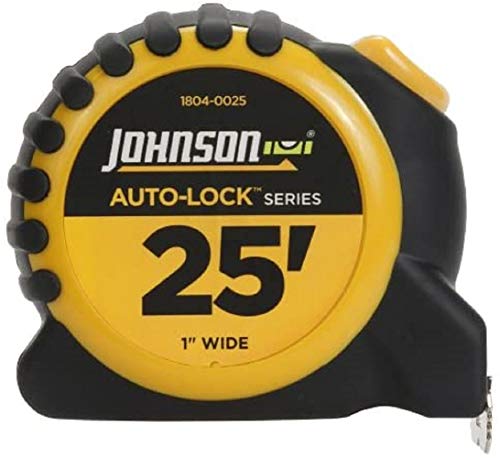
Johnson Level & Tool 1810-0025 100 ft Power Tape
A fiberglass reel blade covers property lines, decks and landscaping runs that a pocket tape cannot reach. An open reel handle winds the blade back quickly after a long pull. Landscapers and fence installers favor this over a folding tape for outdoor layout work.
Pros
- Covers long outdoor runs a pocket tape cannot
- Fiberglass blade resists moisture damage outside
- Open reel rewinds faster than a case tape
Cons
- Too bulky for pocket or belt clip carry
- No auto lock, so a second person helps on long pulls
How they stack up
| # | Model | Length | Best for | Score | Price |
|---|---|---|---|---|---|
| 1 | Milwaukee 48-22-9925 STUD 25 ft Tape Measure | 25 feet | Best overall | 9.4 | Check price |
| 2 | Stanley PowerLock 33-425 25 ft Tape Measure | 25 feet | Best value | 9.1 | Check price |
| 3 | FastCap PSSHO16 Flatback Tape Measure | 16 feet | Best for cabinetry and precision work | 8.9 | Check price |
| 4 | DEWALT DWHT34036S Tough Series 25 ft Tape Measure | 25 feet | Best for durability | 8.8 | Check price |
| 5 | Singer 68112 60 Inch Soft Tape Measure | 60 inches | Best for sewing and crafts | 8.7 | Check price |
| 6 | Komelon SL2825 Self Lock 25 ft Tape Measure | 25 feet | Best budget | 8.6 | Check price |
| 7 | Johnson Level & Tool 1810-0025 100 ft Power Tape | 100 feet | Best for long distance and outdoor measuring | 8.5 | Check price |
Good to know
What length tape measure do most contractors use?
A 25 foot tape covers the vast majority of framing, drywall and trim tasks. Longer 100 foot reel tapes only come out for property lines, fencing and larger outdoor layouts.
Which is better, a self locking or manual lock tape measure?
Self locking tapes save a step during one handed measuring, since the blade holds automatically on extension. Manual lock tapes like the Stanley PowerLock still hold reliably, just with one extra button press.
Can a metal tape measure be used for sewing?
It can measure a flat surface, but it will not bend around a body or curved fabric edge. A soft fiberglass tape like the Singer model is built specifically for that flexibility.
Why do some tape measures read differently at the very start?
The metal hook is intentionally loose enough to compensate for its own thickness on inside and outside measurements. That built in play is normal and not a manufacturing defect.
How accurate is a standard tape measure?
Quality tapes hold accuracy within a small fraction of an inch over 25 feet under normal use. Accuracy drops if the blade kinks, stretches, or the hook wears down over years of use.
What is tape measure standout and why does it matter?
Standout is how far the blade extends horizontally before it droops or buckles. A longer standout lets one person measure across a gap without a second set of hands holding the far end.
Do metric and standard measurements matter on the same tape?
Woodworkers doing precise joinery often prefer a tape with both systems printed together, like the FastCap model. Standard construction work in the United States rarely needs the metric side.
How long does a tape measure blade typically last?
A quality steel blade can last years of regular use before the coating wears enough to affect reading. Cloth and fiberglass tapes wear faster at the ends from repeated folding and pulling.
Tape measure vs laser measure: which is more practical on a jobsite?
A tape measure still wins for marking cuts directly on material, since a laser only reads a number. Laser tools help more for room sized distances where unrolling a blade is impractical.
Final word
Pick the Milwaukee STUD tape for framing and remodeling work where long standout and blade toughness matter most. Sewing, upholstery and craft projects are better served by the flexible Singer 60 inch tape instead of any metal option. Homeowners who just need a reliable everyday tape without a premium price should start with the Komelon SL2825.
Jake Monroe
Jake worked as a residential contractor for over a decade before shifting to full-time writing. He evaluates power tools, hand tools and workshop gear through the lens of someone who has actually used them on job sites, not just read the box.
