Marking Gauges That Keep Woodworking Layout Lines Accurate
The Veritas Wheel Marking Gauge is the best overall pick, with a brass-wheel cutter that scores wood cleanly across the grain. The Starrett No. 65 suits mortise and tenon layout with its dual scribe pins, and the Groz Marking Gauge covers the same basic task at a lower cost.
The Veritas Wheel Marking Gauge earns the top spot for anyone laying out dovetails, tenons, or panel lines by hand. Its round brass fence rides flat against the workpiece edge, and the small cutting wheel slices rather than tears the fibers. The trade-off is price, since it costs more than a basic pin-style gauge covers the same ground for.
A marking gauge only needs to do one thing well: hold a fixed distance and scribe a clean, repeatable line. We compared fence design, cutting element, and how easily each scale locks and reads under shop light.
What matters most
What a marking gauge actually does A marking gauge holds a fixed distance from an edge and scribes a line at that distance, repeatably, across a board. Woodworkers use it to lay out dovetails, tenon shoulders, panel widths, and rip lines before cutting. Accuracy depends on how steadily the fence rides the reference edge while the cutting element does its work.
Wheel cutters versus scribe pins A wheel-style gauge, like the Veritas or WoodRiver, slices wood fibers cleanly because the wheel rotates slightly as it travels. A pin-style gauge, such as the Groz or Starrett, pushes a fixed point through the fibers, which can tear long grain if pushed too fast. Cross-grain work generally favors a wheel, while mortise layout often favors the dual-pin design.
Choosing a gauge for joinery work Mortise and tenon layout benefits from a two-pin gauge like the Starrett No. 65 or Crown Hand Tools model, since both reference lines get set from one fence position. Dovetail and panel work leans toward a single wheel cutter for a crisper line. Traders doing both jobs often keep one of each type on the bench.
Fence material and long-term durability Brass fences, found on the Veritas, Starrett, and Taytools gauges, resist wear and keep a flat reference edge for years of use. Cast iron, as on the Groz gauge, holds up to rough shop use but can chip if dropped. Aluminum keeps weight down on the General Tools model but dents more easily than brass or iron.
The best picks, ranked

Veritas Wheel Marking Gauge
Veritas machines a small steel cutting wheel into the stem, which slices across wood grain instead of tearing it like a pin would. The round brass fence rotates to present a fresh reference edge, and a thumbscrew locks the stem at any setting. Woodworkers doing dovetail or tenon layout get a crisper line than most pin gauges leave.
Pros
- Wheel cutter leaves a cleaner line across grain
- Round fence rotates for a fresh reference edge
- Wheel is replaceable when it dulls
Cons
- Costs more than basic pin-style gauges
- Round fence can roll if set down carelessly

Starrett No. 65 Mortise and Marking Gauge
Starrett builds this gauge with two independently adjustable pins, so both edges of a mortise or tenon get scribed from a single pass. A brass-faced hardwood fence resists wear where it rides the stock. The fine-thread adjuster on the second pin lets you dial in tenon width without a separate setup gauge.
Pros
- Two pins mark both mortise edges at once
- Brass facing on the fence resists wear
- Fine adjuster sets exact tenon width
Cons
- Pins tear long-grain wood more than a wheel
- Narrower fence than panel-marking gauges

WoodRiver Wheel Marking Gauge
WoodRiver pairs a cutting wheel with a brass-faced wooden fence, giving most of the clean-cut benefit of a premium wheel gauge at a lower cost. The stem slides smoothly through the fence body and locks with a knurled brass screw. Hobbyist woodworkers doing occasional joinery get solid results without the premium price tag.
Pros
- Wheel cutter scores cleaner than a pin
- Brass facing adds durability over plain wood
- Smooth stem travel through the fence
Cons
- Wheel is not as easily replaced as premium versions
- Fence is smaller than wide-panel gauges
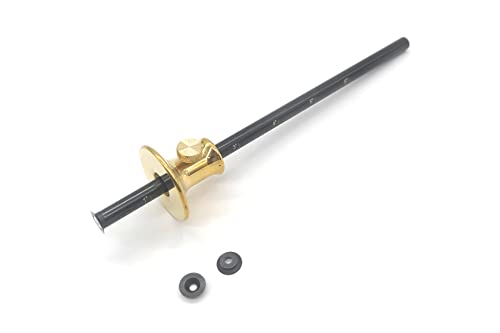
Taytools Wheel Marking Gauge
Taytools stamps a clear, high-contrast scale directly into the brass fence, which helps newer woodworkers set distances without squinting or using a separate rule. The wheel cutter handles most softwood and hardwood layout cleanly. A simple hex-key lock holds the setting firmly during repeated passes.
Pros
- High-contrast scale is easy to read quickly
- Hex-key lock holds settings firmly
- Solid brass fence adds weight and stability
Cons
- Hex key is a separate piece that can be lost
- Lacks the fine micro-adjust of pricier gauges

Groz Marking Gauge
Groz builds this gauge around a cast iron fence and a single hardened steel pin, covering basic ripping and layout lines for a fraction of a premium gauge’s cost. It lacks the finesse of a wheel cutter but handles rough layout work on framing lumber and shop fixtures without complaint. A simple thumbscrew sets the pin distance.
Pros
- Lowest cost way into a marking gauge
- Cast iron fence adds stability on flat stock
- Simple design has few parts to fail
Cons
- Single pin tears cross-grain cuts more
- No fine-adjustment thread for small changes

Crown Hand Tools Mortise Gauge
Crown Hand Tools keeps this gauge close to the classic English mortise gauge pattern, with a rosewood stock and a sliding brass stem carrying two pins. Traditional hand-tool woodworkers who favor period-correct joinery methods tend to prefer this layout over a modern wheel design. The brass slide adjusts the second pin for tenon width.
Pros
- Classic design suits traditional hand-tool work
- Brass slide adjusts tenon pin precisely
- Rosewood stock feels warm and stable in hand
Cons
- No cutting wheel option on this model
- Rosewood needs occasional oiling to stay smooth

General Tools Professional Marking Gauge
General Tools fits this gauge with a carbide-tipped scoring pin, which holds an edge longer than plain steel when used across both wood and soft metal stock. Machinists doing light layout work alongside woodworkers find the carbide tip resists wear from repeated use. The aluminum fence keeps overall weight low.
Pros
- Carbide pin holds an edge longer than steel
- Works across both wood and soft metal stock
- Lightweight aluminum fence is easy to handle
Cons
- Aluminum fence feels less substantial than brass
- Carbide tip is not user-replaceable
How they stack up
| # | Model | Fence material | Best for | Score | Price |
|---|---|---|---|---|---|
| 1 | Veritas Wheel Marking Gauge | Brass, round profile | Best overall marking gauge | 9.3 | Check price |
| 2 | Starrett No. 65 Mortise and Marking Gauge | Brass-faced rosewood | Best for mortise and tenon layout | 9.0 | Check price |
| 3 | WoodRiver Wheel Marking Gauge | Brass-faced hardwood | Best value wheel gauge | 8.8 | Check price |
| 4 | Taytools Wheel Marking Gauge | Solid brass | Best for beginners | 8.6 | Check price |
| 5 | Groz Marking Gauge | Cast iron | Best budget pick | 8.3 | Check price |
| 6 | Crown Hand Tools Mortise Gauge | Rosewood with brass fittings | Best traditional brass-and-rosewood design | 8.2 | Check price |
| 7 | General Tools Professional Marking Gauge | Anodized aluminum | Best for metal and wood layout | 8.0 | Check price |
Questions worth asking
What is a marking gauge used for in woodworking?
It scribes a line at a fixed distance from a board’s edge, used for laying out joints, panel widths, and rip cuts before sawing or chiseling.
Is a wheel marking gauge better than a pin gauge?
For cross-grain and dovetail layout, yes, since the wheel slices rather than tears the wood fibers. Pin gauges still work well for mortise and tenon layout where two reference lines are needed.
How do you set a marking gauge accurately?
Lock the fence against a rule or combination square at the target distance, then tighten the thumbscrew without letting the stem shift. Test on scrap before marking the actual workpiece.
Can a marking gauge be used on metal?
A carbide-tipped model like the General Tools gauge can score soft metal for layout, though it is not designed for the hardened steel a scratch awl or scribe handles.
What is the difference between a marking gauge and a mortise gauge?
A marking gauge uses one pin or wheel for a single reference line. A mortise gauge adds a second adjustable pin so both edges of a mortise get marked in one pass.
Do marking gauges work on both faces of a board?
Yes, as long as the fence can register against either face consistently. Round brass fences, like the Veritas, rotate easily to present a clean edge on either side.
How often does the cutting wheel need replacing?
A steel wheel stays sharp through moderate shop use for a year or more; replacement wheels are sold separately for models like the Veritas when it finally dulls.
Are rosewood-stock gauges still practical today?
Yes, models like the Crown Hand Tools gauge remain fully functional and are favored by hand-tool woodworkers who prefer traditional materials over modern aluminum or plastic.
What stem length should I look for?
Six to eight inches covers most furniture-scale layout. Wider panels or case pieces may call for a longer stem if you plan to mark far from an edge.
Final word
The Veritas Wheel Marking Gauge is the strongest all-around choice for anyone doing regular joinery layout, since its wheel cutter leaves a cleaner line than a pin on most grain directions. Woodworkers focused mainly on mortise and tenon work should pick the Starrett No. 65 instead, since its two pins handle both reference lines in one setup. Buyers who only need occasional layout accuracy on a tight budget get the most practical value from the Groz gauge.
Jake Monroe
Jake worked as a residential contractor for over a decade before shifting to full-time writing. He evaluates power tools, hand tools and workshop gear through the lens of someone who has actually used them on job sites, not just read the box.


