Automatic Livestock Waterers That Prevent Freezing
The RentACoop Chicken Waterer leads for poultry, with horizontal nipples that keep water genuinely clean. Small stock in cold climates do best with the Farm Innovators HB-60 Heated Flat Back Bucket, while cattle and horses call for the Behlen Country Poly Stock Tank.
For poultry, the RentACoop nipple waterer stands out first. The Farm Innovators HB-60 heated bucket answers winter freezing for small stock most simply, and the Behlen Country Poly Stock Tank holds up best for cattle and horses.
Cheap open troughs fill with droppings, algae and ice within days, and animals drink less once water turns fouled or cold. We compared freeze protection method, how well each design keeps out contamination, usable capacity against herd or flock size, and cleaning access, weighing those against what owners report about cracking, element failure and nipples freezing shut.
The shortlist, ranked

RentACoop Chicken Waterer with Horizontal Nipples
Horizontal nipples sit in the side of a sealed bucket, so birds peck for water instead of standing in it. Bedding, droppings and algae never get a way in. A single fill lasts a small flock several days, which changes the daily routine considerably. Owners report a short training period, often helped by tapping the nipple to show the first few birds.
Pros
- Water stays genuinely clean between fills
- Several days of capacity for a small flock
- Nipples can be retrofitted to other buckets
Cons
- Birds need a short training period
- Nipples freeze in hard frost without a heater

Farm Innovators HB-60 Heated Flat Back Bucket
A thermostatically controlled element keeps this bucket above freezing without overheating the water, drawing power only when temperatures demand it. Its flat back sits neatly against a wall or fence rail, and the handle takes a standard bucket hook. Goats, sheep and a few horses stay watered through winter without much fuss.
Pros
- Thermostat means it only draws power when needed
- Flat back mounts securely against a wall
- Protected cord resists chewing
Cons
- Requires a safe outdoor rated power supply
- Element eventually fails and is not replaceable
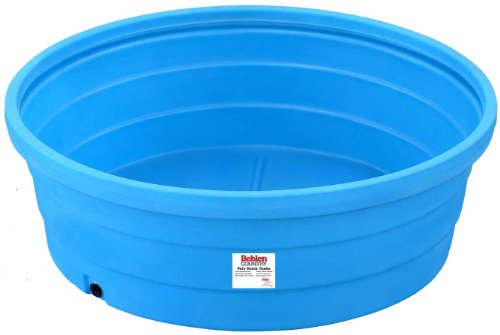
Behlen Country Poly Round Stock Tank
Rotomoulded polyethylene handles freeze and thaw cycles far better than galvanised steel, which splits at the seams over time. Large capacity means a herd can drink without the tank running dry between fills. A drain plug turns cleaning into a quick job rather than a chore, and the tank accepts a submersible de icer for winter.
Pros
- Survives freeze and thaw without splitting
- Drain plug makes regular cleaning realistic
- No sharp edges or rusting seams
Cons
- Open design collects debris and algae
- Awkward to move once positioned

Farm Innovators HPF-100 Heated Poultry Drinker
This drinker builds the heating element into the base of a conventional poultry fount, so water stays liquid through cold nights without a separate heated base to buy. A thermostat keeps power draw sensible. For a flock already used to a traditional fount rather than nipples, it is the simplest winter fix.
Pros
- No separate heated base to buy or store
- Familiar fount design needs no bird training
- Thermostat limits electricity use
Cons
- Open trough still collects bedding and droppings
- Needs power run safely into the coop

API Heated Flat-Back Bucket
API sizes and shapes this bucket for stall use, hanging flat against a wall where a horse can drink without knocking it loose. Its element is thermostatically controlled, and the cord is armoured against chewing, which matters in a stall. Capacity covers overnight use for a single horse in cold weather.
Pros
- Designed specifically for stall mounting
- Armoured cord suited to horses
- Keeps water drinkable through hard frost
Cons
- Capacity is limited for more than one horse
- Cord routing needs care to stay out of reach

Harris Farms Free Range Poultry Drinker
A large gravity fed fount holds enough for a mid sized flock across several days, and a wide base resists being knocked over. Filling it takes seconds, and the level is easy to check at a glance. Like all open founts it collects bedding, so hanging it slightly above back height helps considerably.
Pros
- Large capacity reduces refill frequency
- Wide base is hard for birds to tip
- Simple design with nothing to fail
Cons
- Open trough needs cleaning every few days
- Freezes solid without a heated base

Little Giant Stock Tank Float Valve
Fitting a float valve to a tank you already own turns it into an automatic waterer for a small outlay. The tank refills as stock drink, rather than running dry between visits. Installation needs a hose connection and a hole in the tank wall, and it is the cheapest meaningful upgrade to any existing trough setup.
Pros
- Cheapest way to automate an existing tank
- Keeps the level constant so tanks never run dry
- Adjustable to suit different tank depths
Cons
- Needs a permanent water supply run to the tank
- Supply line must be drained or heated in winter
Before you buy
What to weigh before buying a livestock waterer Freeze protection, contamination control and capacity decide most of the value here. Any container holds water in July. Winter is what separates a good design from a bad one, so plan around your coldest month rather than an average day.
Why winter separates good waterers from bad ones An unheated trough freezes solid overnight at minus ten, and stock go without. Heated buckets, submersible de icers and insulated tanks all solve this, but each needs a safe outdoor rated power supply. Plan the electricity before choosing the waterer, since that constraint often decides the answer.
How closed systems compare with open troughs Nipple and cup waterers keep droppings, bedding and algae out entirely, meaning less cleaning and better intake. Open troughs are simpler and suit larger stock that cannot use nipples, though they need scrubbing every few days in warm weather. For poultry especially, switching to a closed system is a real quality of life improvement.
How to size capacity for heat and cleaning access Animals drink far more in heat and while lactating, sometimes double their normal intake, so size the waterer for the hottest day rather than the average one. At the same time, a design you cannot easily scrub will not get scrubbed. Drain plugs, wide openings and smooth interiors all make routine cleaning realistic.
How they compare
| # | Model | Type | Best for | Score | Price |
|---|---|---|---|---|---|
| 1 | RentACoop Chicken Waterer with Horizontal Nipples | Sealed bucket with horizontal nipples | Best overall for poultry | 9.4 | Check price |
| 2 | Farm Innovators HB-60 Heated Flat Back Bucket | Around 5 gallons | Best for freezing weather | 9.2 | Check price |
| 3 | Behlen Country Poly Round Stock Tank | Rotomoulded polyethylene | Best for cattle and horses | 9.0 | Check price |
| 4 | Farm Innovators HPF-100 Heated Poultry Drinker | Heated poultry fount | Best heated poultry option | 8.7 | Check price |
| 5 | API Heated Flat-Back Bucket | Around 5 gallons | Best for horses | 8.5 | Check price |
| 6 | Harris Farms Free Range Poultry Drinker | Gravity fed fount | Best value for poultry | 8.3 | Check price |
| 7 | Little Giant Stock Tank Float Valve | Automatic float controlled refill | Best budget upgrade | 8.0 | Check price |
Good to know
How much water does livestock need per day?
It varies by species, size and weather. As a rough guide a laying hen drinks around a pint a day, a sheep or goat one to three gallons, and a cow can take twenty gallons or more in hot weather. Lactating animals and hot conditions can double these figures, so size for the peak.
Do heated waterers use a lot of electricity?
Thermostatically controlled units only draw power as the temperature nears freezing, so seasonal consumption runs far lower than the rated wattage suggests. Non thermostatic heaters run constantly and cost considerably more. Always use an outdoor rated circuit with ground fault protection for anything heated in a barn.
Are nipple waterers suitable for all poultry?
Most chickens, including hens and growers, take to them within a day or two, especially if you tap the nipple to release a drop first. Very young chicks and some ducks manage less well, since ducks need to dip their bills. Keep an open source available during the transition and watch that every bird is drinking.
How do I stop algae growing in a stock tank?
Site the tank in shade where possible, scrub it out regularly, and keep the water turning over rather than sitting still. Some producers add a few goldfish to graze algae in larger tanks. Avoid chemical treatments unless specifically labelled safe for livestock drinking water.
Can I use a de icer in a plastic stock tank?
Only if the de icer is specifically rated for plastic tanks, since some models get hot enough to melt or distort poly walls. Floating and sinking de icers each carry their own ratings on the packaging. Check the label rather than assuming, and inspect the cord for damage each season.
How often should waterers be cleaned?
Open founts and troughs need rinsing every few days and a proper scrub weekly in warm weather. Closed nipple systems can go considerably longer, though the bucket should still be emptied and cleaned monthly. Any slippery film on the inside means it is overdue.
What is the best way to keep water from freezing without electricity?
Options are limited but real: insulated tank covers, siting tanks in sun and out of wind, using large volumes that freeze more slowly, and breaking ice manually twice a day. Black tanks in sunlight gain useful heat. In genuinely hard climates, electricity is usually the only reliable answer.
Is an automatic float valve worth fitting?
For any tank topped up daily, yes. It keeps the level constant, prevents tanks running dry when you are delayed, and cuts the labour of hauling water. The main considerations are running a supply line to the tank and protecting that line from freezing in winter.
Nipple waterer or open fount, which is better for chickens?
Nipple waterers win on cleanliness, since bedding and droppings never touch the water. Open founts need no training and suit flocks unused to nipples, but they demand far more frequent cleaning to stay safe.
Our pick
The RentACoop nipple waterer is the strongest poultry choice because clean water needs no scrubbing and birds drink more of it. For winter, the Farm Innovators HB-60 heated bucket is the most practical small stock solution, and the Behlen Country Poly Stock Tank handles cattle and horses with a durability that galvanised tanks cannot match.
Olivia Hartley
Olivia spent several years working at an animal shelter and a pet-supply retailer before joining the editorial team. She researches pet gear with an emphasis on safety, comfort and the fine print that owners often miss.


