Lightweight Backpacking Stoves That Won’t Weigh You Down
The MSR PocketRocket Deluxe is our top pick for most backpackers because it delivers fast boil times in a tiny 2.9 ounce package, while its regulated pressure ensures steady performance in cold conditions. Its main limitation is that it requires a separate canister, adding a few ounces to your pack, but the efficiency and reliability make it worth the extra weight.
When you’re counting every ounce on the trail, the stove you carry can make or break your pack weight. A lightweight stove not only saves you energy but also gives you more room for food and gear. The best models balance minimal weight with fast boiling and dependable performance.
We compared the most sought-after backpacking stoves on the market, focusing on real-world specifications and user feedback. From ultralight canister stoves to integrated systems, we’ve identified the top contenders for different backpacking styles.
How to choose
The top picks, ranked

MSR PocketRocket Deluxe
The MSR PocketRocket Deluxe is a top-tier canister stove that packs impressive power into a tiny frame. It features a regulated valve for consistent output in cold conditions and a wide burner head for efficient boiling.
Pros
- Regulator maintains performance in cold
- Compact and lightweight
- Fast boil time
Cons
- No built-in windscreen
- Requires separate canister

Jetboil Flash Cooking System
The Jetboil Flash is an all-in-one system that boils water in record time. Its flux ring and insulated cup make it highly efficient, and the color-changing indicator lets you know when water is ready.
Pros
- Extremely fast boil
- Fuel efficient
- All-in-one design with cup
Cons
- Heavier than canister stoves
- Bulky for ultralight
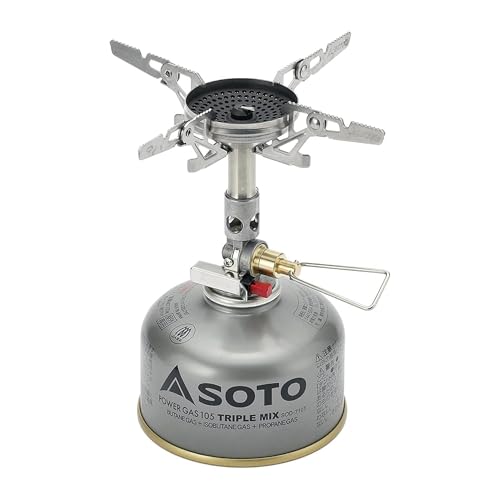
Soto WindMaster
The Soto WindMaster is designed to perform in breezy conditions, featuring a concave burner head that deflects wind. It also includes a micro regulator for consistent gas flow.
Pros
- Excellent windproof design
- Very lightweight
- Stable pot support
Cons
- No ignition included
- Canister not included

BRS-3000T Ultralight Stove
The BRS-3000T is a favorite among ultralight backpackers for its incredibly low weight and affordability. It’s a simple, no-frills stove that gets the job done without adding bulk.
Pros
- Extremely light and compact
- Very affordable
- Simple and reliable
Cons
- No ignition, requires lighter
- Less stable with large pots

Primus Classic Trail Stove
The Primus Classic Trail Stove is a reliable and affordable option that has been a staple for decades. It’s easy to use and works well for casual campers and backpackers.
Pros
- Built-in piezo ignition
- Durable construction
- Affordable price
Cons
- Heavier than ultralight stoves
- No regulator

Soto Amicus Stove
The Soto Amicus is a compact stove with a wide burner head and stable pot supports, making it ideal for small groups. It features a four-prong pot support that holds larger pots securely.
Pros
- Stable for larger pots
- High heat output
- Compact and lightweight
Cons
- No ignition included
- Canister not included

Fire-Maple FMS-116T
The Fire-Maple FMS-116T is a sleek stove with a built-in pressure regulator and a turbo-charged burner. It offers excellent performance in cold weather and a compact design.
Pros
- High BTU output
- Works well in cold
- Lightweight
Cons
- No ignition
- Pot supports can be flimsy
The lineup, side by side
| # | Model | Weight | Best for | Score | Price |
|---|---|---|---|---|---|
| 1 | MSR PocketRocket Deluxe | 2.9 oz (82 g) | Best overall for fast boils and cold weather | 9.4 | Check price |
| 2 | Jetboil Flash Cooking System | 13.1 oz (371 g) | Best integrated system for solo hikers | 9.2 | Check price |
| 3 | Soto WindMaster | 2.0 oz (57 g) | Best wind resistance | 9.0 | Check price |
| 4 | BRS-3000T Ultralight Stove | 0.9 oz (25 g) | Best ultralight budget option | 8.8 | Check price |
| 5 | Primus Classic Trail Stove | 3.9 oz (110 g) | Best value for beginners | 8.5 | Check price |
| 6 | Soto Amicus Stove | 2.4 oz (68 g) | Best for groups and stability | 8.7 | Check price |
| 7 | Fire-Maple FMS-116T | 2.1 oz (60 g) | Best for tech-savvy hikers | 8.4 | Check price |
Common questions
What is the lightest backpacking stove available?
The BRS-3000T is one of the lightest stoves available, weighing just 0.9 ounces. Other ultralight options include the Soto WindMaster at 2.0 ounces and the Fire-Maple FMS-116T at 2.1 ounces. These stoves are ideal for ultralight backpackers who prioritize weight savings.
How long does it take to boil water for backpacking?
Boil times vary by stove and conditions. Most canister stoves boil one liter of water in 3 to 4 minutes. Integrated systems like the Jetboil Flash can do it in about 2.5 minutes. Wind, temperature, and altitude will affect these times.
Are canister stoves safe to use in cold weather?
Canister stoves can be less efficient in cold weather because the fuel pressure drops. However, stoves with a regulator, like the MSR PocketRocket Deluxe or the Soto WindMaster, maintain consistent output. Using a fuel canister with a higher isobutane content also helps in cold conditions.
Can I use a backpacking stove with a large group?
For groups larger than two, you may want a stove with a wider burner and stable pot supports, such as the Soto Amicus or a liquid fuel stove. Alternatively, you can bring multiple stoves. Integrated systems like Jetboil are better for solo or pair use due to their small pot size.
What is the best fuel type for backpacking stoves?
Canister fuel (isobutane-propane blend) is the most popular for lightweight backpacking because it’s convenient and clean. Liquid fuel (white gas) is better for extreme cold, high altitude, and long expeditions where refueling is possible. Alcohol stoves are another ultralight option but are slower and less efficient.
Do I need a windscreen for my backpacking stove?
A windscreen can improve efficiency by protecting the flame, but it must be used with caution. With canister stoves, a windscreen that wraps too tightly can cause the canister to overheat. Some stoves, like the Soto WindMaster, have built-in wind resistance, reducing the need for a separate screen.
How do I maintain my backpacking stove?
Keep the burner clean and check for any blockages. Periodically inspect the O-rings and connections for leaks. Use a small brush to remove soot, and always store the stove in a dry place. Most stoves come with a small tool for cleaning the jet.
What is the average lifespan of a backpacking stove?
With proper care, a quality stove can last many years. The main wear parts are O-rings and the ignition system if present. Canister stoves are generally reliable and require minimal maintenance. Liquid fuel stoves may need more frequent cleaning but can last a lifetime.
Can I use a backpacking stove at high altitudes?
Yes, but performance may decrease due to lower oxygen and lower boiling point. Canister stoves with regulators work better at altitude. Liquid fuel stoves are often preferred for high-altitude expeditions because they can be pressurized and are less affected by temperature.
Are integrated systems like Jetboil worth the extra weight?
Integrated systems are heavier but offer faster boil times and better fuel efficiency, making them ideal for solo hikers who want quick meals. They also come with a pot and cup, simplifying packing. If weight is your top priority, a separate ultralight stove might be better.
Our take
For most backpackers, the MSR PocketRocket Deluxe is the best overall choice, combining light weight, fast boil, and cold-weather reliability. If you prioritize minimum weight and are on a budget, the BRS-3000T is a fantastic ultralight option. For those who want an integrated system with unmatched efficiency, the Jetboil Flash is worth the extra ounces. Ultimately, the right stove depends on your specific needs, but the PocketRocket Deluxe offers the best balance for the majority of hikers.
Derek Holt
Derek has a background coaching recreational and amateur athletes and has worked the sales floor at specialty fitness retailers. He focuses on equipment durability, ergonomics and realistic use cases rather than marketing claims.
You might also need

Lightweight Stoves That Make Car Camping Effortless

Lightweight Foldable Camping Mattresses for Comfortable Nights Outdoors

Lightweight Car Camping Lanterns That Pack Small and Shine Bright
