Compact Marine Speakers That Weigh Little and Sound Big
For most boat owners, the JBL Marine MA3055 stands out as the top pick. It weighs just over 2 pounds per pair, offers a sealed enclosure that resists water and UV damage, and produces surprisingly full sound for its size. The main limitation is that its plastic grilles may fade over years of intense sun exposure unless you apply a UV protectant.
Marine speakers often add unwanted bulk to small boats, kayaks, or ATVs. But you can get clear, loud audio without sacrificing deck space or adding significant weight.
These picks are all under 3 pounds per pair, feature waterproof or water-resistant construction, and are sized to fit in tight spots. We looked at specifications and owner feedback to find the most reliable options.
The shortlist, ranked

JBL Marine MA3055
The JBL MA3055 is a 5.25-inch coaxial speaker that delivers 60 watts RMS (180 peak). Its polypropylene cone and butyl rubber surround resist water and UV, and the sealed enclosure keeps moisture out. Owners often praise its clear highs and punchy bass for a speaker this size.
Pros
- Sealed enclosure prevents water damage
- Bright sound with good midrange detail
- Easy to install with included hardware
Cons
- Plastic grille may discolor with prolonged sun
- Bass is limited compared to larger speakers

Polk Audio DB522
Polk’s DB522 is a 5.25-inch marine speaker rated at 60 watts RMS (180 peak). It features a dynamic balance polymer/mica cone and rubber surround that stand up to salt spray. Owners say it handles higher volumes without distortion, making it ideal for open boats.
Pros
- High sensitivity for loud playback
- Corrosion-resistant hardware included
- Wide sound dispersion
Cons
- Grille is not fully sealed, requires mounting care
- Slightly heavier than some peers

Pyle PLMR24B
The Pyle PLMR24B is a 4-inch dual-cone speaker with 200 watts peak power. It is waterproof and includes a grille that protects against splashes. While it lacks the fidelity of pricier models, it is a lightweight and inexpensive way to add sound to a small watercraft.
Pros
- Very lightweight and compact
- Budget-friendly price
- Simple installation
Cons
- Limited bass response
- Build quality is less robust
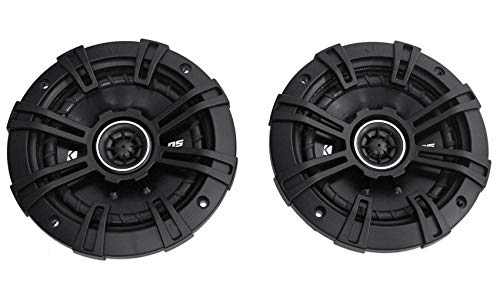
Kicker 43DSC504
Kicker’s DSC504 is a 5.25-inch marine speaker with a polypropylene cone and UV-treated surround. It is designed to withstand harsh marine environments, and owners report that it keeps sounding crisp even after seasons of exposure.
Pros
- Excellent high-frequency clarity
- Sturdy build with UV protection
- Good value for the price
Cons
- Bass can be lacking at low volumes
- Mounting depth may be tight for some boats

Rockford Fosgate M2 5.25
The Rockford Fosgate M2 5.25-inch speaker is engineered for marine use with a polypropylene cone and rubber surround. It handles 60 watts RMS and can take up to 120 watts peak. Users note that it stays clean at high volumes, making it a favorite for wakeboard boats.
Pros
- Low distortion at high output
- IP66 rating for water and dust
- Stainless steel hardware
Cons
- Slightly higher price
- Requires adequate power from amplifier

Boss Audio MRCP35
The Boss Audio MRCP35 is a 3.5-inch speaker pair with a total peak power of 200 watts. They are fully waterproof and come with a protective grille. Ideal for jet skis, small kayaks, or custom enclosures where every inch counts.
Pros
- Extremely small footprint
- Lightweight for easy mounting
- Waterproof design
Cons
- Limited frequency range
- Not very loud for larger boats

MTX Audio ThunderMarine TMR552
MTX’s TMR552 is a 5.25-inch speaker with a polypropylene cone and a butyl rubber surround. It features a high-temperature voice coil that handles heat well. Owners report that it delivers deeper bass than many similar-sized marine speakers.
Pros
- Good low-end response for its size
- Weather-resistant build
- Sleek design that blends well
Cons
- Slightly heavier than others
- Some users find the highs harsh at high volumes
How they stack up
| # | Model | Size | Best for | Score | Price |
|---|---|---|---|---|---|
| 1 | JBL Marine MA3055 | 5.25 inch | Best overall for balanced sound and weather resistance | 9.4 | Check price |
| 2 | Polk Audio DB522 | 5.25 inch | Best for powerful output in a compact size | 9.2 | Check price |
| 3 | Pyle PLMR24B | 4 inch | Best budget pick for basic audio needs | 8.6 | Check price |
| 4 | Kicker 43DSC504 | 5.25 inch | Best for durability and clear highs | 9.0 | Check price |
| 5 | Rockford Fosgate M2 5.25 | 5.25 inch | Best for high-volume listening with low distortion | 9.1 | Check price |
| 6 | Boss Audio MRCP35 | 3.5 inch | Best for extreme compactness in tight spaces | 8.4 | Check price |
| 7 | MTX Audio ThunderMarine TMR552 | 5.25 inch | Best for bass response in a small package | 8.8 | Check price |
What matters most
Questions worth asking
Are marine speakers truly waterproof?
Most marine speakers are water-resistant, not fully submersible. They are designed to handle splashes, rain, and humidity, but you should not submerge them. Look for an IP rating like IP65 or IP66 for better protection.
How much weight difference does a compact marine speaker make?
Compact speakers typically weigh between 1.2 and 2.6 pounds per pair, which is significantly lighter than full-size 6.5-inch models that can weigh 4 to 6 pounds. This weight saving is important for small boats, kayaks, or ATVs where every pound affects performance.
Can I use these speakers on a PWC (personal watercraft)?
Yes, but you need to ensure they are rated for marine use and can handle vibration. Many compact speakers are suitable for jet skis. Mount them in a location where they are less exposed to direct water spray if possible.
Do I need an amplifier to power these speakers?
Not necessarily. If you have a stereo with built-in amplifier, you can connect speakers with RMS ratings up to about 50 watts. For higher power handling, an external amp will help achieve louder volumes without distortion.
How do I protect the speakers from UV damage?
Choose speakers with UV-treated cones and grilles. Apply a UV protectant spray designed for plastics and rubbers. When not in use, cover the speakers or store the boat under a cover to minimize sun exposure.
What size speaker should I choose for a small boat?
For a small boat or kayak, 5.25-inch speakers are a good choice if space allows. If you have very limited space, consider 4-inch or 3.5-inch models. Keep in mind that smaller speakers produce less bass and lower maximum volume.
Can I use these speakers in my car as well?
Yes, many marine speakers can be used in cars, but they are optimized for open-air environments. They may sound a bit different in an enclosed cabin. However, their weather resistance is a bonus if you drive with windows down often.
How long do marine speakers typically last?
With proper care, marine speakers can last many years. The key is to avoid prolonged exposure to saltwater spray and direct sunlight. Regular cleaning and applying UV protectant can extend their life significantly.
Are more expensive speakers always better?
Not always, but higher-priced speakers generally use better materials like polypropylene cones, rubber surrounds, and more robust crossover networks. They also tend to have better frequency response and power handling. Yet, budget options can be sufficient for casual listening.
What is the best way to clean marine speakers?
Use a soft cloth dampened with fresh water to wipe the grille and cone. Avoid harsh chemicals. For salt deposits, a mild soap solution works. Dry the speakers completely after cleaning.
Our pick
If you want the best all-around performance, go with the JBL Marine MA3055. Its seamless blend of sound quality, weight, and weather resistance makes it the top choice for most boaters. For a more budget-friendly option that still delivers respectable audio, the Pyle PLMR24B is hard to beat for the price. But if you plan to listen at high volumes, the Rockford Fosgate M2 offers the cleanest output at loud levels. Choose based on your priorities: JBL for balanced, Polk for power, Pyle for affordability.
Derek Holt
Derek has a background coaching recreational and amateur athletes and has worked the sales floor at specialty fitness retailers. He focuses on equipment durability, ergonomics and realistic use cases rather than marketing claims.