Laser Measure or Tape: Which Gives More Accurate Reads
Bosch’s GLM 50 C is the best all-around laser measure, pairing tight accuracy with Bluetooth reporting. DeWalt’s DW099S suits jobsite abuse with a reinforced housing. Tacklife’s model delivers the strongest value, adding area, volume, and Pythagorean modes at a budget-friendly price.
Most buyers do best with the Bosch GLM 50 C, which pairs tight accuracy with Bluetooth reporting for fewer transcription errors. The DeWalt DW099S trades a little range for a housing built to survive jobsite drops. Tacklife’s model wins on value, packing area, volume, and Pythagorean modes into a budget price.
Two laser measures with the same headline range can behave very differently once accuracy tolerance, display type, and measuring modes enter the picture, and a tool built for a contractor’s 300 ft shots is overkill for hanging a shelf. We compared published accuracy ratings, maximum range, connectivity, and measuring modes, then weighed what owners report about everyday reliability to rank each tool by fit for its intended user.
The shortlist, ranked

Bosch GLM 50 C
Bluetooth sends every reading straight to the Bosch app, cutting the copying errors that creep into handwritten notes. A tilt sensor adds indirect measuring for heights you cannot reach directly. Owners rate the color display among the easiest to read in this class.
Pros
- Sends readings straight to a phone app
- Tilt sensor enables indirect measuring
- Color display reads clearly indoors
Cons
- Priced above basic point-and-shoot models
- App pairing takes a few extra steps

DeWalt DW099S
A reinforced housing survives drops onto concrete that would crack lighter tools. Bluetooth logs each reading for site reports, and area, volume, and indirect modes cover most trade tasks. Contractors cite the rugged feel as the reason it stays in the truck.
Pros
- Reinforced housing built for jobsite drops
- Bluetooth logging for site records
- Area, volume, and indirect measuring modes
Cons
- Range trails longer-reach rivals
- Bulkier than pocket-sized models
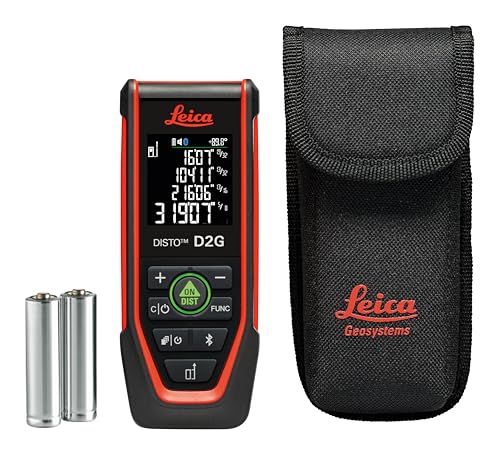
Leica DISTO D2
Long indoor range comes packed into a body small enough for a shirt pocket. Bluetooth pairs with the Leica app for quick data transfer, and the display stays legible in daylight. Precision-focused buyers gravitate here first, according to product specifications.
Pros
- Long indoor range in a pocket-sized body
- Reliable Bluetooth app transfer
- Bright, legible display
Cons
- Costs more than mid-range competitors
- Fewer built-in calculation modes

Bosch Blaze GLM20
Point-to-point speed is the whole appeal here, not extra modes. Its backlit display and single-button operation suit shelves, furniture, and quick room checks. Owners describe it as the tool they actually remember to grab.
Pros
- Fast single-button distance readings
- Ultra-compact, pocket-ready size
- Backlit display for dim rooms
Cons
- Shorter range than pro-grade tools
- Lacks Bluetooth and advanced modes

Tacklife Laser Measure
Area, volume, and Pythagorean modes come standard well below premium pricing. A 130 ft range covers most home layouts, and the backlit LCD stays readable indoors. Specifications put it ahead of similarly priced rivals on features per dollar.
Pros
- Area, volume, and Pythagorean modes included
- 130 ft range for the price bracket
- Backlit LCD readable indoors
Cons
- No Bluetooth data transfer
- Housing feels less rugged than pro tools
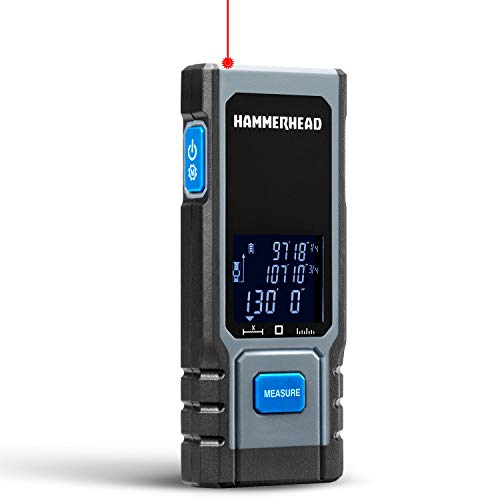
Hammerhead Compact Laser
Occasional DIY jobs are the target here, not daily trade work. Distance, area, and volume readings cover basic home tasks without a learning curve. Its small size means it fits in a kitchen drawer between uses.
Pros
- Low price for a three-mode tool
- Covers common DIY measuring tasks
- Compact enough to store in a drawer
Cons
- 50 ft range limits larger spaces
- Accuracy tolerance wider than pricier models
Suaoki Laser Measure
First-time buyers get a simple button layout and no setup fuss. Distance, area, and volume modes handle rooms and small projects out of the box. Owners new to laser tools describe the learning curve as close to nonexistent.
Pros
- Beginner-friendly single-button controls
- 130 ft range covers most rooms
- Handles distance, area, and volume readings
Cons
- No app or Bluetooth support
- Build quality trails premium brands
Side by side
| # | Model | Max range | Best for | Score | Price |
|---|---|---|---|---|---|
| 1 | Bosch GLM 50 C | About 165 ft | Best overall | 9.4 | Check price |
| 2 | DeWalt DW099S | About 100 ft | Best for jobsites | 9.2 | Check price |
| 3 | Leica DISTO D2 | About 330 ft | Best for accuracy | 9.0 | Check price |
| 4 | Bosch Blaze GLM20 | About 65 ft | Best compact everyday tool | 8.7 | Check price |
| 5 | Tacklife Laser Measure | About 130 ft | Best value | 8.5 | Check price |
| 6 | Hammerhead Compact Laser | About 50 ft | Best budget pick | 8.3 | Check price |
| 7 | Suaoki Laser Measure | About 130 ft | Best simple starter tool | 8.0 | Check price |
What to look for
What accuracy tolerance actually means Manufacturers list accuracy as a tolerance, such as plus or minus 1.5 mm, meaning a reading can drift that much from the true distance. Cabinetry, tiling, and finish carpentry need the tighter end of that range. Plus or minus 3 mm is fine for rough layouts, furniture placement, or hanging pictures. Match the tolerance to how forgiving your project actually is before paying for extra precision.
How much range do you really need Maximum range describes the longest distance a tool reads reliably, and indoor performance usually beats outdoor readings in bright light. A 50 to 65 ft model covers most bedrooms, living rooms, and small workshops. Contractors measuring large interiors or building exteriors benefit from 130 ft or more. Buying far more range than your projects require adds cost without a practical payoff.
Which measuring modes are worth paying for Area and volume modes multiply readings automatically, which saves manual math on flooring and paint estimates. Pythagorean or indirect modes use two readings, or a tilt sensor, to find heights you cannot reach directly. Continuous mode helps locate a target distance by moving the tool until the number matches. Skip modes you will not use rather than paying extra for a longer feature list.
Best laser measure features for tight budgets or job sites Budget models like the Suaoki or Hammerhead skip Bluetooth and stick to distance, area, and volume, which suits occasional home projects. Jobsite tools such as the DeWalt DW099S add a reinforced housing that tolerates drops onto concrete. Bluetooth connectivity matters most for contractors logging many readings per day into an app. Pick the feature set that matches how often, and how roughly, the tool will actually get used.
Good to know
How accurate are laser measures?
Most consumer models are accurate to roughly plus or minus 1.5 to 3 mm, depending on the tool. Higher-end laser measures hit the tighter end of that range, which matters for finish work, while budget tools suit general home layout tasks.
Are laser measures better than tape measures?
For most indoor distances, a laser measure works faster and needs only one person, avoiding the sag that long tape spans introduce. Tape measures still win for curves, very short readings, and surfaces that will not bounce a laser dot back.
What range do I need for home projects?
A range of about 50 to 65 ft covers typical rooms and DIY tasks. Anyone measuring large open spaces, exteriors, or commercial jobs should look for 130 ft or more.
Do laser measures work outdoors?
Yes, but bright sunlight shortens the usable range because the laser dot becomes harder to see. Shade, dusk, or a target plate improve outdoor performance on longer shots.
What is Bluetooth for on a laser measure?
Bluetooth sends each reading to a phone or tablet app, cutting copying errors and letting you build floor plans on the spot. It matters most for contractors taking many measurements per job.
What do area and volume modes calculate?
Area mode multiplies two readings for square footage, useful for flooring and paint. Volume mode adds a third reading for cubic space, which speeds up estimating jobs.
Can a laser measure find a height I cannot reach?
Yes. Models with a Pythagorean or indirect mode combine two or more readings, or use a tilt sensor, to estimate heights and distances without a direct line of sight. This helps with ceilings, windows, and rooflines.
How long do laser measure batteries last?
Battery life depends on the model, but many tools run for thousands of readings on AAA batteries or a rechargeable pack. Auto-shutoff and a dimmer display setting extend that further.
Is a laser measure hard to learn?
No. A single button fires a basic distance reading on most models. Area, volume, and indirect modes take a little practice, but everyday point-to-point measuring is beginner friendly.
Best laser measure for beginners versus contractors?
Beginners do well with a simple model like the Suaoki, which covers distance, area, and volume without extra setup. Contractors get more value from Bluetooth logging and a rugged housing, like the DeWalt DW099S offers.
Final word
Bosch’s GLM 50 C remains the best all-around laser measure, combining tight accuracy with Bluetooth reporting and a display that stays readable indoors. Buyers working job sites gain more from the DeWalt DW099S and its reinforced housing. Tacklife’s model is the value pick, bundling area, volume, and Pythagorean modes at a budget price.
Jake Monroe
Jake worked as a residential contractor for over a decade before shifting to full-time writing. He evaluates power tools, hand tools and workshop gear through the lens of someone who has actually used them on job sites, not just read the box.

