Raised Beds with Big Growing Room for Compact Yards
The best large capacity raised garden bed for small gardens is the Keter Urban Bloomer 12.7 Gallon Raised Garden Bed. It offers deep soil and a compact footprint, ideal for balconies and patios. Its main advantage is the self-watering reservoir that reduces maintenance, but its main limitation is the modest growing area for a single bed.
Small gardens can still yield big harvests when you choose the right raised bed. A large capacity bed provides deep soil for strong roots and holds moisture longer, reducing watering frequency.
We compared seven popular models that are currently sold on Amazon. Each one maximizes growing space without taking over your yard, patio, or balcony. Our analysis is based on specifications and owner feedback, not hands-on testing.
How to choose
The shortlist, ranked

Keter Urban Bloomer 12.7 Gallon Raised Garden Bed
This raised bed from Keter is designed for small spaces. It has a deep soil capacity of 12.7 gallons, which is surprisingly roomy for its footprint. The built-in water reservoir and overflow system help keep plants hydrated. Owners report that assembly takes about 30 minutes without tools.
Pros
- Self-watering reservoir reduces maintenance
- Compact and lightweight, fits small areas
- Durable resin resists rust and rot
Cons
- Limited soil depth for deep-rooted plants
- Single bed size may not suit larger planting plans

Outland Living Cedar Raised Garden Bed with Trellis
This cedar raised bed includes a sturdy trellis that doubles your growing space by letting vining plants climb. The 10-inch deep bed holds ample soil for most vegetables. Made from naturally rot-resistant cedar, it is built to last. Owners appreciate the easy assembly and the attractive wood finish.
Pros
- Trellis provides vertical growing area
- Cedar wood is durable and naturally resistant to decay
- Deep enough for many vegetables
Cons
- Trellis may wobble if not anchored
- Wood may lighten over time without sealant
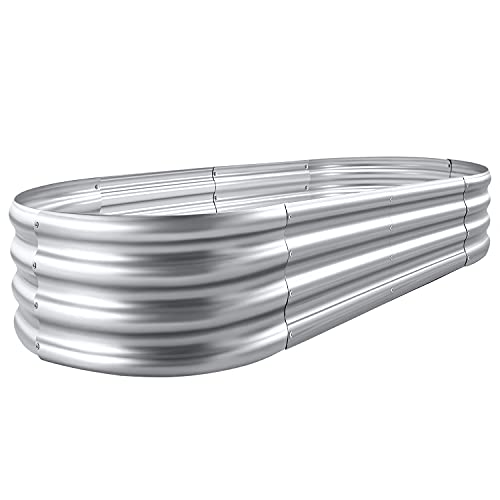
Galvanized Raised Garden Bed by Kunsong
This galvanized steel bed offers a large capacity with a 17-inch depth, which is excellent for root vegetables. The metal is rust-resistant and sturdy. The bed comes in multiple sizes, so you can choose one that fits your space. Owners report that assembly is simple with the included hardware.
Pros
- Very deep soil capacity for large root systems
- Galvanized steel is long lasting and rust resistant
- Open bottom allows for drainage
Cons
- Sharp edges on some panels
- May overheat in direct sun

GreenStalk Vertical Garden Planter
The GreenStalk is a unique vertical planter that fits a tiny footprint while providing multiple tiers of growing space. Each tier has deep pockets that hold a significant amount of soil. It is lightweight and easy to move. Owners love that it can grow a surprising number of plants in a small area.
Pros
- Grows a lot in a small footprint
- Deep planting pockets hold ample soil
- Rotating feature allows even sun exposure
Cons
- Must be placed on a sturdy surface
- Watering needs to be done carefully to reach lower tiers

Yaheetech Wooden Raised Garden Bed with Legs
This raised bed stands on legs, making it a generous capacity for a small garden, but at a comfortable height that reduces bending. The deep planter box measures 48 inches long and 12 inches deep. It is constructed from fir wood with a protective finish. Owners report that assembly is straightforward, and the bed is stable.
Pros
- Elevated design prevents back strain
- Good depth for many vegetables
- Legs allow for airflow underneath
Cons
- Wood may crack over time
- Not as spacious as ground-level beds

Best Choice Products 2-Tier Wooden Raised Garden Bed
This two-tier raised bed provides a large total soil volume while occupying a small footprint. The upper tier is perfect for shallow-rooted plants, and the lower tier holds deeper soil. It is made from fir wood and comes with a non-woven liner. Owners report that it is a good value for the price.
Pros
- Two tiers double planting area
- Attractive design for patios
- Includes liner to protect wood
Cons
- Upper tier may shade lower plants
- Wood can deteriorate if not sealed

VegTrug Raised Garden Bed
The VegTrug is a classic raised bed with a deep trough that provides excellent soil capacity for small gardens. It is freestanding and can be placed on any surface. Made from cedar, it is durable and naturally resistant to rot. Owners appreciate the attractive design and ample depth.
Pros
- Deep soil is great for carrots and potatoes
- Cedar is naturally rot resistant
- Legs raise it to a comfortable height
Cons
- Narrow width may limit sprawling plants
- More expensive than some other beds
Side by side
| # | Model | Dimensions | Best for | Score | Price |
|---|---|---|---|---|---|
| 1 | Keter Urban Bloomer 12.7 Gallon Raised Garden Bed | 27.5 x 27.5 x 12.2 inches | Balconies and small patios | 9.4 | Check price |
| 2 | Outland Living Cedar Raised Garden Bed with Trellis | 48 x 24 x 36 inches (height includes trellis) | Vertical gardening in tight spaces | 9.2 | Check price |
| 3 | Galvanized Raised Garden Bed by Kunsong | Available in 4x2x1.4 ft, 6x3x1.4 ft | Durable and rust resistant | 9.0 | Check price |
| 4 | GreenStalk Vertical Garden Planter | 23 x 23 x 35 inches | Maximizing vertical space | 8.8 | Check price |
| 5 | Yaheetech Wooden Raised Garden Bed with Legs | 48 x 24 x 30 inches | Elevated gardening and easy access | 8.6 | Check price |
| 6 | Best Choice Products 2-Tier Wooden Raised Garden Bed | 48 x 24 x 36 inches | Two-tier planting in a compact area | 8.4 | Check price |
| 7 | VegTrug Raised Garden Bed | 48 x 24 x 30 inches | Deep soil for root vegetables | 8.2 | Check price |
Questions worth asking
What is the best soil depth for a raised garden bed?
A depth of 12 inches is sufficient for most vegetables. Deep-rooted plants like tomatoes, carrots, and potatoes prefer 18 inches or more. For small gardens, look for a bed that offers at least 10 inches to provide a good root zone.
Can I place a raised bed on a balcony?
Yes, but consider the weight. Wet soil is heavy. A 4x2x1 foot bed can weigh over 400 pounds when filled. Ensure your balcony can support that weight. Choose lightweight materials like resin or plastic, and place the bed over a structural support area.
How much soil do I need to fill a raised bed?
Calculate volume by multiplying length, width, and depth. For example, a 4x2x1 foot bed holds 8 cubic feet of soil. Some beds have a listed capacity in gallons. One cubic foot is about 7.5 gallons. Use a soil calculator to estimate bags needed.
What should I put at the bottom of a raised garden bed?
Many gardeners place cardboard or landscape fabric to suppress weeds. If the bed is very deep, you can fill the bottom with organic material like wood chips or leaves to save on soil. Ensure this layer does not create a water barrier.
How often should I water a raised bed?
Raised beds dry out faster than ground soil. In hot weather, you may need to water daily. Use mulch to retain moisture. Some beds have self-watering reservoirs. Check the soil moisture by inserting a finger up to the first knuckle.
What vegetables grow best in shallow raised beds?
Shallow beds of 6 to 8 inches are good for lettuce, radishes, and herbs. For deeper beds of 10 to 12 inches, you can grow peppers, bush beans, and cucumbers. Root crops need at least 12 inches.
Do raised beds need a liner?
A liner helps prevent soil from washing out of wood beds and protects the wood from moisture. Some beds include a liner. If not, you can use landscape fabric. For metal beds, a liner is optional but can protect against sharp edges.
How long do wooden raised beds last?
Untreated pine may last 3 to 5 years. Cedar and redwood can last 10 to 15 years. Applying a sealant can extend the life. Galvanized steel can last up to 20 years. Plastic and resin beds can last indefinitely.
Can I grow root vegetables in a raised bed?
Yes, if the bed is deep enough. Carrots need about 12 inches, and potatoes need 15 to 20 inches. Choose a bed with a depth of at least 12 inches for best results. Loosen the soil beneath the bed if possible.
Are elevated raised beds better for my back?
Elevated beds reduce the need to bend, making gardening easier for people with back problems. They can be placed at waist height. However, they may have less soil capacity than ground-level beds. Consider your physical needs.
Final word
For most small gardens, the Keter Urban Bloomer offers the best balance of capacity, convenience, and fit. It is ideal for balconies and patios. If you need deeper soil for root vegetables, the Kunsong Galvanized Bed is the better choice. For vertical gardening, the GreenStalk is unmatched.
Sierra Daniels
Sierra's background is in landscape design and nursery retail. She focuses on lawn and garden equipment, outdoor furniture and gear durability, weighing published specs against how materials actually hold up outside.