6 Laminators That Won’t Bubble Your Documents
Scotch Thermal Laminator TL901X wins overall for reliable everyday laminating. Fellowes Saturn 3i 125 handles busy office volume best of the group. Amazon Basics 9-Inch Thermal Laminator covers occasional home projects for very little outlay each month.
Scotch Thermal Laminator TL901X suits most homes and small offices, warming quickly and handling common pouch thicknesses without jamming often. Fellowes Saturn 3i 125 fits offices running long batches, while Amazon Basics 9-Inch model covers occasional projects at minimal cost.
Laminator listings all promise fast, bubble free results, yet real differences show up in warm up time, supported pouch thickness and whether the jam release actually works. We compared published specifications and feed widths, then weighed owner reports about roller wear and clouding to rank these seven by how they hold up in regular use.
The shortlist, ranked

Scotch Thermal Laminator TL901X
This two roller machine takes documents up to about nine inches wide and warms up within a few minutes. A simple selector handles the common three and five mil pouch thicknesses. A release lever clears misfeeds without disassembly, which is why most home offices settle on this model.
Pros
- Consistent bubble free output
- Simple thickness selector
- Effective jam release lever
Cons
- Only takes letter width documents
- Slower than four roller office machines

Fellowes Saturn 3i 125 Laminator
Warm up takes about a minute, and the feed accepts documents up to roughly twelve inches wide, suiting offices laminating batches of signage and reference sheets. Automatic sensing adjusts to pouch thickness, removing one setup step. Owners report it keeps pace with continuous feeding better than home machines.
Pros
- Very quick warm up
- Auto adjusts to pouch thickness
- Handles continuous batches well
Cons
- Larger desk footprint
- Costs more than home models
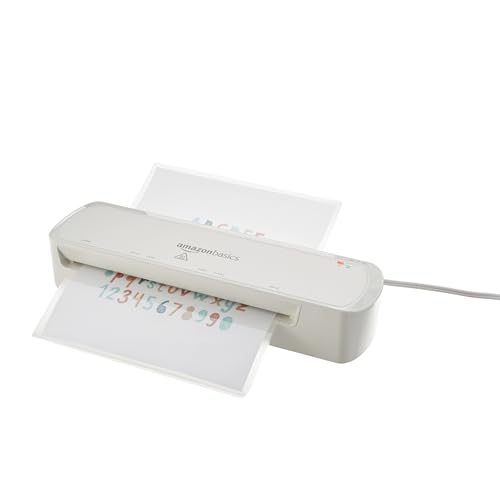
Amazon Basics 9-Inch Thermal Laminator
This basic two roller laminator suits letter sized documents for people laminating a handful of items a month. Warm up takes longer than premium machines, and thinner pouches work best. Crafts, recipe cards and school work come out clean at minimal cost.
Pros
- Very affordable entry point
- Compact and light
- Simple two button operation
Cons
- Slow warm up
- Struggles with thick pouches

Scotch Pro Thermal Laminator TL1302X
A wider version of the Scotch design accepts documents up to about thirteen inches, covering menus, posters and tabloid sheets. Thicker pouches work here than on the standard model, and warm up runs faster. Letter width limitations make this the natural upgrade.
Pros
- Handles wide and tabloid documents
- Supports thicker pouches
- Faster than the standard Scotch model
Cons
- Takes noticeably more desk space
- Overkill for letter sized work

Swingline GBC Fusion 1100L Laminator
This compact office laminator combines a fast heat up cycle with a jam release, sized for letter width work. It sits between home and heavy office machines on both speed and price. Owners report it running batches without the roller cooling issues cheaper units show.
Pros
- Quick to reach operating temperature
- Handles repeated sheets consistently
- Compact for an office unit
Cons
- Letter width only
- Fewer thickness options than premium units

Apache AL13P 13-Inch Laminator
Pouches heavier than most home units pass through here, which matters for badges, luggage tags and durable signage. A thirteen inch feed also handles wide sheets. Manual settings mean choosing temperature yourself to match pouch thickness instead of relying on auto sensing.
Pros
- Handles thick, rigid pouches
- Wide feed opening
- Manual control suits unusual materials
Cons
- Manual settings need some trial
- Bulky for a home desk

Blusmart Laminator Machine
This inexpensive letter width laminator usually ships with a starter pack of pouches, making it an easy first machine for a classroom or craft room. Thin pouches run smoothly, and thicker ones take more time. Light, intermittent use suits it better than long batches.
Pros
- Bundled pouches get you started
- Low purchase cost
- Light enough to move between rooms
Cons
- Needs cooling breaks during long batches
- Build quality below office machines
Compared at a glance
| # | Model | Max width | Best for | Score | Price |
|---|---|---|---|---|---|
| 1 | Scotch Thermal Laminator TL901X | About 9 inches | Best overall | 9.4 | Check price |
| 2 | Fellowes Saturn 3i 125 Laminator | About 12.5 inches | Best for busy offices | 9.2 | Check price |
| 3 | Amazon Basics 9-Inch Thermal Laminator | 9 inches | Best budget | 9.0 | Check price |
| 4 | Scotch Pro Thermal Laminator TL1302X | About 13 inches | Best for wide formats | 8.8 | Check price |
| 5 | Swingline GBC Fusion 1100L Laminator | About 9 inches | Best value office machine | 8.6 | Check price |
| 6 | Apache AL13P 13-Inch Laminator | 13 inches | Best for thick pouches | 8.3 | Check price |
| 7 | Blusmart Laminator Machine | About 9 inches | Best for classrooms and crafts | 8.0 | Check price |
How to pick the right one
What feed width covers your largest document? A nine inch machine covers letter and A4 sheets, enough for most home use. Menus, posters and tabloid sheets need a thirteen inch feed instead. Owners most often regret buying narrow and later discovering they cannot laminate the item that prompted the purchase.
How does pouch thickness change which machine you need? Three mil pouches suit flexible items like recipe cards, five mil works as the general purpose choice, and heavier gauges produce rigid badges and signage. Not every laminator handles the thick options. Forcing a heavy pouch through a light machine is a reliable way to cause a jam.
Why warm up time matters more than laminating speed Most machines pass a sheet through in seconds, but warm up ranges from about a minute on office models to several minutes on budget ones. Laminating one or two items at a time makes that wait the bulk of the job. A fast heating machine genuinely saves time in that scenario.
Does the laminator have a working jam release? Misfeeds happen, usually when a pouch enters crooked or a sealed edge goes in last. A release lever reverses or frees the rollers within seconds. Without one, clearing a jam means waiting for the machine to cool and prying at it, which is how rollers get damaged.
Good to know
What pouch thickness should I use for laminating?
Three mil suits flexible items you want to stay bendable, five mil works as the general purpose choice for signs and reference sheets, and heavier gauges give a rigid card feel for badges and tags. Confirm your machine supports the thickness before buying pouches in bulk.
Why does my laminated sheet come out cloudy?
Cloudiness usually means the pouch passed through before the machine reached full temperature, or the setting was too low for the pouch thickness. Waiting for the ready indicator and selecting the correct thickness resolves it in most cases.
Can I run a laminating pouch through twice?
Yes, and it is the standard fix for a cloudy or incompletely sealed result. Let the sheet cool first, then feed it through again sealed edge first. Running the same pouch repeatedly can distort it, so two passes is a sensible limit.
Which edge of the laminating pouch goes in first?
The sealed folded edge always enters first. Feeding the open edge first is the most common cause of jams, because the film layers separate and wrap around the rollers instead of passing through together.
Do laminators need a carrier sheet?
Many machines include one, and it protects the rollers from adhesive squeeze out on thicker pouches. Modern laminators often skip the requirement for standard pouches, but using one costs nothing and extends roller life.
Can I laminate photos safely?
Yes, though thermal lamination is permanent and heat can affect some inkjet prints and older photographs. For irreplaceable images, laminate a copy rather than the original, or choose a cold laminating pouch that seals with adhesive instead of heat.
How do I clear a laminator jam safely?
Use the release lever if the machine has one, which frees the rollers immediately. Otherwise switch off, let the unit cool fully, then withdraw the pouch gently. Pulling hard on a hot machine is how roller surfaces get scored.
How long does a laminator typically last?
With light home use, many owners report years of service from mid range machines. Roller wear and heater consistency are the limiting factors, both of which suffer under continuous batch work on units built for occasional use. Match the machine to your volume and it will last.
Is a laminator worth buying for occasional home use?
Yes, if you laminate recipe cards, kids’ artwork or reference sheets a few times a month. Budget models like the Amazon Basics 9-Inch cover that volume cheaply. Frequent batch laminating justifies a faster warming office model instead.
The bottom line
Scotch Thermal Laminator TL901X remains the sensible default for home and small office laminating, pairing quick setup with output that rarely needs a second pass. Choose Fellowes Saturn 3i 125 for batch laminating with warm up ready in about a minute, or Amazon Basics 9-Inch model if a few projects a month cover your needs.
Marcus Chen
Marcus covered consumer electronics for enthusiast tech publications for six years before joining ChoiceCrest. He specializes in translating manufacturer spec sheets into plain-language buying advice, with a focus on audio, computing accessories and smart-home gear.
You might also need
Nintendo Game & Watch: Super Mario Bros Review: Still Worth It as a Collectible?

Ray-Ban Meta (Gen 2) Wayfarer Smart Glasses: Worth $379 for Clear Lenses?
AlyKets Nikon UC-E6 Replacement USB Cable: Does a $7.95 Cord Work as Well as the Original?
