Kitchen Shears vs a Chef’s Knife: Which Cuts Better?
OXO Good Grips Kitchen and Herb Scissors take the top spot for a comfortable grip and blades that separate for washing. Shun Classic Kitchen Shears handle poultry bone best, and the KitchenAid All Purpose pair is the reliable everyday value choice.
OXO Good Grips Kitchen and Herb Scissors handle almost everything a home kitchen needs, from string to herbs. Shun Classic Kitchen Shears step up for genuine bone cutting, and the KitchenAid All Purpose pair delivers reliable everyday value.
A listing rarely reveals whether a pivot flexes under a joint or whether handles dig into a palm after ten minutes of use. We compared published blade steel, edge geometry and construction against consistent owner reports on durability and cleaning, weighting bone-cutting capability and hygiene above bundled extras.
The best picks, ranked

OXO Good Grips Kitchen and Herb Scissors
Separating fully at the pivot solves the biggest hygiene problem with kitchen shears, since that hinge is exactly where raw chicken residue collects. Cushioned handles spread pressure across the palm instead of one finger, and micro serrations on one blade grip slippery skin. Owners report them handling everything short of heavy bone.
Pros
- Blades separate completely for genuine hygienic cleaning
- Cushioned grip stays comfortable under sustained force
- Micro serrations hold slippery poultry skin in place
Cons
- Not built for cutting through heavy bone
- Built in herb stripper sees rare use
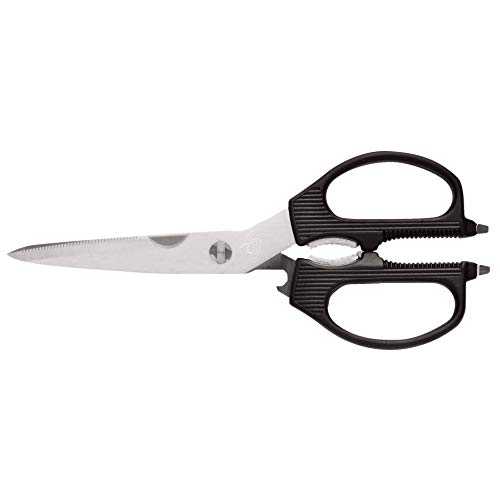
Shun Classic Kitchen Shears
Japanese stainless steel gives these a heavier blade profile, and a notch near the pivot grips poultry joints and small bones rather than letting them slide free. Offset handles supply the leverage a spatchcocked bird demands. Price reflects the capability, so it rewards being kept off everyday utility duty.
Pros
- Cuts genuinely through poultry bone and joints
- Bone notch grips instead of slipping
- Blades separate fully for thorough cleaning
Cons
- Highest price among the shears ranked here
- Needs hand washing and careful drying

KitchenAid All Purpose Kitchen Shears
Opening packaging, trimming fat, snipping herbs and cutting parchment cover the daily list here, backed by a soft grip handle and micro serrated blades that hold an edge well for the price. Dishwasher safe construction suits a pair used constantly and cleaned casually. Heavy bone stays out of reach given the lighter build.
Pros
- Strong price to performance ratio for daily use
- Dishwasher safe, unlike most premium pairs
- Comfortable handles fit smaller hands well
Cons
- Blades do not separate for a deep clean
- Not built to cut through bone

Wusthof Come-Apart Kitchen Shears
High carbon German stainless forms the blades, with a micro serrated lower edge and a pivot that separates with a simple twist. No flex shows through a tough cut, and the build feels notably solid in hand. Moulded rather than cushioned handles suit those who prefer grip over softness when wet.
Pros
- Rigid construction shows no flex under load
- Pivot separates easily for a thorough clean
- German steel holds an edge well over time
Cons
- Handles offer less cushioning than rival pairs
- Priced above general purpose shears

Messermeister Take-Apart Kitchen Scissors
Extra weight compared to most pairs translates directly into cutting power through cardboard, thick packaging, fish fins and poultry joints. Blades separate for cleaning, and handles are sized for a full grip rather than a delicate pinch. That heft is the trade-off for anyone who mainly wants something light for herbs.
Pros
- Substantial cutting power through tough material
- Blades separate fully for washing
- Handles suit larger hands comfortably
Cons
- Heavy and oversized for delicate snipping tasks
- Large finger loops feel awkward for small hands

Victorinox Swiss Classic Kitchen Shears
Knife making steel from Victorinox shows up in a light, simple pair built for fiddly work: trimming herbs, snipping bacon into a pan, sizing parchment. Low mass makes one handed use comfortable for long stretches. A fixed pivot rules out both taking them apart and tackling a chicken carcass.
Pros
- Light and nimble for detailed snipping work
- Swiss steel takes and holds a fine edge
- Comfortable for extended one handed use
Cons
- Blades do not separate for cleaning
- Not suited to bone or heavy cutting

Zwilling J.A. Henckels Twin Kitchen Shears
A bottle opener, nut cracker and jar gripper build directly into the handles here, alongside micro serrated stainless blades, useful when drawer space is short. Steel and pivot feel solid, and the extra functions work as advertised rather than sitting unused. Thicker handles that house them cost some comfort during long snipping sessions.
Pros
- Several genuinely useful built in functions
- Solid pivot shows no play under pressure
- Saves drawer space in a small kitchen
Cons
- Thicker handles feel less comfortable over long sessions
- Fixed blades limit how deep you can clean
How to pick the right one
Why do take-apart blades matter for kitchen shears? A shears’ pivot is a narrow gap that traps exactly the material you least want left behind, raw poultry juice and fat. Rinsing assembled shears under a tap never reaches it, and a dishwasher only partly does. Pairs that separate at the pivot wash as two flat blades and dry properly, which is why nearly every poultry rated pair has this feature.
What are micro serrations for on kitchen shears? A row of fine serrations on one blade grips material that would otherwise slide along a smooth edge, chicken skin, tomato skin, plastic packaging. The difference shows up clearly on slippery jobs and costs nothing on ordinary ones. Serrated edges resist home sharpening though, so shears tend to get replaced rather than reground once dull.
Can kitchen shears cut through bone? General purpose shears separate a chicken at the joints if you find the gap, but pushing through actual bone needs heavier blades, a stiff pivot and often a notch near the hinge that grips rather than lets the bone slide out. Light shears forced through bone end up with chipped blades and loose pivots. Buy dedicated poultry shears if spatchcocking is a regular job.
How do you keep kitchen shears sharp for years? Hand wash and dry instead of relying on a dishwasher, since detergent and heat dull edges and pit lower grade steel. A drop of food safe mineral oil on the pivot occasionally keeps it moving freely, and tightening the pivot screw fixes blades that begin to separate rather than shear. Keep kitchen shears in the kitchen; garden wire and cardboard boxes ruin them fastest.
The lineup, side by side
| # | Model | Blades | Best for | Score | Price |
|---|---|---|---|---|---|
| 1 | OXO Good Grips Kitchen and Herb Scissors | Stainless steel, micro serrated | Best overall | 9.4 | Check price |
| 2 | Shun Classic Kitchen Shears | Japanese stainless steel | Best for poultry | 9.2 | Check price |
| 3 | KitchenAid All Purpose Kitchen Shears | Stainless steel, micro serrated | Best value | 9.0 | Check price |
| 4 | Wusthof Come-Apart Kitchen Shears | High carbon German stainless steel | Best for hygiene | 8.8 | Check price |
| 5 | Messermeister Take-Apart Kitchen Scissors | Stainless steel, heavy profile | Best for tough jobs | 8.6 | Check price |
| 6 | Victorinox Swiss Classic Kitchen Shears | Stainless steel | Best lightweight pair | 8.3 | Check price |
| 7 | Zwilling J.A. Henckels Twin Kitchen Shears | Stainless steel, micro serrated | Best multi function | 8.0 | Check price |
Frequently asked questions
What’s the difference between kitchen shears and regular scissors?
Kitchen shears carry thicker blades, a stronger pivot and usually micro serrations for grip, built to cut food including tough skin and small bones. Regular scissors are ground for paper and fabric and bend or chip on the same jobs.
Can kitchen shears cut through chicken bones?
Heavier pairs with a bone notch cut through the small bones and joints of a chicken. Lighter general purpose shears separate joints but should never be forced through solid bone, since that chips blades and loosens pivots.
Are kitchen shears dishwasher safe?
Some carry that rating, but hand washing suits all of them better. Dishwasher detergent dulls edges over time, and heat can loosen handle bonding, so wash, dry and put them away instead of leaving them wet in a rack.
How do I clean shears after cutting raw meat?
Separate the blades if the design allows, then wash each half with hot soapy water, paying attention to the pivot area. If blades stay fixed, work soapy water into the hinge with a small brush while opening and closing them, then dry thoroughly.
Can kitchen shears be sharpened?
Straight blades sharpen on a fine stone or through a professional, though the technique differs from knife sharpening. Micro serrated edges resist restoration, which is why most people replace serrated kitchen shears rather than sharpen them.
Do you need separate poultry shears from regular kitchen shears?
Only if you break down whole birds regularly. Dedicated poultry shears with a bone notch speed up that weekly job and protect a general purpose pair. Occasional use is fine with a sturdy take apart pair instead.
Are left handed kitchen shears available?
Yes, several brands offer them, and the difference matters because right handed blade orientation pushes material away from the cutting line for a left handed user. Ambidextrous handles alone do not fix that, so look for genuinely reversed blades.
Why have my kitchen shears stopped cutting cleanly?
Check the pivot screw first, since a loose pivot lets blades separate under load and feels identical to a dull edge. If tightening does not help, the edge has dulled or a burr has formed, usually from cutting something the shears were not built for.
Our pick
OXO Good Grips Kitchen and Herb Scissors suit most kitchens best, since they separate for proper cleaning and stay comfortable through awkward jobs. Step up to Shun Classic Kitchen Shears for breaking down whole chickens regularly, and choose the KitchenAid All Purpose pair for something dependable in the drawer every day.
Dana Whitfield
Dana spent eight years buying and merchandising for a regional kitchenware retailer before moving into editorial work. She has handled thousands of SKUs across cookware, small appliances and kitchen organization, and focuses on the practical differences that matter once a product is actually in daily use.


