Top Musical Instruments for Kids: Picks for Every Age
For most families, the Hape Early Melodies Wooden Xylophone stands out as the best overall choice. It is built to survive toddler play, produces pleasant tones, and introduces rhythm and melody naturally. Its main limitation is that it offers only one octave, so older kids may soon outgrow it.
Kids are naturally drawn to music. Giving them an instrument encourages creativity, coordination, and listening skills. But not all toys are created equal. Some are too fragile, others are too loud, and many lose their appeal quickly.
This guide focuses on instruments that are fun, safe, and built to last. We looked at real customer feedback and product specifications to find options that kids genuinely enjoy. Whether you have a toddler or a tween, there is a suitable instrument here for your family.
The shortlist, ranked

Hape Early Melodies Wooden Xylophone
This colorful xylophone features a sturdy wooden frame and metal keys. It comes with a wooden mallet that is easy for small hands to grip. The sound is bright and pleasant, not harsh. Parents report that it withstands drops and banging.
Pros
- Durable wooden construction
- Pleasant tone quality
- Non-toxic paints
Cons
- Limited to one octave
- Mallet may be lost easily

Baby Einstein Take Along Tunes Musical Toy
This compact music player introduces babies to classical melodies. It has a large, easy-to-press button that activates music and colorful lights. The handle is perfect for little hands to grasp. It offers multiple volume levels and an auto shut-off feature.
Pros
- Easy for infants to activate
- Adjustable volume
- Sturdy and lightweight
Cons
- Not an actual instrument
- Requires batteries
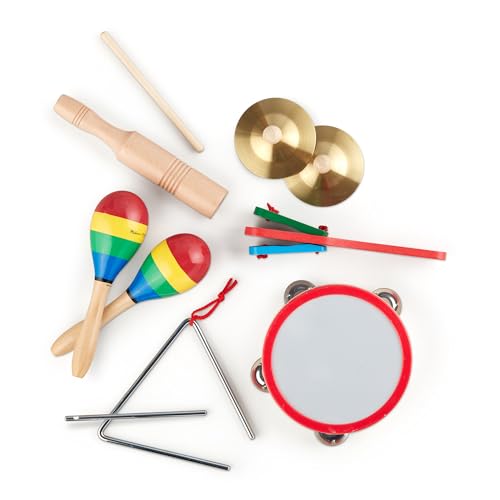
Melissa & Doug Band-in-a-Box
This set includes a wooden xylophone, tambourine, cymbals, maracas, harmonica, and a wooden case. It offers a full band experience in one box. The instruments are well-made and produce decent sounds. Kids can explore different timbres and rhythms.
Pros
- Multiple instruments in one set
- Encourages exploring different sounds
- Includes storage case
Cons
- Harmonica may be hard to play
- Cymbals are small

Kids Drum Set with Cymbals by Pyle
This junior drum set includes three drums, two cymbals, and a stool. It is designed for children aged 3 to 8. The shells are made of poplar wood, and the heads are replaceable. It comes with a pair of drumsticks. Assembly is required and takes about 30 minutes.
Pros
- Realistic playing experience
- Adjustable height
- Includes stool and sticks
Cons
- Requires assembly
- Can be loud for parents

Remo Kids Percussion Floor Tom
This floor tom is a single drum that sits on the floor. It features a pre-tuned head that produces a rich, resonant sound. The drum is lightweight and easy for kids to play with hands or mallets. It is built tough to withstand enthusiastic playing.
Pros
- Simple to play
- Durable and portable
- Good sound quality
Cons
- Single drum only
- No mallets included

Suzuki Harmonica (S-32)
This harmonica is a real musical instrument, not a toy. It is tuned to the key of C and has 10 holes. The plastic comb is safe for kids and resistant to moisture. It produces clear, bright tones. It is a great way to introduce children to melody and breath control.
Pros
- Real instrument quality
- Easy to learn basic notes
- Durable and easy to clean
Cons
- Requires practice to produce single notes
- May be too advanced for young kids
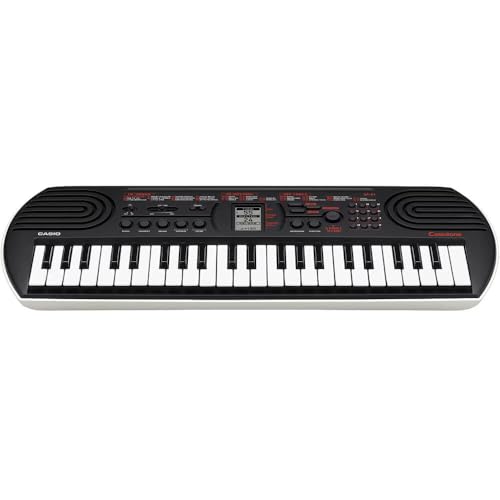
Casio SA-76 Mini Keyboard
This mini keyboard has 44 mini-sized keys, perfect for small hands. It includes 100 tones, 50 rhythms, and 10 built-in songs. The LCD screen shows notes and functions. It can run on batteries or an optional AC adapter. It is a great first keyboard for kids.
Pros
- Wide range of sounds and rhythms
- Lightweight and portable
- Educational features
Cons
- Mini keys are not full size
- No power adapter included
Side by side
| # | Model | Material | Best for | Score | Price |
|---|---|---|---|---|---|
| 1 | Hape Early Melodies Wooden Xylophone | Wood and metal | Toddlers and preschoolers | 9.4 | Check price |
| 2 | Baby Einstein Take Along Tunes Musical Toy | 10 classical melodies | Babies 3 months and up | 9.1 | Check price |
| 3 | Melissa & Doug Band-in-a-Box | 6 pieces | Preschoolers who want variety | 9.0 | Check price |
| 4 | Kids Drum Set with Cymbals by Pyle | 3 pieces (snare, tom, bass) | Aspiring drummers | 8.8 | Check price |
| 5 | Remo Kids Percussion Floor Tom | 10 inches | Young children who love drumming | 8.7 | Check price |
| 6 | Suzuki Harmonica (S-32) | C | Kids aged 6 and up | 8.5 | Check price |
| 7 | Casio SA-76 Mini Keyboard | 44 mini keys | School-age children exploring melody | 8.9 | Check price |
How to choose
Frequently asked questions
What is the best age to introduce musical instruments?
From birth, babies respond to music. Simple toys like rattles can be introduced at 3 months. More interactive instruments like xylophones are suitable from 12 months. By age 3, children can play simple drums and shakers. Around age 5 or 6, they can start with real instruments like keyboards or harmonicas.
Are musical instruments safe for toddlers?
Yes, if they are age-appropriate. Look for items labeled for the child’s age. Avoid small parts that could be swallowed. Check for smooth edges and non-toxic materials. Always supervise play, especially with mallets or drumsticks.
How do I clean a kids’ harmonica?
After each use, tap out any moisture. Periodically, you can rinse the mouthpiece with warm water, but do not submerge the whole harmonica. Use a soft brush to clean the holes. Let it air dry completely before storing.
Can a keyboard replace an acoustic piano for lessons?
For beginners, a keyboard with touch-sensitive keys is a start. However, the mini keys on kids’ keyboards are not ideal for developing proper finger technique. If your child is serious about piano, consider a full-size digital piano later.
What is the best way to teach rhythm to a child?
Clapping games and dancing to music help internalize rhythm. Use instruments like drums or shakers to echo simple patterns. Play along with songs and encourage free play. Consistency and fun are more important than formal lessons at a young age.
Are there quieter instruments for kids?
Yes, xylophones, harmonicas, and small keyboards are less loud than drums. You can also use a practice pad for drumming. For acoustic drums, consider placing a cloth over the drumhead to muffle sound.
How much should I spend on a kids’ instrument?
You can find good quality instruments from current price to current price. Premium sets may cost more. Invest in durability over price. A well-made instrument can last through multiple children.
Can musical toys help with language development?
Yes, music and rhythm are linked to language processing. Singing songs and playing instruments that produce different sounds can help children distinguish between sounds, which supports speech development.
What is a good first instrument for a 4-year-old?
A xylophone or a simple drum set are excellent choices. They allow immediate success and are durable. Sets like the Melissa & Doug Band-in-a-Box offer variety to discover preferences.
How do I know if my child is ready for a real instrument?
If they show interest and can focus for 10 minutes, they may be ready. Look for fine motor skills and the ability to follow instructions. Around age 6, many children can handle a keyboard or harmonica.
Our pick
For the best all-around experience, choose the Hape Early Melodies Wooden Xylophone for toddlers. If you want a real drumming experience, go with the Pyle Kids Drum Set. For a versatile musical journey, the Casio SA-76 Keyboard is a great investment that can grow with your child.
Rachel Simmons
Rachel previously worked in child-product retail and brings a practical, detail-first eye to gear reviews, focusing on safety standards, ease of use and the fine print that matters most for new caregivers.