Men’s Coveralls Built for Work Site Durability
Dickies’ Men’s Long Sleeve Coverall leads this list as a reliable everyday work jumpsuit at a moderate price. Carhartt’s Loose Fit Firm Duck Insulated Coverall suits cold weather outdoor labor, while 3M’s Tyvek Disposable Coverall fits anyone needing one-time protection for a messy or hazardous task.
Dickies’ Men’s Long Sleeve Coverall tops this list because its cotton-polyester blend balances durability and breathability for everyday work without the bulk of an insulated suit. Its main limitation is a lack of insulation, which means it needs layering underneath in genuinely cold conditions.
We compared listed fabric weight, closures, insulation and owner feedback on fit and durability rather than wearing each coverall on the job ourselves.
The top picks, ranked
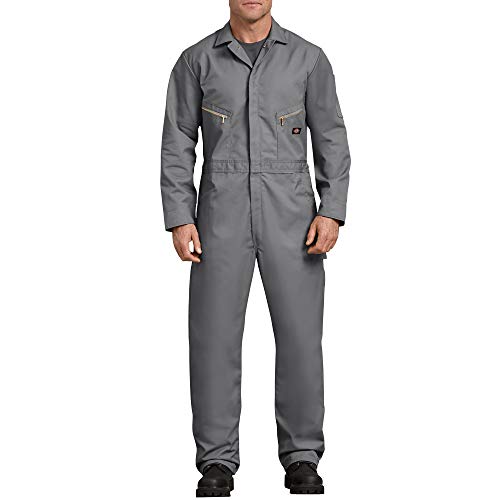
Dickies Men’s Long Sleeve Coverall
A cotton-polyester blend resists wrinkling better than pure cotton while still breathing more than fully synthetic fabric. A full front zipper with a snap closure speeds up getting in and out of the coverall. Multiple pockets hold tools and small parts without needing a separate tool belt.
Pros
- Blend fabric resists wrinkling better than pure cotton
- Multiple pockets reduce need for a separate tool belt
- Breathable enough for indoor shop or warm outdoor work
Cons
- No insulation, needs layering in cold weather
- Less abrasion resistant than heavier duck canvas coveralls

Carhartt Men’s Loose Fit Firm Duck Insulated Coverall
Firm duck canvas resists tearing and abrasion better than lighter work fabrics, suited to rough outdoor conditions. A quilted insulated lining adds real warmth for cold weather labor without a separate coat underneath. The loose fit allows room for additional layers on the coldest days.
Pros
- Duck canvas resists abrasion better than lighter fabrics
- Quilted lining provides real warmth for cold outdoor work
- Loose fit allows comfortable additional layering
Cons
- Bulkier and heavier than uninsulated coveralls
- Overly warm for indoor or mild weather use

Red Kap Men’s Long Sleeve Coverall
Red Kap builds coveralls widely used across commercial uniform programs, giving this model a consistent, professional appearance. The fabric blend matches Dickies’ in weight and breathability for general work use. It typically comes in a narrower color range aimed at business uniform ordering rather than individual retail variety.
Pros
- Widely used in commercial uniform programs
- Consistent fit and appearance across bulk orders
- Comparable durability to other mid-weight coveralls
Cons
- Narrower color selection than general retail brands
- No insulation for cold weather use

Walls Men’s Non-Insulated Long Sleeve Coverall
Walls prices this coverall below most other brands on this list while covering the same basic non-insulated work function. The fabric blend is slightly lighter than Dickies’ or Red Kap’s, suited to warmer conditions. Stitching and hardware trail premium brands in long-term durability testing from owner feedback.
Pros
- Lower price than most coveralls compared here
- Lighter fabric suits warmer work conditions
- Covers the same basic coverall function as pricier brands
Cons
- Stitching and hardware wear faster than premium brands
- No insulation option within this specific line

Berne Men’s Deluxe Insulated Coverall
Berne adds a heavier insulated lining than Carhartt’s standard duck coverall, aimed at the coldest outdoor conditions. A rib-knit collar, cuffs and waistband seal out wind better than a plain hem. The heavier build makes it less practical for anything but genuinely cold weather work.
Pros
- Heavier insulation suits the coldest work conditions
- Rib-knit seals at collar, cuffs and waist block wind
- Durable duck canvas matches premium workwear standards
Cons
- Too warm and bulky for mild weather or indoor use
- Heavier to move in than lighter work coveralls

Key Apparel Men’s Long Sleeve Coverall
Key Apparel offers this coverall across a wider range of tall and big sizing than some competing brands, suited to industrial workforces with varied body types. The fabric blend and closures closely match Dickies’ and Red Kap’s general work coverall design. It is sold primarily through industrial and safety supply channels rather than general retail.
Pros
- Wider range of tall and big sizing options
- Matches the durability of similar mid-weight coveralls
- Suited to varied body types on industrial crews
Cons
- Less available through general retail than Dickies or Carhartt
- No insulation option in this specific model

3M Tyvek Disposable Protective Coverall
Unlike the other reusable fabric coveralls on this list, 3M’s Tyvek suit is designed to be worn once and discarded after a messy or hazardous task. The lightweight material resists dust, paint and some liquid splashes better than cloth fabric. It lacks the durability for repeated daily work use that the other coveralls on this list offer.
Pros
- Resists dust, paint and light liquid splashes better than cloth
- Disposable design avoids contaminating regular work clothes
- Lightweight and easy to move in during short tasks
Cons
- Not durable enough for repeated daily work use
- Offers no insulation or long-term wear resistance
Before you buy
What a men’s coverall jumpsuit is built for Most searches for men’s jumpsuits in a work context point to coveralls, a one-piece garment covering the torso and legs for job site or shop protection. Fabric weight ranges from lightweight blends suited to warm conditions up to heavy duck canvas built for rough outdoor labor. Insulation separates general work coveralls from models built specifically for cold weather.
Uninsulated versus insulated coveralls Dickies, Red Kap, Walls and Key Apparel all offer uninsulated coveralls suited to general work in moderate temperatures. Carhartt and Berne add insulated linings instead, aimed at outdoor labor through cold months where an uninsulated coverall would leave a worker cold. Choosing between the two comes down to the work environment, not personal preference alone, since an insulated suit will overheat indoors or in mild weather.
Fabric durability for different work environments Carhartt’s and Berne’s heavyweight duck canvas resists tearing and abrasion better than the lighter blends used by Dickies, Red Kap and Walls. Lighter fabric blends suit shop work, light maintenance or warmer climates where heavy canvas would feel excessive. Workers handling rough materials or outdoor terrain benefit more from the added durability of duck canvas despite its extra weight.
Reusable coveralls versus disposable protection 3M’s Tyvek coverall stands apart from every other option on this list by being disposable after a single messy or hazardous task. Reusable fabric coveralls from Dickies, Carhartt and others are built to be washed and worn repeatedly across many work shifts. Anyone doing occasional painting, insulation work or similar one-time tasks is better served by a disposable suit than washing a fabric coverall repeatedly for infrequent use.
How they stack up
| # | Model | Fabric | Best for | Score | Price |
|---|---|---|---|---|---|
| 1 | Dickies Men’s Long Sleeve Coverall | Cotton-polyester blend | Best Overall | 8.8 | Check price |
| 2 | Carhartt Men’s Loose Fit Firm Duck Insulated Coverall | Firm duck canvas | Best for Cold Weather Labor | 9.1 | Check price |
| 3 | Red Kap Men’s Long Sleeve Coverall | Cotton-polyester blend | Best for Uniform Consistency | 8.5 | Check price |
| 4 | Walls Men’s Non-Insulated Long Sleeve Coverall | Lightweight cotton-polyester blend | Best Budget Option | 8.2 | Check price |
| 5 | Berne Men’s Deluxe Insulated Coverall | Heavyweight duck canvas | Best for Extreme Cold | 8.9 | Check price |
| 6 | Key Apparel Men’s Long Sleeve Coverall | Cotton-polyester blend | Best for Industrial Fit Options | 8.4 | Check price |
| 7 | 3M Tyvek Disposable Protective Coverall | Tyvek nonwoven material | Best for One-Time Hazardous Tasks | 8.3 | Check price |
Questions worth asking
What is the best coverall for cold weather work?
Berne’s Deluxe Insulated Coverall and Carhartt’s Loose Fit Firm Duck Insulated Coverall both add real insulation suited to extreme cold.
Are disposable coveralls as protective as fabric ones?
For one-time messy or hazardous tasks, Tyvek coveralls resist dust, paint and light splashes well, though they are not durable enough for repeated daily work.
What fabric is most men’s work coveralls made from?
A cotton-polyester blend is most common for general work coveralls, while heavier duck canvas is used for more demanding outdoor conditions.
Do work coveralls come in extended sizing?
Yes, brands like Key Apparel specifically offer a wider range of tall and big sizing for industrial workforces.
What is the difference between a coverall and a jumpsuit?
In a work context, the terms are largely interchangeable, though coverall more specifically implies a garment built for job site protection.
Can coveralls be worn without a shirt underneath?
Most coveralls are designed to be worn over a shirt, though lightweight versions can be worn directly against the skin in warm conditions.
Are insulated coveralls too hot for indoor work?
Yes, insulated coveralls like Carhartt’s or Berne’s are built for cold outdoor labor and tend to overheat quickly indoors.
What closures do work coveralls typically use?
Most coveralls use a front zipper paired with a snap closure, while disposable suits often use a zipper with an adhesive strip for a tighter seal.
Our take
Most workers needing a reliable everyday coverall should choose Dickies’ Long Sleeve Coverall for its balance of durability and breathability. Anyone working outdoors through cold months should pick Carhartt’s or Berne’s insulated coverall instead, since an uninsulated suit will not hold up in freezing conditions. Workers facing a single messy or hazardous task should skip fabric coveralls entirely and use 3M’s disposable Tyvek suit.
Priya Nathan
Priya spent years in apparel buying and merchandising for a multi-brand retailer before moving into editorial work. She focuses on fit, fabric and construction quality across everyday wear, activewear and accessories, reading past marketing copy to the details that affect how a garment actually wears and holds up.