Corded vs Cordless Jigsaws: Which Cuts Curves Better?
Bosch JS470E is the top corded jigsaw for steady, controlled cuts in wood and metal. Makita XVJ03Z leads cordless barrel-grip saws with splinter-free curves and brushless power. Black and Decker BDEJS600C fits occasional DIY jobs where budget matters more than finish.
Bosch JS470E is the corded saw most people should buy first, steady enough for plywood and metal alike. Makita XVJ03Z takes the cordless barrel-grip category with cleaner curves, and Black and Decker BDEJS600C covers light DIY on a tight budget.
Raw power matters less here than blade grip and how steady a saw feels along a line, which trips up a lot of buyers. We weighed published specifications against owner reports on blade wander, bevel accuracy and how easy each tool tracks a cut.
The top picks, ranked

Bosch JS470E
Seven amps of corded power drive this top-handle saw with unusually low vibration. Tool-free blade changes and four orbital settings suit wood, metal and plastic without swapping tools.
Pros
- Very low vibration
- Precise line tracking
- Easy blade swaps
Cons
- Corded reach limits
- Dust blower could be stronger

Makita XVJ03Z
An 18V brushless motor powers this barrel-grip saw, built for curved and detailed cuts. Holding the low grip closer to the blade gives more feel over the workpiece than a top-handle design.
Pros
- Great control for curves
- Brushless efficiency
- Very clean cuts
Cons
- Battery not included
- Barrel grip has a learning curve
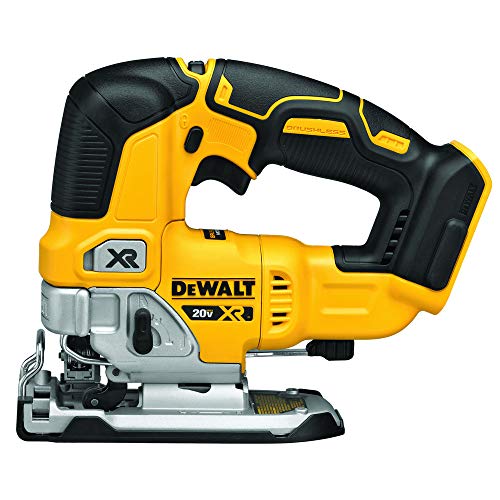
DEWALT DCS334B
This 20V top-handle saw pairs a comfortable grip with reliable blade retention. Anyone already on the DEWALT battery platform gets a dependable everyday saw without buying new packs.
Pros
- Comfortable top handle
- Secure blade grip
- Bright work light
Cons
- Tool only, no battery
- Heavier with big packs
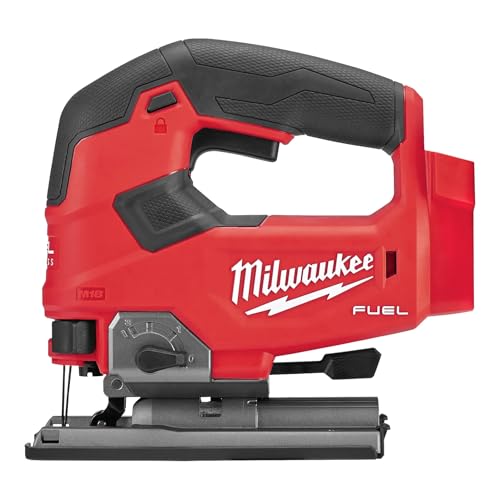
Milwaukee 2737-20 M18 FUEL
A brushless D-handle motor keeps this saw stable under load, built for tradespeople who run a jigsaw daily. Blade tracking stays consistent even through thick stock.
Pros
- Strong under load
- Durable build
- Consistent blade tracking
Cons
- Tool only
- Premium price

Bosch JS572EBL
7.2 amps of steady corded power meets a low barrel grip on this saw, built for fine control. No battery to manage means it is ready the moment it is plugged in.
Pros
- Excellent control
- No battery to charge
- Low vibration
Cons
- Cord management needed
- Case sold separately

Ryobi P523
This 18V ONE+ saw gives casual users a capable cordless option at a fair price. It handles home projects fine, though it lacks the smoothness of pricier brushless models.
Pros
- Affordable on ONE+ platform
- Simple to use
- Tool-free blade change
Cons
- More vibration
- Tool only

Black and Decker BDEJS600C
Five amps of corded power run this basic saw for occasional cuts around the house. Owners note it suits simple projects but is not built for heavy or precise work.
Pros
- Very affordable
- Lightweight
- Fine for light jobs
Cons
- More blade wander
- Limited for thick stock
Compared at a glance
| # | Model | Power | Best for | Score | Price |
|---|---|---|---|---|---|
| 1 | Bosch JS470E | 7.0 amp corded | Best overall | 9.4 | Check price |
| 2 | Makita XVJ03Z | 18V brushless | Best cordless | 9.2 | Check price |
| 3 | DEWALT DCS334B | 20V brushless | Best top-handle cordless | 9.0 | Check price |
| 4 | Milwaukee 2737-20 M18 FUEL | 18V brushless | Best for heavy use | 8.8 | Check price |
| 5 | Bosch JS572EBL | 7.2 amp corded | Best barrel-grip corded | 8.6 | Check price |
| 6 | Ryobi P523 | 18V | Best for DIY value | 8.3 | Check price |
| 7 | Black and Decker BDEJS600C | 5.0 amp corded | Best budget | 8.0 | Check price |
Before you buy
Corded or cordless: which suits your projects? Corded saws deliver constant power and never run out mid-cut, which suits shop use and long sessions. Cordless models win on portability and make sense if you already own batteries. Base the choice on where you cut most and whether you are tied to an existing battery platform.
Top-handle versus barrel-grip: what is the difference? Top-handle saws feel familiar for straight cuts and general work. Barrel-grip saws place your hand lower, closer to the blade, which sharpens control on curves and detail cuts. Precise scrollwork rewards the practice a barrel grip takes to master.
How orbital action and blade choice affect the cut Orbital settings swing the blade forward for faster, rougher cuts, while turning orbit off leaves a cleaner edge. Blade choice matters just as much: fine-tooth blades cut splintering, and the right blade for metal or laminate stops wandering. Match blade and orbit setting to the material for the best finish.
What makes blade changes and cuts stay accurate Tool-free blade changes save time and are standard on good saws now, but check how securely the clamp holds the blade, since a loose grip causes wander. Confirm the base tilts accurately for bevels and locks firmly too, because a wobbly shoe ruins straight lines regardless of motor power.
Questions worth asking
Is a barrel-grip or top-handle jigsaw better?
Top-handle saws suit beginners and general cuts, while barrel-grip saws give finer control for curves and detail work. Choose based on the cuts you make most and how much control you want over the blade.
Do I need orbital action on a jigsaw?
Orbital action speeds up cuts in wood but leaves a rougher edge. Turn it off for a clean finish cut. Most quality jigsaws switch between settings, giving you both speed and precision from one tool.
What blade gives the cleanest jigsaw cuts?
A fine-tooth, down-cutting or reverse-tooth blade minimizes splintering on the good face. Match blade type to material, since wood, metal and laminate each need a different tooth pattern for clean results.
Can a jigsaw cut tight curves and circles?
Yes, curves are a jigsaw’s specialty. A barrel-grip saw with a narrow blade cuts the tightest curves. For circles, some models accept a guide accessory, or you can follow a drawn line freehand.
Should a beginner buy corded or cordless?
For occasional home use, a corded saw gives steady power at lower cost. Owning batteries from one brand already makes a cordless model on that platform convenient, saving a new charger purchase.
Why does my jigsaw blade bend or wander?
Blade wander usually comes from pushing too fast, a dull or wrong blade, or a loose blade clamp. Slow down, let the saw do the work, and switch to a stiffer or coarser blade for thick material.
Can a jigsaw cut metal cleanly?
Yes, with the correct metal-cutting blade and a slower speed. A fine-tooth bi-metal blade suits thin steel or aluminum; keep the shoe flat and skip orbital action for a cleaner edge.
How thick a material can a jigsaw cut?
Most jigsaws cut roughly 2 to 2.75 inches in softwood, less in hardwood or metal, depending on model and blade. Thick or dense stock cuts slower and can cause blade flex, so check the stated capacity first.
What is the difference between a jigsaw and a circular saw?
A jigsaw cuts curves, notches and intricate shapes with a reciprocating blade, while a circular saw makes fast, straight rip and crosscuts. Most home shops eventually need both for different jobs.
Is a more expensive jigsaw worth it for occasional use?
Not always. Occasional users get by fine with a budget model like the Black and Decker BDEJS600C. Frequent or precision work justifies the smoother tracking and blade grip of a premium saw like the Bosch JS470E.
Our pick
Bosch JS470E remains the jigsaw to recommend to most buyers for its smooth, controllable cut. Makita XVJ03Z is the pick for cordless barrel-grip detail work, and Black and Decker BDEJS600C handles light DIY without overspending.
Jake Monroe
Jake worked as a residential contractor for over a decade before shifting to full-time writing. He evaluates power tools, hand tools and workshop gear through the lens of someone who has actually used them on job sites, not just read the box.