6 Inversion Tables That Actually Support Full Body Weight
Teeter FitSpine X3 tops this list with a ratcheting ankle lock and an independently certified frame. Innova ITX9600 delivers a padded lumbar backrest and six-position pin control for far less. Body Champ IT8070 folds flattest, making it the pick for smaller rooms and lighter users.
Stability at full angle separates a good inversion table from a wobbly one. Teeter FitSpine X3 wins on that count with a ratcheting ankle system and a certified frame. Innova ITX9600 matches most of its comfort features at a lower spot on the price ladder. Smaller rooms favor Body Champ IT8070, which folds flatter than any other model here.
Every listing quotes a weight capacity without describing how the frame behaves near that limit. Ankle clamps range from genuinely comfortable to the reason a table ends up unused in the garage. We compared published capacities, certification, ankle systems, angle control methods and folded sizes, alongside what owners report after months of regular use. Speak with a medical professional before starting inversion if you have any relevant health condition.
Our top picks

Teeter FitSpine X3 Inversion Table
A ratcheting FlexTech ankle lock secures far more easily than the pin systems on budget tables. Independent certification backs the frame, and precision rotation control lets you stop at a partial angle instead of swinging to full inversion. Owners consistently call it the model stable enough to relax on.
Pros
- Ankle lock is the most comfortable here
- Frame stays rigid through the full angle range
- Folds for storage despite the heavy build
Cons
- Highest outlay in this group
- Heavy to move between rooms

Innova ITX9600 Inversion Table
A thick backrest and an adjustable lumbar pad sit on top of a straightforward six-position pin system here. Pin adjustment removes any guesswork about how far the frame will rotate. Assembly runs about an hour, and owners describe the frame as steady for its class.
Pros
- Pin system sets exact angles reliably
- Adjustable lumbar support is unusual at this level
- Fits a wide range of user heights
Cons
- Ankle clamps feel less refined than premium models
- Folded size is bulkier than it looks
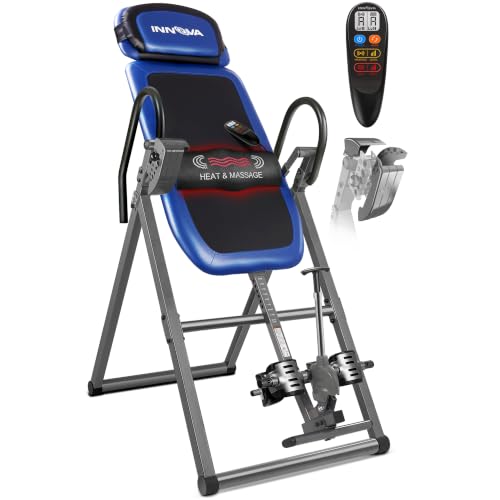
Innova ITM4800 Advanced Heat and Massage Inversion Table
A removable heat and massage pad sits on the same Innova platform that owners already trust. Many use the pad before rather than during inversion. It is corded and detaches for washing the cover, so treat the massage function as a comfort extra rather than the reason to buy.
Pros
- Heat pad feels genuinely pleasant before stretching
- Shares the same solid frame as the standard model
- Pad detaches when not wanted
Cons
- Massage function stays mild rather than deep
- Power cord adds clutter around the frame
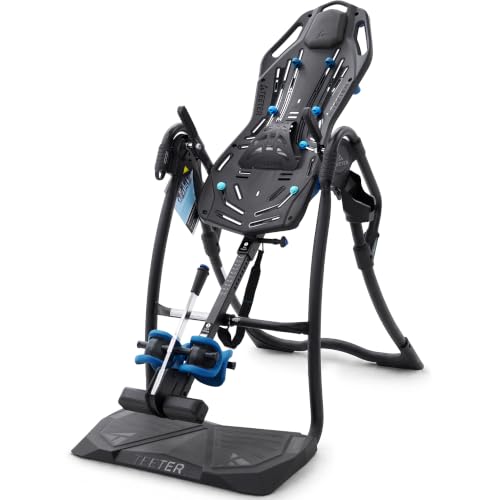
Teeter FitSpine LX9 Inversion Table
Acupressure nodes, a lumbar bridge and extended handles build on the standard FitSpine platform here. Returning upright takes less effort with the longer grips. Taller users fit comfortably, and the frame carries the same certification as the X3, though the extras come at a premium.
Pros
- Extended handles make the return to upright easier
- Comfortable fit for taller users
- Shares the certified frame quality of the X3
Cons
- Premium cost for incremental extras
- Bulky and heavy to reposition

Ironman Gravity 4000 Inversion Table
A heavy tubular steel frame backs a 350 pound rating, the highest capacity in this group. An extra-long safety pin and a thicker memory foam backrest come standard. Size is the tradeoff, since it folds less compactly than lighter tables and needs two people to assemble.
Pros
- Highest weight capacity in this group
- Thicker memory foam backrest than most rivals
- Ratchet ankle lock instead of a basic clamp
Cons
- Large footprint even when folded
- Assembly needs two people

Body Champ IT8070 Inversion Table
Folding flatter than most rivals matters when a table has to live behind a door between sessions, and that is this model’s strength. A strap-based angle limiter and a lightly padded backrest keep things simple. Lighter users and shorter sessions suit it better than daily heavy use.
Pros
- Folds flatter than most inversion tables
- Light enough for one person to move
- Simple strap angle limiter
Cons
- Lower weight capacity than rivals
- Thinner padding on the backrest

Health Gear ITM5500 Advanced Technology Inversion Table
Thick padding and a heat and massage cushion arrive here at a lower outlay than premium tables. The frame suits occasional use rather than daily inversion. Owners advise following the assembly instructions carefully and checking bolts periodically.
Pros
- Comfort features at a modest outlay
- Generous padding for longer sessions
- Straightforward strap-based angle control
Cons
- Frame flexes more than premium tables
- Bolts benefit from periodic checking
Compared at a glance
| # | Model | Capacity | Best for | Score | Price |
|---|---|---|---|---|---|
| 1 | Teeter FitSpine X3 Inversion Table | 300 lb | Best overall | 9.4 | Check price |
| 2 | Innova ITX9600 Inversion Table | 300 lb | Best value | 9.2 | Check price |
| 3 | Innova ITM4800 Advanced Heat and Massage Inversion Table | 300 lb | Best with extras | 9.0 | Check price |
| 4 | Teeter FitSpine LX9 Inversion Table | 300 lb | Best for taller users | 8.8 | Check price |
| 5 | Ironman Gravity 4000 Inversion Table | 350 lb | Best for heavier users | 8.6 | Check price |
| 6 | Body Champ IT8070 Inversion Table | 250 lb | Best compact option | 8.3 | Check price |
| 7 | Health Gear ITM5500 Advanced Technology Inversion Table | 300 lb | Best budget option with padding | 8.0 | Check price |
How to choose
What does an inversion table’s weight rating actually mean? A stated capacity only tells part of the story, since flex increases noticeably as a frame nears its limit. Tubing gauge and independent safety certification matter more than the number on the box. Stay well below the maximum rating rather than at it, and treat certification as a baseline requirement, not a bonus feature.
Why do ankle clamps decide whether you keep using the table? Pressure on the ankles is the most common reason an inversion table ends up unused. Ratcheting systems with foam padding spread load better than simple pin and bar clamps. Wearing shoes or thick socks helps, and the clamp should sit firm rather than crushing.
Pin or strap: which angle control suits beginners? Pin systems lock a fixed angle and give beginners the most predictable rotation. Tether straps allow smooth free movement up to a set limit, which suits people who want gentle motion rather than a hard stop. Most routines start at a shallow twenty to forty degrees, so full inversion is not the target on day one.
How much space does an inversion table need at home? These frames are large, and folded dimensions vary widely between models. Measure the room including headroom for rotation before ordering. Assembly typically takes one to two hours and goes faster with a second person. Storage-limited homes should weigh a compact folding model even if it means a lower capacity.
Frequently asked questions
How long should a session on an inversion table last?
Most manufacturers suggest starting with one to two minutes at a shallow angle and building gradually. Comfort and how you feel afterward should guide the pace, and a routine is worth discussing with a medical professional first.
What angle should beginners start at?
Around twenty to forty degrees is a common starting point, far short of full inversion. Many owners find they never need to go beyond about sixty degrees for the stretch they are after.
Who should avoid inversion tables?
Anyone with high blood pressure, heart conditions, glaucoma, retinal problems, hernias or who is pregnant should speak to a doctor first. This question belongs with a medical professional, not a product review.
What weight capacity do I need?
Pick a table rated comfortably above body weight rather than right at it. Most models here max out at 300 pounds, and Ironman Gravity 4000 goes to 350 pounds for heavier users.
Do inversion tables fold for storage?
Most do, though folded dimensions vary a lot between brands. Body Champ IT8070 folds flattest here, while heavy duty frames like the Ironman stay bulky even folded. Measure your storage space before ordering.
Are ankle clamps uncomfortable?
They can be, particularly on budget tables. Ratcheting padded systems are noticeably kinder to the ankles. Shoes or thick socks, plus a precisely adjusted clamp, make a substantial difference.
How difficult is assembly?
Expect one to two hours for most models, with a second person helpful for lifting the frame. Follow the manual’s sequence closely, since several designs require partial assembly before the frame stands upright.
Can I use an inversion table every day?
Many owners use one briefly most days, but frequency should follow the manufacturer’s guidance and any advice from a healthcare provider. Build up gradually instead of starting with long daily sessions.
Is an inversion table worth it for back pain?
Owners often report short-term relief from mild muscular tension, though results vary by condition. It is not a substitute for diagnosis or treatment, so check with a doctor before relying on one for chronic pain.
Our take
Teeter FitSpine X3 is the inversion table worth choosing first, since a certified frame and a comfortable ratcheting ankle lock are exactly what keeps people using one. Innova ITX9600 delivers most of that usefulness at a lower cost tier, and Body Champ IT8070 answers the question when storage space is the real constraint. Start at a shallow angle, build up gradually, and check with a medical professional if you have any relevant condition.
Derek Holt
Derek has a background coaching recreational and amateur athletes and has worked the sales floor at specialty fitness retailers. He focuses on equipment durability, ergonomics and realistic use cases rather than marketing claims.


