Which Insulated Teapot Actually Keeps Tea Hot Longest
Hiware’s 40oz Double Wall Glass Teapot suits everyday brewing with air-gap insulation and a removable infuser. Zojirushi’s SH-HB10BA holds heat longest once tea moves into its vacuum steel body. Tealyra’s Drago fits loose leaf drinkers who want to watch leaves steep.
Hiware’s 40oz Double Wall Glass Teapot works best for brewing a full pot at the table, combining air-gap glass insulation with a removable infuser. Its glass walls cool faster than the vacuum steel bottles also covered below.
Listings labeled insulated teapot span double-wall glass, vacuum steel bottles, and stacked stovetop sets, so heat retention varies more than the word suggests. Specs, infuser design, and owner feedback across seven current Amazon listings separate real differences from marketing language.
The shortlist, ranked

Hiware 40oz Double Wall Glass Teapot with Removable Infuser
An air pocket between two borosilicate glass walls slows heat loss versus single-wall glass. A removable stainless steel infuser handles loose leaf steeping without a separate strainer. Gas and electric burners both work for direct stovetop brewing.
Pros
- Air-gap glass insulation outperforms single-wall glass pots
- Removable infuser simplifies loose leaf cleanup
- Stovetop-safe glass allows brewing and serving from one vessel
Cons
- Loses heat faster than vacuum steel bottles over several hours
- Heavier and more fragile than single-wall glass teapots

Zojirushi SH-HB10BA Stainless Steel Vacuum Bottle
This vacuum-insulated steel bottle isn’t a traditional teapot; most owners use it to hold tea after steeping elsewhere. A stopper-style cap allows one-hand pouring without unscrewing a lid. Ice cubes and a cleaning brush both fit through the wide mouth.
Pros
- Vacuum steel holds heat far longer than glass alternatives
- Wide mouth simplifies filling with ice or brushes for cleaning
- One-hand stopper pour reduces spills during serving
Cons
- Opaque steel body hides tea color and leaf movement
- No built-in infuser, so leaves must steep in a separate pot first
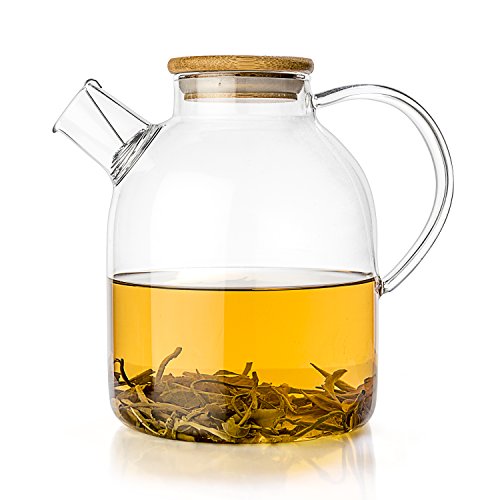
Tealyra Drago Glass Teapot with Removable Infuser
Single-wall borosilicate glass pairs with an extra-fine stainless mesh infuser, so loose leaves steep without a separate strainer at the table. The glass body is rated for direct stovetop brewing. Compared with double-wall and vacuum steel options here, single-wall construction cools fastest.
Pros
- Extra-fine infuser mesh catches small loose-leaf particles
- Stovetop-safe glass supports brewing and serving in one pot
- Clear glass shows leaf color and steeping progress
Cons
- Single-wall glass loses heat faster than double-wall or vacuum pots
- Glass lid and body are more fragile than steel alternatives

Thermos Sipp Vacuum Insulated Stainless Steel Bottle
A push-button lid opens with one thumb press on this vacuum-insulated steel bottle. Double-wall vacuum steel matches the Zojirushi’s insulation approach in a slimmer, more portable shape. Its carry handle and narrow base suit a desk trip rather than table service.
Pros
- Push-button lid enables one-hand pouring on the go
- Slim vacuum-steel body fits bags and car cup holders
- Stainless interior resists tea tannin stains better than plastic
Cons
- No infuser included, so tea must be strained before filling
- Narrower opening than wide-mouth pots makes ice or fruit harder to add

Cusinium Turkish Tea Pot Stainless Steel Double Pot Set
A smaller concentrate pot stacks on a larger water kettle in this traditional caydanlik layout. Steam from the boiling bottom kettle keeps the top pot’s strong brew warm during service. Gas, electric, and induction stovetops are all listed as safe for the stainless steel body.
Pros
- Stacked design keeps concentrated tea warm without a separate warmer
- Mirror-finish steel resists dents better than thin aluminum sets
- Works across multiple stovetop types, including induction
Cons
- Requires active stovetop use rather than passive countertop insulation
- Larger footprint than a single glass or vacuum teapot

Sotya Double Wall Glass Teapot with Infuser
An insulating air pocket similar to the Hiware pot forms between the double-wall glass, at a lower price point in this lineup. A removable stainless infuser lifts out for easy leaf disposal. Thinner glass and a smaller handle set it apart from bulkier double-wall designs.
Pros
- Double-wall glass insulation costs less than comparable steel pots
- Removable infuser simplifies cleanup after brewing
- Stovetop-safe glass allows direct brewing
Cons
- Thinner glass walls feel less sturdy than pricier double-wall pots
- Handle sits closer to the hot outer wall than bulkier designs

Kamjove Art Tea Cup Automatic Double Wall Glass Teapot
Loose leaf tea brews in an upper chamber, then a push-button release drains it into a double-wall glass reservoir below. Leaves separate from liquid automatically, which stops over-steeping. Its single-serve capacity fits a desk setup rather than serving a group.
Pros
- Push-button separation stops tea from over-steeping automatically
- Compact single-serve size fits easily on a desk
- Double-wall lower chamber adds some heat retention after brewing
Cons
- Capacity too small for serving multiple people at once
- Plastic base and button mechanism add parts that can wear out
How to choose
What counts as an insulated teapot Three approaches share the insulated label: double-wall glass with a trapped air gap, vacuum-sealed stainless steel, and a stacked stovetop design that uses steam for warmth. Double-wall glass, seen in the Hiware and Sotya pots, slows heat loss without hiding the tea’s color. Vacuum steel, used in the Zojirushi and Thermos bottles, blocks heat transfer more completely but hides the brew inside an opaque body. Cusinium’s Turkish set instead relies on an active heat source rather than passive insulation.
Glass vs steel: which insulation type to pick Owners can watch leaves unfurl and judge steeping strength by color in a glass pot, a feature steel bottles cannot offer. Poured tea stays hot far longer in a vacuum steel bottle, since metal walls with a vacuum gap block heat transfer better than an air-filled glass gap. Serving tea over several hours favors steel; drinking within thirty minutes of brewing favors glass for the visual feedback.
Best insulated teapots for small households vs group serving One or two cups fit the Kamjove Art Tea Cup’s chamber, matching a single person working at a desk. Larger double-wall glass pots, such as the 40-ounce Hiware, serve three to four cups from one brew for a shared table. Turkish-style stacked sets like the Cusinium serve a group differently, brewing a concentrate that gets diluted per cup instead of pouring a fixed-strength pot.
How to stop tea from cooling too fast Preheating any teapot with hot water before brewing reduces early heat loss, regardless of material. Warmth extends for a later cup by transferring brewed tea from a glass pot into a vacuum steel bottle, such as the Zojirushi or Thermos Sipp. Thin glass walls without a double-wall design lose heat fastest, so a tea cozy or trivet away from cold countertops helps hold temperature longer.
Compared at a glance
| # | Model | Capacity | Best for | Score | Price |
|---|---|---|---|---|---|
| 1 | Hiware 40oz Double Wall Glass Teapot with Removable Infuser | 40 oz (1.2 L) | Best Overall | 9.4 | Check price |
| 2 | Zojirushi SH-HB10BA Stainless Steel Vacuum Bottle | 34 oz (1.0 L) | Best for All-Day Heat Retention | 9.2 | Check price |
| 3 | Tealyra Drago Glass Teapot with Removable Infuser | 27 oz (800 ml) | Best for Loose Leaf Tea Presentation | 9.0 | Check price |
| 4 | Thermos Sipp Vacuum Insulated Stainless Steel Bottle | 40 oz (1.18 L) | Best for Spill-Proof Pouring | 8.7 | Check price |
| 5 | Cusinium Turkish Tea Pot Stainless Steel Double Pot Set | Stacked double-pot stovetop set | Best for Turkish-Style Tea | 8.5 | Check price |
| 6 | Sotya Double Wall Glass Teapot with Infuser | 27 oz (800 ml) | Best Budget | 8.2 | Check price |
| 7 | Kamjove Art Tea Cup Automatic Double Wall Glass Teapot | Approx. 13 oz (380 ml) | Best for Single-Serve Use | 8.0 | Check price |
Questions worth asking
What is the difference between a double-wall and vacuum-insulated teapot?
Double-wall glass traps a layer of regular air between two glass walls, which slows heat loss compared to single-wall glass. Vacuum-insulated steel removes the air between walls entirely, blocking heat transfer more effectively and holding warmth for longer stretches.
How long does an insulated teapot keep tea hot?
Vacuum steel bottles like the Zojirushi SH-HB10BA typically hold noticeable warmth for several hours, based on the manufacturer’s design intent. Double-wall glass pots cool faster, often losing significant heat within an hour or two depending on room temperature.
Can you put an insulated glass teapot on the stove?
Some double-wall glass teapots, including the Hiware and Sotya models here, are rated for direct stovetop use on gas or electric burners. Always check the specific listing, since not every glass teapot design tolerates open flame.
Which insulated teapot is best for loose leaf tea?
Tealyra’s Drago suits loose leaf tea well, with an extra-fine stainless infuser that catches small particles other strainers miss. Hiware’s removable infuser also works for loose leaf and offers a larger 40-ounce capacity.
Is stainless steel or glass better for keeping tea hot?
Stainless steel with vacuum insulation holds heat longer than glass, since it blocks conductive and convective heat loss more fully. Glass offers a visual advantage instead, letting owners see color and clarity as tea steeps.
What is the best insulated tea pot for a small kitchen?
Sotya’s double-wall glass teapot has a smaller footprint and lower cost than steel alternatives, fitting easily into limited counter or cabinet space. Its 27-ounce capacity suits one or two people rather than a large household.
Zojirushi vs Hiware, which keeps tea hotter longer?
Zojirushi’s SH-HB10BA vacuum steel body holds heat longer than Hiware’s double-wall glass, based on how each insulation type performs. Hiware’s glass pot instead lets owners brew and watch leaves steep in the same vessel.
Can insulated teapots go in the dishwasher?
Removable infusers and lids on pots like the Hiware and Sotya are generally dishwasher-safe per their listings. Vacuum steel bodies, such as the Zojirushi and Thermos Sipp, are usually hand-wash only to protect the insulation seal.
Are stacked Turkish tea pots considered insulated?
Cusinium’s stacked caydanlik set relies on steam from the lower kettle rather than a sealed air gap or vacuum layer. It keeps the concentrate warm only while the stovetop stays on, unlike passive glass or steel insulation.
What size insulated teapot works best for a family?
Hiware’s 40-ounce double-wall glass pot serves three to four cups per brew, enough for most small families at one sitting. Larger groups may need a second pot or the Cusinium set’s continuous stovetop refill method.
The bottom line
Hiware’s 40oz Double Wall Glass Teapot remains the strongest overall pick, pairing enough capacity for a shared pot with a removable infuser and stovetop-safe glass. Anyone who wants tea to stay hot for hours after brewing, rather than minutes, should choose the Zojirushi SH-HB10BA instead. Turkish tea drinkers who prefer a concentrate-and-dilute method are better served by the Cusinium stacked pot set.
Dana Whitfield
Dana spent eight years buying and merchandising for a regional kitchenware retailer before moving into editorial work. She has handled thousands of SKUs across cookware, small appliances and kitchen organization, and focuses on the practical differences that matter once a product is actually in daily use.