Insulated Serving Bowl Sets for Patio and Picnic Tables
Hydro Flask Outdoor Kitchen Serving Bowl wins on holding time, since vacuum walls beat any air gap. Bruntmor’s double wall set feeds a family spread across matching sizes. IMEEA nesting bowls handle dips and slaw, then stack flat in a normal cupboard.
Hydro Flask Outdoor Kitchen Serving Bowl suits anyone carrying one big dish outside and serving it over a long meal. Vacuum walls roughly double the holding time of a plain air gap, and a sealing lid lets a full bowl travel. Weight is the catch. Five quarts of pasta salad in stainless steel is awkward to pass along a table.
Insulated covers a lot of ground in these listings, from true vacuum walls to a thin air gap to a frozen gel lining. We compared insulation method, stated capacity, lid design, whether the outside sweats under cold food, and what each one needs at the sink. Single wall bowls marketed as insulated were cut.
The top picks, ranked

Hydro Flask Outdoor Kitchen Serving Bowl, 5 qt
Vacuum walls, not a simple air gap, explain the long holding time here. Its lid seals well enough to carry five quarts to a park table without a second container. Loaded weight is the tradeoff, since stainless plus food makes this a two hand bowl.
Pros
- Vacuum walls hold temperature for hours, not minutes
- Sealing lid allows a full bowl to travel
- Stainless interior shrugs off tomato and turmeric stains
Cons
- Heavy to pass around once filled
- Hand washing protects the seal and exterior finish

Bruntmor Double Wall Insulated Stainless Steel Serving Bowl Set
Graduated sizes cover a main and two sides from one purchase, which is the point of buying a set. Double walls block condensation, so no water ring appears on a wooden table. Heat retention runs shorter than a vacuum bowl, closer to an hour of real serving time.
Pros
- One purchase covers mains and sides
- No condensation rings on furniture
- Bowls nest for storage
Cons
- Shorter heat retention than vacuum bowls
- Lids are not fully leak proof

IMEEA Double Wall Stainless Steel Serving Bowl Set
Mirror polished stainless and a slim profile let these slot into a normal cupboard shelf. Sizing points at dips, slaw and dressed salads rather than a full main course. Wall thickness stays modest, so plan on moderate holding rather than a whole afternoon.
Pros
- Nests into very little shelf space
- Size range fits sides, dips and dressings
- Wipes clean without staining
Cons
- Too small for a main dish
- Polished finish shows fingerprints
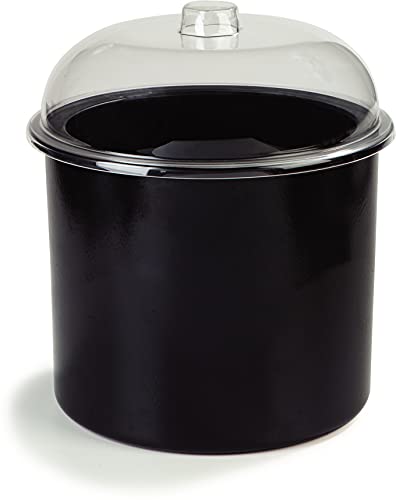
Carlisle FoodService Coldmaster Insulated Serving Bowl
Freeze the bowl overnight and its gel lining keeps dressed salad cold for hours. Exterior colour shifts to blue once fully chilled, then fades back as the bowl warms. Cold food only, so chilli and hot pasta belong in something else.
Pros
- Holds cold for hours without ice in the food
- Colour indicator removes the guesswork
- Lighter than any stainless bowl here
Cons
- Needs overnight freezer space
- Cannot serve hot dishes

Vollrath Double Wall Insulated Serving Bowl
Buffet lines are the home turf here, visible in the heavy gauge steel and rolled rim. Outer wall stays cool enough to grip when the contents are hot. Styling is plain foodservice, better suited to a long table than a dressed dinner party.
Pros
- Built for repeated buffet service
- Exterior stays touchable with hot food inside
- Survives commercial dishwashing
Cons
- No lid included for transport
- Utilitarian look on a set table
Cook N Home Double Wall Stainless Steel Bowl Set
Basic double wall construction covers a garden table without much outlay. Bowls double as mixing bowls indoors, which earns them cupboard space year round. Insulation is the thinnest in this group, so count on roughly an hour of useful holding.
Pros
- Works indoors as a mixing bowl set
- Cheapest route into double wall serving
- Dishwasher friendly
Cons
- Shortest temperature holding of this group
- Thin walls dent if dropped
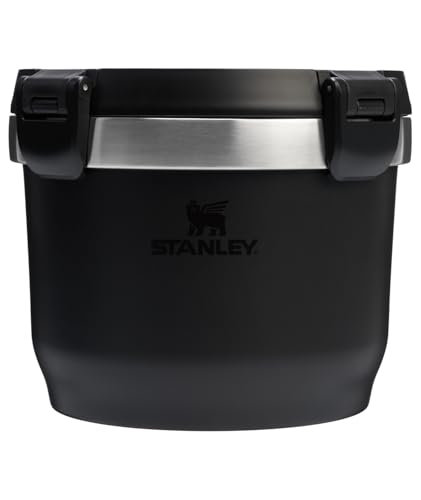
Stanley The Stay Hot Camp Bowl
Portioned for one person rather than a shared dish. Insulated stainless keeps a camp meal hot while you eat slowly in cold air. Treat it as a companion to a serving bowl, not a substitute for one.
Pros
- Keeps one portion hot through a slow meal
- Rugged enough for a camp table or a car boot
- Packs small and cleans easily
Cons
- Not a shared serving bowl
- Too small for a family side dish
How they compare
| # | Model | Capacity | Best for | Score | Price |
|---|---|---|---|---|---|
| 1 | Hydro Flask Outdoor Kitchen Serving Bowl, 5 qt | 5 qt | Best overall | 9.4 | Check price |
| 2 | Bruntmor Double Wall Insulated Stainless Steel Serving Bowl Set | Double wall stainless steel | Best for family tables | 9.2 | Check price |
| 3 | IMEEA Double Wall Stainless Steel Serving Bowl Set | Double wall polished stainless steel | Best value | 9.0 | Check price |
| 4 | Carlisle FoodService Coldmaster Insulated Serving Bowl | Freezable gel lining | Best for cold salads | 8.8 | Check price |
| 5 | Vollrath Double Wall Insulated Serving Bowl | Double wall stainless steel | Best for buffet serving | 8.6 | Check price |
| 6 | Cook N Home Double Wall Stainless Steel Bowl Set | Double wall stainless steel | Best budget | 8.4 | Check price |
| 7 | Stanley The Stay Hot Camp Bowl | Single portion | Best for camping and tailgating | 8.0 | Check price |
What to look for
What to look for in an insulated serving bowl set Start with what lands on your table most often. Cold sides need walls that resist warming and stay dry on the outside. Hot dishes need the reverse: heat locked in, exterior cool enough to grip. Capacity settles the rest. Five quarts feeds a main side to six or eight people, while two quart bowls suit dips, slaw and dressings. Sealing lids only earn their keep when food travels. Nesting shapes matter to anyone storing a full set on one shelf.
Vacuum insulation vs double wall air gaps Two steel layers with air trapped between them slow heat transfer and stop condensation. Pull that air out and you have vacuum insulation, which roughly doubles useful holding time. Hydro Flask takes the vacuum route. Bruntmor, IMEEA, Vollrath and Cook N Home all rely on the air gap instead. Gel lining is a third method, and Carlisle’s Coldmaster uses it to store cold overnight rather than resist heat. Match the method to how long your meals actually run outdoors.
Serving hot food at a cookout Preheating changes the result more than most buyers expect. Cold steel pulls heat straight out of chilli the moment it lands. Rinse the bowl with boiling water, tip it out, then fill. Lids go back on between servings, because an open surface sheds heat fast in a breeze. Vollrath and Hydro Flask handle hot service best of this group. Keep the Coldmaster away from anything warm, since its gel lining exists only for cold food.
Keeping salads cold on a hot patio Reverse the same logic for cold food. Chill the bowl before it ever meets the salad. Carlisle’s Coldmaster pushes this furthest with an overnight freeze, holding dressed greens cold without ice watering the dressing down. Double wall stainless solves a smaller problem well, leaving no condensation puddle under the bowl. Watch the clock as well as the bowl. Two hours in warm air is the usual safety limit for dairy based sides, whatever the insulation does.
Questions worth asking
How long do insulated serving bowls keep food hot?
Vacuum bowls hold serving temperature for a few hours with the lid closed. Air gap double wall bowls manage closer to an hour, which still covers most outdoor meals.
What is the difference between double wall and vacuum insulated bowls?
Air sits between the steel layers of a double wall bowl. Vacuum versions remove that air, cutting heat transfer far more sharply and roughly doubling holding time.
Are insulated serving bowls dishwasher safe?
Cook N Home and Vollrath bowls handle a dishwasher, and IMEEA suggests a gentle cycle. Vacuum models such as the Hydro Flask ask for hand washing to protect the seal and finish.
Can an insulated bowl keep salad cold outdoors?
Yes, especially when chilled in advance. Carlisle’s Coldmaster goes furthest, since a frozen gel lining holds cold for hours without ice diluting the dressing.
Which size serving bowl is best for a family barbecue?
Five quarts covers one main side for six to eight people. Two quart bowls fit dips, slaw and anything portioned small.
Do stainless steel bowls sweat with cold food?
Single wall bowls do, and they leave rings on furniture. Double wall and vacuum bowls keep the outer layer near air temperature, so condensation never forms.
Can you put an insulated bowl in the freezer?
Gel lined bowls like the Coldmaster are designed for exactly that. Vacuum insulated stainless should stay out, because the seal is not built for that thermal stress.
Are plastic or stainless serving bowls better for outdoor dining?
Stainless resists staining and takes hot food. Food safe polycarbonate weighs less and survives a drop on stone paving, which is why the Coldmaster uses it.
Is an insulated serving bowl set worth it over a regular bowl?
Worth it when food sits out past half an hour or travels to a park. For a quick meal indoors, plain ceramic serves the same purpose.
How do you clean a double wall serving bowl without damaging it?
Wash and dry promptly instead of soaking, since water can sit in the rim seam. Skip abrasive pads on polished finishes like the IMEEA set, which scratch and then show every fingerprint.
The bottom line
Hydro Flask Outdoor Kitchen Serving Bowl is the pick for anyone carrying one big dish outside and serving it across a long meal, because vacuum walls plus a sealing lid cover transport and holding at once. Households setting out three or four sides get more from the Bruntmor set, and salad heavy tables should start with the freezable Carlisle Coldmaster. Avoid single wall bowls on wooden furniture, since the condensation ring turns up every time.
Sierra Daniels
Sierra's background is in landscape design and nursery retail. She focuses on lawn and garden equipment, outdoor furniture and gear durability, weighing published specs against how materials actually hold up outside.