Which Indoor Herb Garden Kit Keeps Basil Alive
AeroGarden Harvest suits most kitchen counters: six pods, a 20 watt LED arm that raises to 12 inches, and low-water alerts. Click and Grow Smart Garden 9 stretches refills to roughly three weeks. iDOO 12-Pod Hydroponics Growing System fits twelve plants into similar counter depth.
AeroGarden Harvest fits the cook who wants cut basil within a month and no watering routine to remember. Six pods sit under a 20 watt LED arm that lifts to 12 inches, and the panel flags low water. Its reservoir is shallow, so summer growth means a top-up most weeks.
Hydroponic kits and windowsill soil kits both sell as indoor herb gardens, yet they solve opposite problems. We compared pod counts, light specifications, tank capacity and box contents across seven kits. Owner feedback on algae, pump noise and germination filled the gaps that listings leave open.
How to pick the right one
What to look for in an indoor herb garden kit Start with the choice between hydroponic and soil, because every later decision follows it. Hydroponics grows faster and handles watering, at the cost of electricity, nutrients and reservoir cleaning. Pod count fixes how many herbs run at once, and six covers a typical cook’s rotation. Light height matters more than listings admit, since basil pressed against an LED scorches. Check tank capacity last: a shallow reservoir means a top-up every week through summer.
Hydroponic vs soil kits: which suits your kitchen Powered units such as the AeroGarden Harvest and iDOO 12-Pod deliver cuttings in weeks, and they work in a room with no window at all. You pay for that in pods, nutrients and a pump that hums overnight. Soil sets from Back to the Roots and Planters’ Choice cost nothing to keep running and accept any seed you like. Real sunlight is non-negotiable for them, which rules out plenty of flats. Unsure which camp you fall into? Sow a soil kit on the brightest sill first, then move to LEDs if seedlings stretch and go pale.
Best indoor herb kits for small kitchens and apartments Counter depth limits these kits far more than width does. Harvest and Smart Garden 9 both slot behind a sink or beside a kettle. Windowsill tins from Spade To Fork use less space again, though they want water every other day. In a studio, noise becomes part of the decision, because a circulating pump runs all night beside your bed. Click and Grow wicks instead of pumping, so it stays silent.
Keeping herbs alive past the first harvest Month two kills more indoor gardens than week one does. Pinch the top pair of basil leaves regularly, or the plant bolts and the flavour turns bitter. Mint takes over any shared reservoir, so give it an end slot or a pot of its own. Rinse hydroponic tanks every few weeks to keep algae off the root mass. Cilantro deserves its own replanting schedule, since it bolts inside two months under any light.
The best picks, ranked

AeroGarden Harvest Indoor Garden
Six pods grow under a 20 watt LED panel that slides up to 12 inches as stems climb. Onboard controls run a 16 hour light cycle and blink when water or nutrients drop. Basil, parsley, dill, thyme and mint pods usually ship in the starter kit.
Pros
- Reminder lights replace a watering schedule
- Footprint clears the space behind a kitchen sink
- Light arm lifts with the plants, so leaves avoid scorching
Cons
- Shallow reservoir needs a top-up most summer weeks
- Pods come from one supplier, which limits seed choice
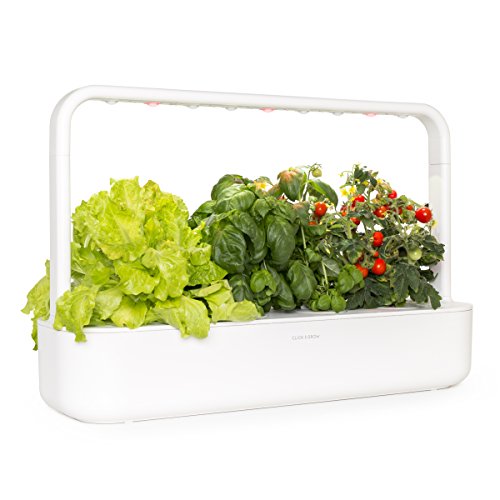
Click and Grow Smart Garden 9
Nutrients sit inside the soil capsules here, so nothing gets mixed or measured. A wicking reservoir carries plants roughly three weeks between fills. Nine slots suit a mixed herb rotation rather than one crop grown at volume.
Pros
- Longest refill gap of any kit here
- No liquid feed to mix or pH to check
- Runs silent because no pump is fitted
Cons
- Capsules are sold by one brand only
- Growth lags behind active hydroponic systems

iDOO 12-Pod Hydroponics Growing System
Twelve baskets double the planting slots of a typical countertop unit without doubling its depth. A circulating pump aerates the reservoir, which pushes roots along faster than passive wicking. Light height tops out near 15 inches, enough for basil to bush out before trimming.
Pros
- Most planting slots per inch of counter here
- Pump aeration speeds root development
- Baskets accept sponges and your own seed
Cons
- Pump hum carries in a quiet kitchen
- Reservoir needs scrubbing to keep algae down
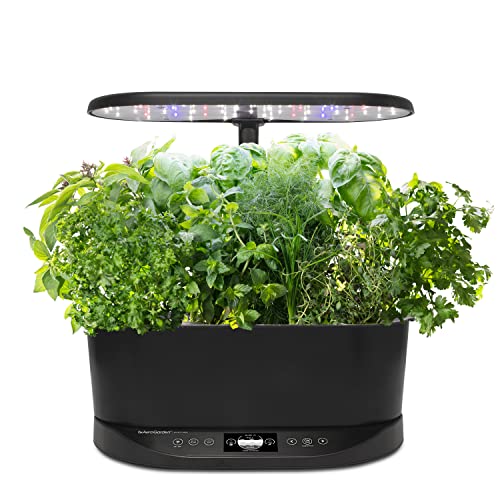
AeroGarden Bounty Elite Indoor Garden
Nine pods, a stainless housing and a deeper tank take this past herb duty into tomatoes and peppers. Its 50 watt panel climbs to 24 inches, double the headroom a Harvest allows. Scheduling, vacation mode and refill reminders all run from a touchscreen.
Pros
- Fruiting plants fit, not only herbs
- Deeper tank cuts the number of refill trips
- Stainless finish suits an open-plan kitchen
Cons
- Demands real counter depth to sit flat
- More machine than basil and parsley require

Back to the Roots Kitchen Herb Garden Kit
Three self-watering planters arrive with organic seed packets and potting mix, ready to sow on a sill. Nothing plugs in, so results track exactly how much sun that window delivers. As a first trial of indoor herbs, it asks for very little commitment.
Pros
- No cords, pumps or consumable pods
- Organic seed packets included in the box
- Planters outlast the seeds for later sowings
Cons
- Needs a genuinely bright south-facing window
- Growth stalls through winter without added light

Planters’ Choice Organic Herb Growing Kit
Four seed packets, biodegradable pots, compressed soil discs and bamboo markers make up the set. Everything assumes growing from seed rather than potting on a nursery plant. Basil, cilantro, parsley and chives cover most weeknight cooking.
Pros
- Lightest commitment of any kit on this list
- Biodegradable pots plant straight into a bigger container
- Works as a practical gift for a new cook
Cons
- Starter pots outgrow themselves within weeks
- Germination hinges entirely on window light

Spade To Fork Indoor Herb Garden Starter Kit
Five herb varieties come with metal tins narrow enough to line up along a sill. Drainage discs, soil and a per-herb growing guide fill out the box. Power is not part of the design, so window aspect decides the outcome.
Pros
- Tins fit a standard window ledge front to back
- Guide covers each herb separately
- Planters stay usable after the first crop
Cons
- Small soil volume means watering every couple of days
- North-facing rooms will not support these herbs
How they compare
| # | Model | Pods | Best for | Score | Price |
|---|---|---|---|---|---|
| 1 | AeroGarden Harvest Indoor Garden | 6 | Best overall | 9.4 | Check price |
| 2 | Click and Grow Smart Garden 9 | 9 | Best hands-off option | 9.2 | Check price |
| 3 | iDOO 12-Pod Hydroponics Growing System | 12 | Best value | 9.0 | Check price |
| 4 | AeroGarden Bounty Elite Indoor Garden | 9 | Best for larger crops | 8.8 | Check price |
| 5 | Back to the Roots Kitchen Herb Garden Kit | 3 self-watering pots | Best for beginners | 8.6 | Check price |
| 6 | Planters’ Choice Organic Herb Growing Kit | 4 herb seed packets | Best budget | 8.3 | Check price |
| 7 | Spade To Fork Indoor Herb Garden Starter Kit | 5 herb seed packets | Best for windowsills | 8.0 | Check price |
Good to know
How long do herbs take to grow in an indoor garden kit?
Hydroponic units usually give a first basil cutting in three to four weeks. Soil kits on a sill need six weeks or more, depending on light. Thyme and rosemary crawl in either format.
Do indoor herb gardens need a grow light?
Without a bright south-facing window, yes. AeroGarden and iDOO build in LED panels for exactly that reason. Unlit kits such as the Spade To Fork set struggle badly from November onward.
Which herbs grow best indoors?
Basil, mint, parsley, chives and thyme all perform under LED panels. Rosemary and lavender want stronger light and drier roots, so they disappoint most indoor growers.
AeroGarden vs Click and Grow: what is the real difference?
AeroGarden circulates water and liquid nutrients, which grows plants faster and supports bigger crops. Click and Grow relies on nutrient-loaded soil capsules and a wicking tank, so attention drops to roughly every three weeks.
Can you use your own seeds in a hydroponic herb kit?
iDOO takes generic baskets and sponges, so any seed works. AeroGarden and Click and Grow are designed around branded pods, though empty pod kits let you fill your own.
How often should you change the water in a hydroponic herb garden?
Top up as the level falls, then replace the whole reservoir every two to four weeks. A full change also clears algae, which builds fastest in units sitting in direct sun.
Is an indoor herb garden kit worth it?
Cook with fresh herbs weekly and it earns its keep, since supermarket bunches wilt in days. Occasional users do better with a windowsill soil kit than a powered system with pods to reorder.
What is the best indoor herb garden for a small apartment?
Click and Grow Smart Garden 9 wins on silence and a three week refill gap, which matters in one room. AeroGarden Harvest is the alternative when you want faster growth and can live with a weekly top-up.
Why is my indoor basil turning yellow?
Yellowing lower leaves point to nutrient shortage or roots sitting in stagnant water. Check the feed schedule, refresh the reservoir, confirm the pump is circulating. Overcrowded pods cause the same symptom.
Do indoor herb garden kits use much electricity?
A 20 watt panel on a 16 hour cycle draws roughly the same as a single LED bulb. Larger units like the Bounty Elite pull 50 watts, still modest next to a kitchen appliance.
The bottom line
Buy the AeroGarden Harvest if you want cut basil within a month and no watering routine to track. Gardeners with a bright south window get better long-run value from Back to the Roots, which has no pods to reorder. Pick the iDOO 12-Pod system when twelve plants at once matters more than a silent kitchen.
Sierra Daniels
Sierra's background is in landscape design and nursery retail. She focuses on lawn and garden equipment, outdoor furniture and gear durability, weighing published specs against how materials actually hold up outside.