Hole Punches That Won’t Jam on Thick Office Stacks
Swingline’s SmartTouch 20-Sheet leads for daily office binders as the strongest all-around pick. Officemate’s Adjustable 3-Hole Punch suits light home use on a budget. Bostitch’s EZ Squeeze 40-Sheet wins bulk binding jobs that need less hand force.
Swingline’s SmartTouch 20-Sheet punches the most paper per stroke without added hand strain, making it the top pick for busy offices, though its metal build adds weight compared to compact models.
Punch quality hinges on sheet capacity and spring resistance, two specs brands rarely print clearly, so we compared listed capacities, guide adjustability, and owner feedback on jamming to rank these seven.
The shortlist, ranked

Swingline SmartTouch 20-Sheet 3-Hole Punch
Twenty sheets per stroke keeps this punch ahead of most office-grade competitors. A low-force lever spreads pressure across the handle so repeat use does not strain the wrist. Letter and A4 paper both align against the adjustable guide, and the 28-sheet chip tray slides out from the side for fast emptying.
Pros
- Low-force handle limits strain during repeat use
- Adjustable guide switches between letter and A4 alignment
- Side-loading chip tray empties without disassembly
Cons
- Heavier build trades off some portability
- Guide markings fade after years of heavy use

Bostitch EZ Squeeze 40-Sheet 3-Hole Punch
Forty sheets punch in a single squeeze, the highest capacity in this lineup. Force spreads across the whole hand instead of concentrating in the fingers, thanks to the squeeze-handle design. Non-skid feet anchor the base when stacks get thick, and a 50-sheet chip tray means fewer trips to the trash.
Pros
- Highest sheet capacity in this comparison
- Squeeze handle needs less finger force than lever styles
- Large chip tray means fewer empties per session
Cons
- Fixed hole spacing skips A4 compatibility
- Bulkier footprint takes more desk space
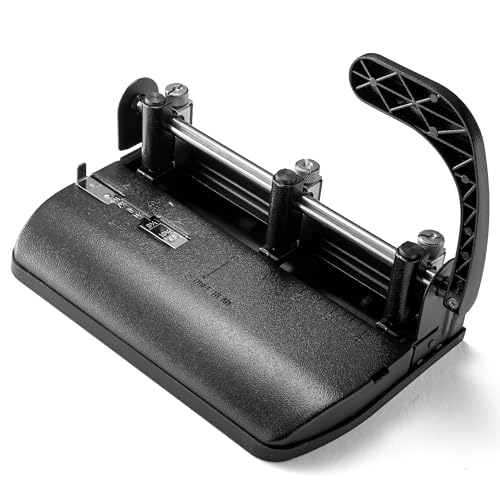
Officemate Adjustable 3-Hole Punch
Occasional home or student punching suits this compact model better than daily office volume. Its adjustable guide switches between 2-hole and 3-hole spacing to match different binder styles. A small chip tray keeps the footprint light, though it fills fast under sustained use.
Pros
- Switches between 2-hole and 3-hole spacing
- Lightweight design stores easily in a drawer
- Low cost fits occasional, light-duty punching
Cons
- 10-sheet limit struggles with thick reports
- Plastic base flexes under repeated heavy pressure
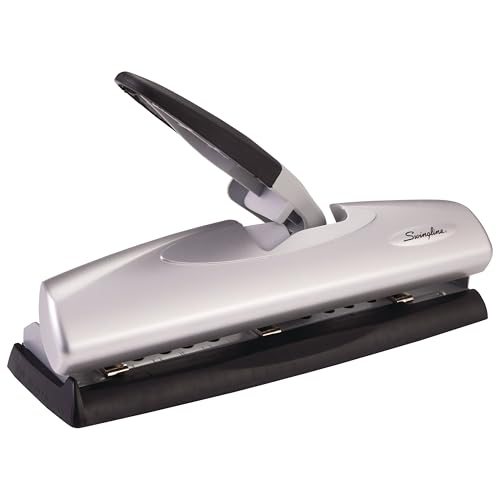
Swingline Light Touch 2-3 Hole Punch
Reduced squeeze force sets this model apart for anyone punching paper over long stretches. Both 2-hole and 3-hole configurations are available, covering different binder standards without buying a second punch. A clear base shows paper alignment before the lever drops.
Pros
- Noticeably lighter squeeze than standard punches
- Clear base improves paper alignment visibility
- Handles both 2-hole and 3-hole binder standards
Cons
- 12-sheet capacity trails higher-end models
- Clear plastic base scratches over time
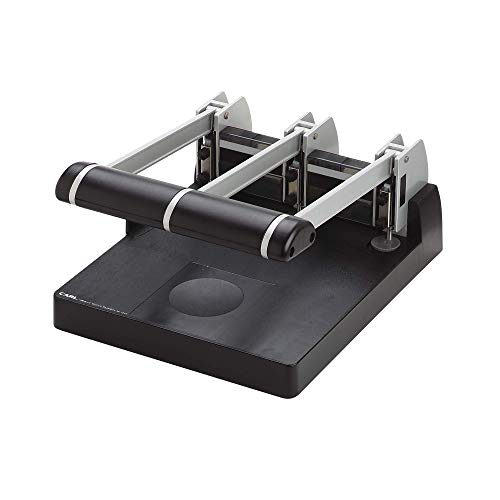
Carl XHC-2300 Heavy-Duty 3-Hole Punch
Shared desks and classrooms wear down plastic punches fast, which is why Carl built this one with a full metal frame. Thirty-sheet capacity clears thick packets in a single pass instead of repeated attempts. A locking lever keeps the mechanism closed for safer storage and transport between rooms.
Pros
- All-metal frame withstands shared, high-traffic use
- Locking lever keeps it compact for storage
- 30-sheet capacity clears thick packets in one pass
Cons
- Fixed spacing does not fit A4 paper
- Heavier weight limits portability
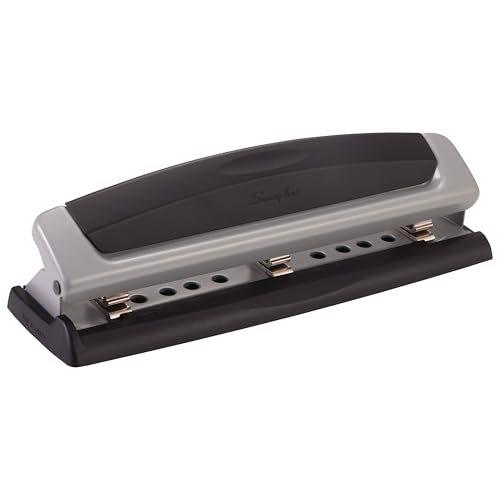
Swingline Compact Handheld 3-Hole Punch
No flat base means this handheld version fits in a bag or desk drawer instead of taking up counter space. Single pages punch more reliably than full stacks, since capacity tops out at five sheets. Its small chip tray needs more frequent emptying than desktop models.
Pros
- Fits in a bag or drawer for on-the-go use
- One-handed operation skips the flat base entirely
- Low price suits backup or travel use
Cons
- 5-sheet limit rules out thicker documents
- Small chip tray fills up quickly
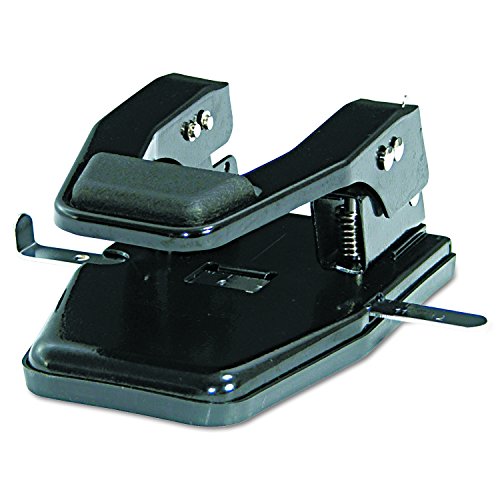
Martin Yale TCC5 Premier Two-Hole Punch
Medical and legal offices rely on two-hole filing systems that this punch is built specifically to serve. An adjustable center guide repositions hole spacing to match different binder widths. Steel punch heads hold their edge through repeated heavy use better than standard alloy blades.
Pros
- Adjustable center spacing fits varied 2-hole binders
- 24-sheet capacity suits mid-size reports
- Steel punch heads resist dulling
Cons
- Not built for standard 3-hole binders
- Larger footprint than compact punches
How they compare
| # | Model | Sheet capacity | Best for | Score | Price |
|---|---|---|---|---|---|
| 1 | Swingline SmartTouch 20-Sheet 3-Hole Punch | 20 sheets | Best overall | 9.4 | Check price |
| 2 | Bostitch EZ Squeeze 40-Sheet 3-Hole Punch | 40 sheets | Best for bulk binding | 9.1 | Check price |
| 3 | Officemate Adjustable 3-Hole Punch | 10 sheets | Best budget | 8.6 | Check price |
| 4 | Swingline Light Touch 2-3 Hole Punch | 12 sheets | Best for small hands | 8.8 | Check price |
| 5 | Carl XHC-2300 Heavy-Duty 3-Hole Punch | 30 sheets | Best for classrooms and shared desks | 9.0 | Check price |
| 6 | Swingline Compact Handheld 3-Hole Punch | 5 sheets | Best for portability | 8.4 | Check price |
| 7 | Martin Yale TCC5 Premier Two-Hole Punch | 24 sheets | Best for two-hole binder systems | 8.7 | Check price |
What to look for
What to look for in a hole punch Sheet capacity decides whether a punch survives daily office use or stays a drawer backup. Compare the listed capacity against your actual stack thickness, not a single-sheet demo. Adjustable guides let one unit serve both 2-hole and 3-hole binder systems, which matters most in mixed offices. Chip tray size sets how often paper confetti needs dumping, a detail brands rarely highlight upfront.
How much sheet capacity does an office punch need Offices binding reports daily need at least 20 sheets per stroke to avoid repeated passes. Both the Swingline SmartTouch and Bostitch EZ Squeeze clear that threshold, with the Bostitch reaching 40 sheets for the heaviest jobs. A low-force lever or squeeze handle keeps strain manageable when one person punches hundreds of sheets weekly. Skipping this spec is the most common reason office punches get replaced within a year.
Best hole punch for home or occasional use Home users rarely punch more than a handful of pages at once, so 30-sheet capacity goes unused. Officemate’s Adjustable and Swingline’s Light Touch cost less and take up less drawer space than office-grade models. Both switch between 2-hole and 3-hole spacing, covering most binder types found at home. Buying a high-capacity punch for occasional use mostly adds bulk without a real benefit.
Portability, shared desks, and specialty binder systems Handheld punches like the Swingline Compact skip a flat base entirely, trading capacity for pocket size. Classrooms and shared desks favor all-metal builds such as the Carl XHC-2300, which resist wear from multiple daily users better than plastic housings. Medical and legal offices using two-hole filing should look at the Martin Yale TCC5 instead of a standard 3-hole model. Matching base material and hole spacing to the actual use case avoids buying the wrong punch twice.
Good to know
What sheet capacity do I need for a home office punch?
Most home users punch fewer than 10 sheets at once, so a 10 to 12-sheet capacity punch like the Officemate Adjustable covers typical needs without extra bulk.
Can one hole punch handle both 2-hole and 3-hole binders?
Yes, models like the Swingline Light Touch and Officemate Adjustable include a sliding guide that switches between 2-hole and 3-hole spacing.
How many sheets can a heavy-duty hole punch handle at once?
Heavy-duty models such as the Bostitch EZ Squeeze punch up to 40 sheets in a single stroke, cutting binding time on large reports.
Is a squeeze-handle punch easier on the hands than a lever punch?
Squeeze handles like the Bostitch EZ Squeeze spread pressure across the whole hand, while lever punches like the Swingline SmartTouch use leverage to cut the force needed per stroke.
Do metal hole punches last longer than plastic ones?
All-metal builds like the Carl XHC-2300 resist wear better under daily shared use than plastic-bodied punches, which can flex or crack over years of heavy pressure.
What is the difference between a desktop punch and a handheld punch?
Desktop punches sit flat with a paper guide for alignment and higher capacity, while handheld punches like the Swingline Compact trade capacity for a smaller, portable size.
How often does the chip tray need emptying?
Tray frequency depends on capacity; a 15-sheet tray on a compact punch fills faster than the 50-sheet tray on the Bostitch EZ Squeeze during heavy use.
Are adjustable hole punches good for both letter and A4 paper?
Yes, punches with an adjustable paper guide, like the Swingline SmartTouch, reposition holes to match letter or A4 sizing.
Which hole punch works best for two-hole filing systems?
The Martin Yale TCC5 targets two-hole filing common in medical and legal offices, with a center guide that adjusts to different binder widths.
The bottom line
Swingline’s SmartTouch fits most offices that bind reports weekly, pairing a low-force lever with a guide that adjusts for letter and A4 paper. Anyone punching thicker stacks regularly should step up to the Bostitch EZ Squeeze for its 40-sheet ceiling. Occasional home users get more value from the Officemate Adjustable, which costs less and needs far less storage space.
Marcus Chen
Marcus covered consumer electronics for enthusiast tech publications for six years before joining ChoiceCrest. He specializes in translating manufacturer spec sheets into plain-language buying advice, with a focus on audio, computing accessories and smart-home gear.
You might also need

Top Photo Papers for Home Office Printing
Filing Cabinets vs Digital Storage: Which Fits Your Office?

Smart Glasses for the Office: Picks That Mean Business
