What Makes a Hockey Stick Right for Your Position?
Bauer’s Vapor Hyperlite 2 suits quick-release shooters best, thanks to its low kick point. CCM’s Jetspeed FT6 Pro balances weight and feel better than the rest of this list. Warrior’s Covert QR5 Pro rewards players who load hard into one-timers.
Quick-release shooters get the most from the Bauer Vapor Hyperlite 2, an all-round game favors the CCM Jetspeed FT6 Pro, and players leaning into heavy one-timers should look at the Warrior Covert QR5 Pro.
Marketing pushes stick weight, yet the real driver of shot feel is where the shaft loads and releases. We compared kick point design across shot types, blade stiffness, weight and balance, then weighed that against what owners report about durability through a full season.
How to choose
Why kick point matters more than stick weight Where the shaft bends and releases decides what kind of shot a stick helps you take. Low-kick sticks load close to the blade and release fast, suiting wrist and snap shots in traffic. Mid-kick sticks load through the middle of the shaft, generating more power on a full wind-up for slap shots and long-range shooting. Match this to how you actually shoot, not how you wish you shot.
How to choose stick flex by weight and strength A common starting point sets the flex number at roughly half your body weight in pounds, so a 180-pound player often starts around 85 flex. Younger and less strong players need a lower flex just to load the stick at all. Stronger players can go stiffer for better accuracy. Cutting a stick down raises its effective flex, so factor that in before ordering.
Does blade curve really change how a stick performs? Curve depth, face angle, and toe shape affect how easily you lift the puck, how a pass sits on your blade, and how backhands behave. Deeper curves lift pucks more easily but hurt backhand control. A mid curve with a moderate open face is the most forgiving starting point for someone unsure.
Why do composite hockey sticks break so easily? Top-end sticks stay light by using less material, which means they fail sooner under heavy use, especially at the blade heel and lower shaft. A slightly heavier mid-tier stick often lasts longer for a recreational player. Cost per season matters more than sticker price when the top model costs twice as much.
The shortlist, ranked

Bauer Vapor Hyperlite 2 Hockey Stick
Vapor sticks build around a low kick point, loading and releasing fast for players who shoot off the rush rather than winding up. The Hyperlite 2 keeps blade stiffness while shedding weight compared with older Vapor generations. Owners report a release that genuinely feels quicker than mid-kick sticks, the entire reason to buy into this line.
Pros
- Fast loading suits quick-release shots
- Very light without sacrificing blade stiffness
- Wide range of flexes and curves available
Cons
- Premium price sits at the top of the range
- Low kick point suits one-timers less well

CCM Jetspeed FT6 Pro Hockey Stick
A hybrid kick point splits the difference between the extremes, working for most shot types instead of specializing. Blade feel stands out here, giving solid puck feedback for stickhandling and passing. Forwards and defensemen who do a bit of everything gravitate toward this stick rather than a specialist model.
Pros
- Versatile kick point covers most shot types
- Strong blade feel for handling and passing
- Balanced weight distribution through the shaft
Cons
- Specializes in nothing, so extremes get served better elsewhere
- Pro version sits at a top-end price

Warrior Covert QR5 Pro Hockey Stick
Covert sticks load lower in the shaft, storing energy through a longer flex that suits heavy slap shots and point one-timers. Blade stiffness holds shot accuracy even under a hard load. Technique and strength both matter here, since the stick rewards players who load it properly.
Pros
- Stores energy well for heavy shots
- Stiff blade holds accuracy under load
- Balanced despite a deep-loading design
Cons
- Less rewarding for quick-release shooters
- Requires strength to load the shaft properly

True Catalyst 9X3 Hockey Stick
True built its reputation on blade feel, and the Catalyst line delivers direct feedback through the puck for handling and receiving passes. Kick point sits toward quick release without the extreme setup of the Vapor line. Playmakers tend to favor this stick over pure shooters.
Pros
- Outstanding puck feel through the blade
- Quick release without extreme specialization
- Comfortable shaft shape for handling
Cons
- Fewer curve options than the largest brands
- Blade durability trails the toughest competitors
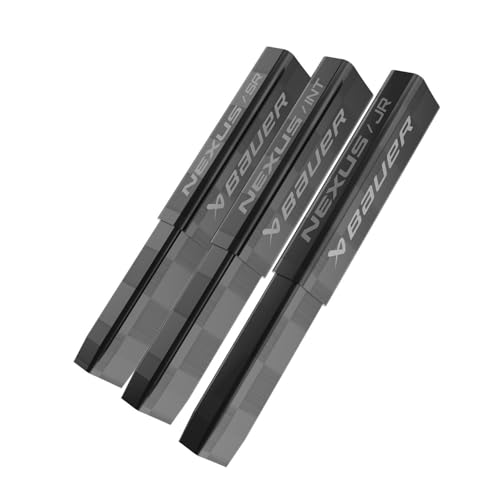
Bauer Nexus Sync Hockey Stick
Nexus represents Bauer’s mid-kick line, built to generate power through a full wind-up rather than a fast release. Shaft geometry runs squarer than round profiles, which some players find easier to grip and load. Defensemen taking point shots and forwards shooting from distance tend to prefer this setup.
Pros
- Mid kick generates strong power on full wind-ups
- Square shaft shape aids grip and loading
- Reliable curve and flex availability
Cons
- Slower release than low-kick sticks
- Slightly heavier than the lightest options here

CCM Ribcor Trigger 8 Pro Hockey Stick
Ribcor is CCM’s low-kick line, flexing closer to the blade for a very fast load and release. A textured shaft grip distinguishes it, though opinion on the texture splits players. Shooting in tight, off the rush and in traffic, is where this stick rewards most.
Pros
- Very fast release for shots in traffic
- Distinctive grip texture aids hand placement
- Light and well balanced overall
Cons
- Grip texture divides opinion among players
- Not suited to heavy point shots

Sherwood Rekker Legend Pro Hockey Stick
Sherwood consistently prices its top stick below equivalent Bauer and CCM models while keeping a genuinely competitive build. Rekker uses a low-kick profile aimed at quick-release shooters. Recreational and beer-league players get pro-level performance here without the pro-level outlay.
Pros
- Strong performance for the price point
- Low-kick profile suits most modern shooting styles
- Light enough to compete with pricier sticks
Cons
- Fewer curve and flex combinations in stock
- Resale value and availability trail the big brands
The lineup, side by side
| # | Model | Kick point | Best for | Score | Price |
|---|---|---|---|---|---|
| 1 | Bauer Vapor Hyperlite 2 Hockey Stick | Low, quick release | Best overall | 9.4 | Check price |
| 2 | CCM Jetspeed FT6 Pro Hockey Stick | Hybrid, versatile | Best all round | 9.2 | Check price |
| 3 | Warrior Covert QR5 Pro Hockey Stick | Low with deep loading profile | Best for one timers | 9.0 | Check price |
| 4 | True Catalyst 9X3 Hockey Stick | Quick release oriented | Best blade feel | 8.7 | Check price |
| 5 | Bauer Nexus Sync Hockey Stick | Mid, power oriented | Best for power shooters | 8.5 | Check price |
| 6 | CCM Ribcor Trigger 8 Pro Hockey Stick | Low, very fast release | Best for quick shooters | 8.3 | Check price |
| 7 | Sherwood Rekker Legend Pro Hockey Stick | Low, quick release | Best value | 8.0 | Check price |
Good to know
What flex hockey stick should I use?
Start near half your body weight in pounds as a flex number, then adjust for strength and style. Softer flex suits players who struggle to load the stick, and stiffer flex suits shooters losing accuracy. Cutting a stick shorter stiffens it by several flex points per inch removed.
What is kick point and why does it matter?
Kick point marks where the shaft bends and stores energy during a shot. Low kick points load and release quickly for wrist and snap shots. Mid kick points load over a longer motion, generating more power on slap shots. The wrong choice makes a natural shot feel awkward.
How long should a hockey stick be?
A common guide has the stick reach between your chin and nose while standing in skates. Shorter sticks aid puck handling and shooting in tight, and longer sticks help reach and poke-checking for defense. Adjust from there based on stance comfort.
Are expensive hockey sticks actually worth the price?
Competitive players notice the weight savings and blade responsiveness, and it is worth paying for. Recreational players often do better with a mid-tier stick, since it lasts longer and the performance gap narrows. Sherwood’s Rekker line delivers pro-style feel at a lower cost.
How long does a composite hockey stick usually last?
Usage and skill level swing this widely, from a few weeks for a heavily used pro model to a couple seasons for a recreational player on a mid-tier stick. Blades typically fail before shafts. Storing a stick away from extreme cold and avoiding slashes at the heel both extend life.
Right or left handed hockey stick, which one do I need?
This depends on which hand sits at the top of the shaft, not which hand you write with. A left-handed stick puts your right hand on top and your left hand lower. Picking up a broom naturally shows which way your hands fall.
Can a broken hockey stick be repaired?
Small blade cracks can be sealed temporarily with epoxy and tape, and an internal plug can sometimes patch a broken shaft, though neither performs like the original. A stick that failed at the flex point is generally done. Treat repairs as a way to finish a season, not a permanent fix.
Does blade stiffness actually matter on a hockey stick?
Yes. A stiffer blade holds its shape through hard shots for better accuracy, while a softer blade dampens passes and adds feel for handling. Playmakers tend to prefer more feel, and shooters tend to prefer more stiffness, which is why lines like True Catalyst and Warrior Covert appeal to different players.
Our take
Quick-release shooting suits how most of the game gets played now, which is why the Bauer Vapor Hyperlite 2 tops this list. Players wanting one stick for everything should look at the CCM Jetspeed FT6 Pro. Anyone whose main weapon is a heavy shot from distance should stick with the Warrior Covert QR5 Pro.
Derek Holt
Derek has a background coaching recreational and amateur athletes and has worked the sales floor at specialty fitness retailers. He focuses on equipment durability, ergonomics and realistic use cases rather than marketing claims.