Hiking Socks That Won’t Leave You With Blisters
Darn Tough Hiker Micro Crew Cushion leads for its durable merino build and lifetime warranty. Smartwool Hike Light Cushion Crew suits warm-weather trails with a lighter cushion profile. Hikers who blister between their toes get more relief from Injinji’s Trail Midweight design.
Darn Tough Hiker Micro Crew Cushion fits hikers logging serious trail miles, thanks to a tightly knit merino blend that resists thinning at the heel, though it costs more than basic synthetic socks.
Sock choice affects blisters more than boot choice for many hikers, so fit, cushioning placement, and moisture handling across popular trail sock listings guided this comparison.
Our top picks

Darn Tough Hiker Micro Crew Cushion
Merino wool blended with nylon resists thinning at the heel and ball of the foot better than pure synthetic knits. Flat-knit toe seams cut down on the friction that causes blisters over multi-mile days. An unconditional lifetime warranty backs the sock against normal wear.
Pros
- Lifetime warranty replaces socks worn out from normal use
- Flat-knit toe seams cut down on blister-causing friction
- Merino blend regulates temperature across seasons
Cons
- Costs more per pair than basic synthetic socks
- Full cushioning runs warm on hot summer trails

Smartwool Hike Light Cushion Crew
A lighter cushion profile keeps feet cooler than full-cushion hikers without giving up merino’s moisture management. Mesh ventilation zones sit over the top of the foot, where heat builds up fastest. Day hikers who don’t need heavy padding get most of the benefit.
Pros
- Light cushioning stays cooler on warm-weather day hikes
- Merino wool manages moisture without synthetic odor buildup
- Mesh zones target the hottest part of the foot
Cons
- Less padding than full-cushion socks on rocky terrain
- Wears out sooner than Darn Tough’s heavier knit

Wigwam Merino Comfort Hiker
Lower merino content than premium brands brings the price down while still beating pure cotton on moisture handling. A cushioned footbed covers the sole without adding bulk around the ankle. Casual hikers who don’t log big weekly mileage fit this sock best.
Pros
- Lower price than premium merino-heavy brands
- Cushioned footbed adds comfort without ankle bulk
- Stretch nylon keeps the fit snug through the arch
Cons
- Lower merino content reduces odor resistance versus premium options
- No lifetime warranty like Darn Tough offers

Injinji Trail Midweight Crew
Individual toe pockets, similar to a glove for the foot, stop toes from rubbing against each other on long descents. Hikers prone to between-toe blisters see the biggest benefit from this layout. A CoolMax and merino blend wicks moisture out of each separated pocket.
Pros
- Individual toe pockets stop toe-on-toe blister friction
- Moisture-wicking blend keeps each toe pocket dry
- Midweight cushioning suits most three-season trail conditions
Cons
- Toe sock fit takes some hikers time to adjust to
- Doesn’t work well with a narrow toe box boot
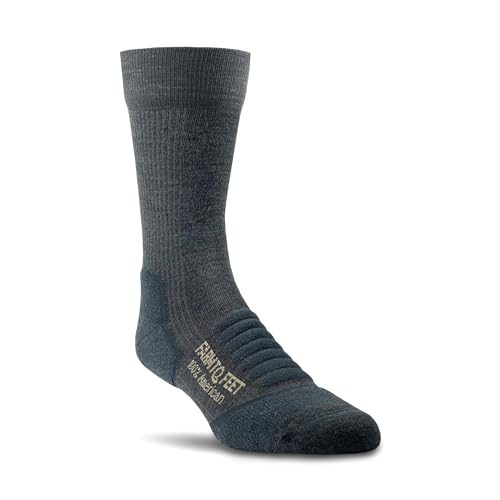
Farm to Feet Damascus Lightweight Hiker
Made in the United States, this lightweight merino knit targets hot-weather trails and trail-running crossover use. Minimal cushioning keeps the sock thin inside trail runners or lighter hiking shoes. Drying happens faster than with heavier cushioned socks after stream crossings.
Pros
- Thin profile fits well inside trail runners and light hikers
- Dries faster than cushioned socks after water crossings
- Manufactured domestically with traceable wool sourcing
Cons
- Minimal cushioning offers less protection on rocky trails
- Not warm enough for cold-weather or winter hikes

Bridgedale Hike Midweight Merino Endurance
Denser merino cushioning through the sole and shin targets colder trail conditions and heavier winter-rated boots. A woven arch brace adds support during long descents under a loaded pack. Stiffer boots handle the extra bulk better than trail runners do.
Pros
- Denser cushioning suits cold weather and heavier boots
- Woven arch brace adds support under a loaded pack
- Warmer than lightweight socks without feeling bulky
Cons
- Runs too warm for summer or high-exertion hot-weather hikes
- Needs boots with enough volume for the extra cushioning

Darn Tough Hiker Boot Sock Full Cushion
A taller boot-height cuff extends full cushioning up the calf, built for multi-day trips carrying a heavy pack. That extra height protects the lower shin from tall-boot rubbing. Durability holds up across back-to-back trail days without a laundry break.
Pros
- Taller cuff protects the shin during multi-day wear
- Full cushioning holds up over back-to-back trail days
- Same lifetime warranty as the crew-height version
Cons
- Taller height adds unnecessary bulk for short day hikes
- Runs warmer than quarter-crew or no-show styles
How to pick the right one
What to look for in a hiking sock Fiber blend drives most of a sock’s performance, since merino wool manages moisture and odor better than cotton while nylon and spandex add structure. Cushioning should match your boot’s fit, because a full-cushion sock inside a snug boot can create pressure points. Height matters too: crew socks suit mid or high boots, and quarter socks fit low trail runners.
Matching sock weight to season and terrain Lightweight socks, like the Farm to Feet Damascus, suit hot trails and trail-running crossover use because they dry fast and breathe well. Midweight and full-cushion socks absorb impact better on rocky, technical terrain. Cold-weather hikes call for denser cushioning, such as Bridgedale’s Hike Midweight Merino Endurance, to trap warmth around the foot.
Preventing blisters through sock choice Flat-knit toe seams, like those on Darn Tough socks, remove a common friction point that causes blisters at the toes. Hikers who blister specifically between toes get more relief from Injinji’s individual toe-pocket layout. Moisture control matters as much as seam placement, since damp skin blisters faster than dry skin.
Choosing between day-hike and multi-day socks Multi-day backpackers benefit from a taller, more durable boot-height sock built to handle repeated wear without a daily wash. Day hikers can prioritize breathability and lighter cushioning, since comfort over a shorter distance matters more than long-term wear resistance. Packing one backup pair remains common practice on longer trips regardless of sock choice.
The lineup, side by side
| # | Model | Fiber blend | Best for | Score | Price |
|---|---|---|---|---|---|
| 1 | Darn Tough Hiker Micro Crew Cushion | Merino wool, nylon, spandex | Best overall | 9.4 | Check price |
| 2 | Smartwool Hike Light Cushion Crew | Merino wool, nylon, elastane | Best value | 8.8 | Check price |
| 3 | Wigwam Merino Comfort Hiker | Merino wool blend, stretch nylon | Best budget | 8.0 | Check price |
| 4 | Injinji Trail Midweight Crew | CoolMax, merino wool blend | Best for blister-prone feet | 8.6 | Check price |
| 5 | Farm to Feet Damascus Lightweight Hiker | Merino wool, nylon | Best for warm-weather trails | 8.3 | Check price |
| 6 | Bridgedale Hike Midweight Merino Endurance | Merino wool, nylon | Best for cold weather | 8.5 | Check price |
| 7 | Darn Tough Hiker Boot Sock Full Cushion | Merino wool, nylon, spandex | Best for multi-day backpacking | 9.1 | Check price |
Questions worth asking
What material is best for hiking socks?
Merino wool blended with nylon manages moisture and resists odor better than cotton, while the nylon adds durability.
Should hiking socks fit tight or loose?
A snug fit without bunching works best, since loose fabric inside a boot creates friction points that lead to blisters.
Are wool hiking socks worth wearing in summer?
Lightweight merino socks like the Farm to Feet Damascus still work in summer, since merino regulates temperature rather than only trapping heat.
Do toe socks actually prevent blisters?
Toe socks like Injinji’s Trail Midweight target between-toe blisters specifically, though they won’t help with heel or ball-of-foot blisters.
How often should hiking socks get replaced?
Replace them once cushioning thins at the heel or ball of the foot, which for regular hikers can happen every six months to a year.
What’s the difference between crew and quarter-height hiking socks?
Crew socks cover more of the calf and suit mid or high boots, while quarter-height socks sit just above the ankle for low trail runners.
Can regular cotton socks work for hiking?
Cotton holds onto moisture instead of wicking it away, which raises blister risk on longer hikes compared to merino or synthetic blends.
Do hiking socks need extra cushioning on rocky trails?
Full-cushion socks add padding under the heel and ball of the foot, which helps absorb impact on rocky or technical terrain.
Merino wool vs synthetic hiking socks: which lasts longer?
Merino blends with added nylon, like Darn Tough’s knit, typically outlast pure synthetic socks while also controlling odor better.
The bottom line
Darn Tough Hiker Micro Crew Cushion remains the strongest overall pick for its durability and lifetime warranty against wear. Hikers tackling hot-weather trails should choose the Farm to Feet Damascus instead. Anyone dealing with between-toe blisters gets more benefit from Injinji’s toe-sock design.
Sierra Daniels
Sierra's background is in landscape design and nursery retail. She focuses on lawn and garden equipment, outdoor furniture and gear durability, weighing published specs against how materials actually hold up outside.

