Hiking Camera Backpacks That Actually Carry Weight
Shimoda Explore V2 35 carries best for most hikers, combining an adjustable harness with swappable camera core units. Lowepro PhotoSport PRO 55L AW III adds real backpacking volume for overnight routes. Thule Aspect DSLR Backpack covers day hikes with a mirrorless kit and a light tripod.
Shimoda Explore V2 35 suits photographers who walk real distance with a camera. Its adjustable harness and internal aluminium stay push load onto the hips, which almost no camera bag manages. Empty weight is the cost, since frame and padding outweigh a plain 35 litre hiking pack.
Camera protection and load carriage pull against each other. Padding and dividers add bulk; a load bearing belt adds frame weight. We compared frame and hipbelt construction, litres left once a camera cube goes in, access speed, tripod attachment points and rain cover provision. Owner feedback after long days under load settled the close calls.
Our top picks

Shimoda Explore V2 35 Backpack
Torso length adjusts on a rail behind the shoulder harness, a trick borrowed from backpacking packs rather than camera bags. Core units slide in from the rear, so one shell holds a small mirrorless kit or a gripped body with three lenses. Opening the rear panel lays the bag strap side up, keeping webbing out of mud and snow.
Pros
- Harness adjusts across a range of torso lengths
- Aluminium stay routes weight into the hipbelt
- Core units swap as your kit changes
Cons
- Empty weight exceeds a plain hiking pack
- Core unit ships separately in many listings

Lowepro PhotoSport PRO 55L AW III
Fifty five litres leaves room for a sleeping bag, stove and three days of food once the camera insert is loaded. That insert lifts out entirely on days the kit stays at camp. Reaching a body means going through a side hatch, fast for wildlife but narrow for a full lens swap.
Pros
- Volume supports genuine multi day routes
- Camera insert removes for non photo days
- All weather cover stows in the base
Cons
- Side hatch reaches only part of the kit quickly
- Far too much pack for an afternoon walk

Peak Design Everyday Backpack 30L V2
Hatches on both flanks let you swing the bag onto one shoulder and pull a body out standing up. FlexFold dividers fold into shelves, reshaping around a long lens, a drone or a packed lunch. Suspension is the weak link, because the hipbelt is plain webbing and heavier loads settle onto the shoulders.
Pros
- Quickest side access in this group
- Dividers reshape without tools
- Weatherproof recycled nylon shell
Cons
- Webbing hipbelt transfers little weight
- Boxy profile catches on brush

WANDRD PRVKE 31
Tarpaulin panels and a roll top close the pack against steady rain with no separate cover needed. Rolled down it cinches to around 21 litres; left up it swallows a shell, gloves and lunch. Camera access runs through a side hatch while the bag hangs from one shoulder.
Pros
- Roll top adds volume for a shell or food
- Tarpaulin panels shed rain without a cover
- Passes as an ordinary pack in town
Cons
- Light harness limits comfortable trail load
- Camera cube is often a separate purchase

Thule Aspect DSLR Backpack
A door on the flank reaches the whole camera compartment while the pack hangs from one shoulder. Twenty five litres fits a body, two or three lenses and a packable shell. Tripod legs sit under a side compression strap, and a rain cover hides in a base pocket rather than costing extra.
Pros
- Side door works without setting the pack down
- Rain cover included rather than optional
- Sized around a body plus two lenses
Cons
- Thin hipbelt on long steep descents
- No space left for overnight gear

Vanguard Alta Sky 45D
Its tall central bay takes a 500mm lens with the body still mounted, something 30 litre packs cannot do. Clothing and food ride in a separate section, away from glass. Wildlife shooters accept the footprint; anyone threading narrow singletrack will feel how wide it sits across the back.
Pros
- Holds a super telephoto with the body attached
- Keeps clothing separate from camera gear
- Several tripod mounting positions
Cons
- Wide profile snags on tight trails
- Heavy before a single lens goes in
K&F Concept Camera Backpack
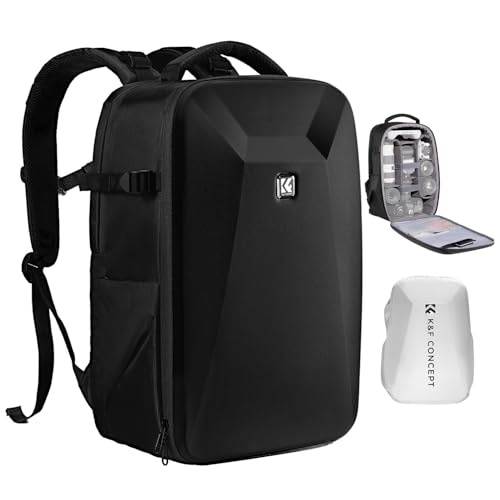
Padded dividers, a side door and a tripod strap cover what a first mirrorless kit needs. Around 25 litres holds a body, two lenses, lunch and a rain shell. Back padding is flat foam with no ventilation channel, so plan modest loads and shorter routes.
Pros
- Covers the basics of a first camera pack
- Rain cover included on most versions
- Light enough for short day hikes
Cons
- Flat foam back panel traps heat
- Zips and buckles wear faster over years
The lineup, side by side
| # | Model | Capacity | Best for | Score | Price |
|---|---|---|---|---|---|
| 1 | Shimoda Explore V2 35 Backpack | 35 L | Best overall | 9.4 | Check price |
| 2 | Lowepro PhotoSport PRO 55L AW III | 55 L | Best for overnight trips | 9.2 | Check price |
| 3 | Peak Design Everyday Backpack 30L V2 | 30 L | Best for fast side access | 9.0 | Check price |
| 4 | WANDRD PRVKE 31 | 21 to 31 L with roll top | Best for wet weather | 8.8 | Check price |
| 5 | Thule Aspect DSLR Backpack | 25 L | Best value | 8.6 | Check price |
| 6 | Vanguard Alta Sky 45D | Around 45 L class | Best for long lenses | 8.3 | Check price |
| 7 | K&F Concept Camera Backpack | Around 25 L | Best budget | 8.0 | Check price |
How to pick the right one
What to look for in a hiking camera backpack Suspension decides everything past about 15 pounds. Look for a padded hipbelt with a frame sheet or stay behind it, not a webbing strap sewn to the base. Usable volume comes next, because a camera cube can eat half the stated litres. Access style splits two ways: rear panel for security, side hatch for speed. Tripod attachment points and an included rain cover finish the checklist.
How much capacity you need for day hikes and overnight trips Twenty five to 30 litres holds a body, two lenses and a shell, which covers most day hikes. Thule Aspect and Peak Design Everyday 30L both sit in that band. Overnight changes the arithmetic completely. Sleeping bag, pad, stove and food want 45 litres before camera gear joins them, which is the reason Lowepro PhotoSport PRO 55L exists. Go smaller and something ends up lashed outside, swinging with every step.
Carrying long lenses, tripods and drones A 70 to 200mm lies flat in almost any cube once detached from the body. Leave it mounted and you need a tall bay like the Vanguard Alta Sky 45D. Tripods ride better on the side than the front, since side carry keeps mass near your centre line and stops legs clipping your head on scrambles. Strap the legs at two points or they pendulum on descents. Drones sit more securely on FlexFold shelves than in a fixed padded cube.
Rain, cold and keeping gear dry Rain covers handle drizzle competently. Sustained rain eventually finds zips and seams, so a dry bag around the cube is cheap insurance. Roll top closures like the WANDRD PRVKE keep water out of the main body better than a zipped lid. Cold drains batteries fast below freezing, so stash spares in an inside pocket against your body. Condensation is the other hazard: let a cold body warm inside the pack before you open it in a heated room.
Common questions
What size camera backpack is best for hiking?
Twenty five to 35 litres suits a day out with a body and two or three lenses. Overnight routes need 45 litres or more once a sleeping system, stove and food go in.
Do camera backpacks have real hipbelts?
Few do. Shimoda and Lowepro build load bearing belts with a frame behind them. Most urban camera bags use a webbing strap that steadies the pack without moving weight off your shoulders.
Can you fit a 70 to 200mm lens in a camera backpack?
Yes, lying flat and detached in almost any camera cube. Mounted on a body it needs a taller bay or a cube sized for a gripped camera.
Is side access or rear access better on the trail?
Side hatches win for wildlife that will not wait. Rear panels keep shoulder straps out of mud and make a zip harder to reach in a crowd. Shimoda offers both.
How do you attach a tripod to a camera backpack?
Side carry with two attachment points is the most stable. Front mounting balances a heavy camera load but blocks pockets and swings on steep ground.
Are camera backpacks waterproof?
Almost none are. Expect a weatherproof shell plus an included rain cover, then line the camera compartment with a dry bag for anything longer than a shower.
Which camera backpack works for flying and hiking?
Peak Design Everyday 30L and WANDRD PRVKE 31 both fit standard carry on dimensions and look unremarkable in a terminal. Neither carries a heavy load comfortably on a long climb.
Should you buy the camera cube separately?
Buying separately lets you match cube size to your kit and change it later. A bundled cube is simpler when your setup is settled and unlikely to grow.
Is a hiking camera backpack worth it over a regular pack plus an insert?
An insert inside a framed hiking pack carries better and costs less. Dedicated packs win on access speed, since you reach glass without unpacking the top of the bag.
Which camera backpack suits wildlife photography?
Vanguard Alta Sky 45D, because a 500mm stays mounted and ready. For lighter telephoto work, Lowepro PhotoSport PRO 55L pairs a side hatch with room for a hide and food.
The bottom line
Buy the Shimoda Explore V2 35 if your walk runs beyond a mile from the car, because its adjustable harness and internal stay genuinely move weight onto your hips. Overnight photographers should size up to the Lowepro PhotoSport PRO 55L instead. Anyone shooting mostly in cities pays for a frame they never load, and gets more from Peak Design’s dual side hatches.
Sierra Daniels
Sierra's background is in landscape design and nursery retail. She focuses on lawn and garden equipment, outdoor furniture and gear durability, weighing published specs against how materials actually hold up outside.