Hiking Boots Built to Handle Real Trail Miles
The Lowa Renegade GTX Mid is the strongest all-around pick, combining stitched leather construction with Gore-Tex waterproofing that holds up over years of trail use. The Salomon Quest 4 GTX suits anyone carrying heavier backpacking loads, while the Merrell Moab 3 fits hikers who want solid performance without the premium leather price.
The Lowa Renegade GTX Mid stands out because its stitched, resoleable construction and Gore-Tex membrane are built to outlast glued synthetic boots over repeated seasons of use. Its main limitation is a longer break-in period, since the nubuck leather upper needs time to soften before long days on trail.
We compared published upper materials, waterproofing membranes, support structures and weight across each listing rather than running our own trail tests.
Our top picks

Lowa Renegade GTX Mid
Lowa builds this mid boot on a nubuck leather upper with a stitched, not glued, construction that holds up to resoling over years of use. A Gore-Tex membrane keeps feet dry without sacrificing much breathability on long approaches. A reinforced heel and torsional stability plate support loaded packs on rocky, uneven trail.
Pros
- Stitched construction allows resoling instead of full replacement
- Gore-Tex membrane balances waterproofing with breathability
- Torsional plate supports loaded packs on uneven terrain
Cons
- Leather upper needs a break-in period before long hikes
- Costs more upfront than synthetic mid boots
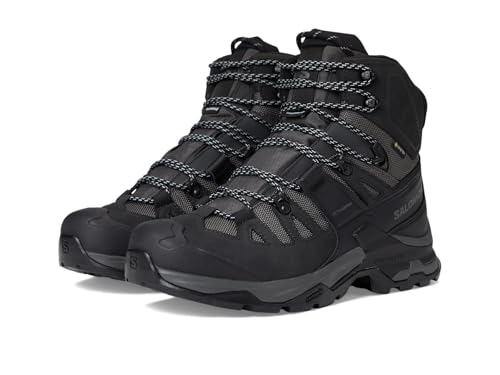
Salomon Quest 4 GTX
A full length Advanced Chassis plate runs through the midsole, adding torsional rigidity most synthetic boots lack under a loaded backpack. The Gore-Tex lining pairs with a Contragrip outsole tuned for traction on loose rock and wet surfaces. Salomon’s Quicklace system replaces traditional eyelets with a single pull cord for faster adjustments.
Pros
- Advanced Chassis plate adds stability under heavy pack weight
- Contragrip outsole grips loose rock and wet surfaces
- Quicklace system tightens the boot in one quick pull
Cons
- Synthetic upper is less durable long term than full leather boots
- Narrower fit than the Keen or Oboz models here

Merrell Moab 3 Mid Waterproof
The Moab 3 keeps the suede leather and mesh upper that made the original Moab popular, now paired with a Vibram TC5+ outsole for added grip. A waterproof membrane handles wet grass and light stream crossings without the premium price of a full Gore-Tex boot. An EVA midsole adds cushioning suited to shorter day hikes rather than multi-day loads.
Pros
- Lower cost than premium leather or Gore-Tex competitors
- Vibram TC5+ outsole adds grip on mixed terrain
- EVA midsole cushions well for day hikes out of the box
Cons
- Waterproofing lags behind true Gore-Tex membranes in sustained rain
- Less structural support for heavy multi-day pack loads
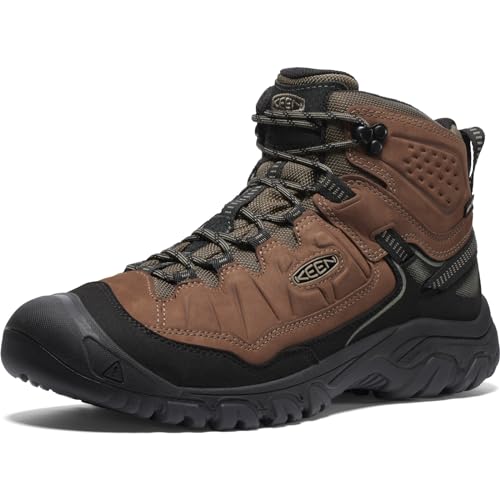
Keen Targhee IV Mid
Keen’s roomier toe box fits wider feet more comfortably than the narrower lasts used by Salomon or Lowa. A removable metatomical footbed molds to arch shape over time, and the KEEN.DRY waterproof membrane keeps the breathable mesh panels from soaking through. A rubber toe bumper adds protection on rocky, root-heavy trail.
Pros
- Roomier toe box suits wide feet better than narrower boots
- Removable footbed allows custom orthotic swaps
- Rubber toe bumper protects against rocks and roots
Cons
- Bulkier fit may feel loose for narrow or average width feet
- Heavier than lightweight hikers like the Hoka Anacapa 2

Danner Mountain 600
Danner builds this boot from full-grain leather, a material that resists abrasion and ages better over years of trail use than synthetic uppers. A Vibram Fuga outsole adds traction tuned for both trail and light scrambling. Despite the rugged construction, the boot keeps a relatively manageable weight for a full leather hiker.
Pros
- Full-grain leather resists abrasion better than synthetic uppers
- Vibram Fuga outsole suits trail and light scrambling alike
- Lower weight than most leather boots in its durability class
Cons
- Leather needs regular conditioning to maintain water resistance
- Longer break-in period than mesh and synthetic competitors

Oboz Bridger Mid B-DRY
Oboz pairs a nubuck leather upper with its own B-DRY waterproof lining, an in-house alternative to licensed membranes like Gore-Tex. A proprietary O FIT insole adds arch support without needing an aftermarket swap. The brand plants a tree for every pair sold, a detail some buyers weigh alongside performance.
Pros
- O FIT insole adds arch support without buying a separate insert
- B-DRY membrane performs close to licensed waterproofing at lower cost
- Comfortable out of the box with a shorter break-in than full leather
Cons
- B-DRY membrane runs slightly less breathable than Gore-Tex in heat
- Less proven long-term durability than Lowa’s stitched construction
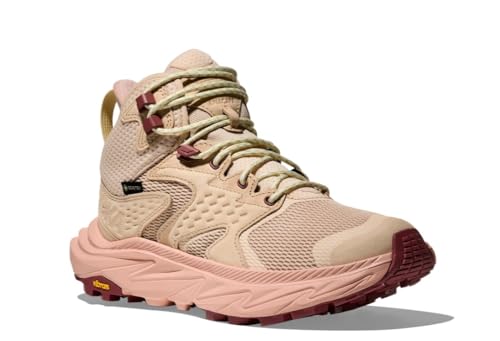
Hoka Anacapa 2 Mid GTX
Hoka brings its running shoe background to this hiker, using an oversized EVA midsole for cushioning most hiking boots do not match. The reduced weight suits fast dayhikes and peak bagging better than loaded backpacking trips. A Gore-Tex membrane keeps the breathable upper dry without adding much bulk.
Pros
- Oversized EVA midsole cushions more than traditional hiking boots
- Lighter weight suits fast dayhikes and peak bagging
- Gore-Tex membrane adds waterproofing without much added bulk
Cons
- Less torsional support for heavy loaded backpacking trips
- Softer midsole wears down faster than firmer traditional soles
How to choose
What to look for in a hiking boot Upper material sets the durability baseline, with full-grain leather on boots like the Danner Mountain 600 outlasting synthetic textiles over repeated seasons. A waterproof membrane, whether licensed Gore-Tex or an in-house option like Oboz B-DRY, decides how well the boot handles wet grass and stream crossings. Midsole support, from a torsional plate to a soft EVA foam, should match the loads the boot will actually carry. Weight affects fatigue on long days, so lighter options like the Hoka Anacapa 2 suit different hikers than heavier leather boots.
Matching boots to your pack weight Hikers carrying a loaded backpack need the torsional rigidity found in the Salomon Quest 4 GTX’s Advanced Chassis plate or the Lowa Renegade’s stability plate, since a soft midsole flexes too much under weight on uneven ground. Dayhikers moving fast and light benefit more from the Hoka Anacapa 2’s cushioned EVA midsole, which prioritizes comfort over structural rigidity. The Merrell Moab 3 sits between the two, offering enough support for day trips without the stiffness built for multi-day loads.
Fit and foot shape considerations Foot width varies more between hiking boot brands than most buyers expect. The Keen Targhee IV Mid uses a noticeably roomier toe box than the Salomon Quest 4 GTX, making it the better starting point for wide or high-volume feet. Narrower feet tend to fit the Salomon’s trimmer last more securely without extra lacing adjustments. Trying a boot with the socks and insoles intended for actual use matters more than relying on a brand’s stated width category.
Waterproofing and breathability tradeoffs Gore-Tex, used in the Lowa Renegade, Salomon Quest 4 and Hoka Anacapa 2, remains the most proven licensed membrane for balancing dryness with breathability. In-house alternatives like Oboz B-DRY and Merrell’s M Select Dry perform well in light rain and wet grass but can run warmer in humid conditions. Hikers in consistently wet climates should lean toward Gore-Tex, while those in drier regions may not notice much difference day to day.
Compared at a glance
| # | Model | Upper | Best for | Score | Price |
|---|---|---|---|---|---|
| 1 | Lowa Renegade GTX Mid | Nubuck leather | Best Overall | 9.4 | Check price |
| 2 | Salomon Quest 4 GTX | Synthetic textile with TPU overlays | Best for Heavy Backpacking Loads | 9.1 | Check price |
| 3 | Merrell Moab 3 Mid Waterproof | Suede leather and mesh | Best Value | 8.8 | Check price |
| 4 | Keen Targhee IV Mid | Leather and breathable mesh | Best for Wide Feet | 8.7 | Check price |
| 5 | Danner Mountain 600 | Full-grain leather | Best Leather Durability | 8.9 | Check price |
| 6 | Oboz Bridger Mid B-DRY | Nubuck leather | Best for Day Hiking | 8.6 | Check price |
| 7 | Hoka Anacapa 2 Mid GTX | Synthetic textile with Gore-Tex lining | Best for Lightweight Cushioning | 8.5 | Check price |
Questions worth asking
What is the difference between a mid and high hiking boot?
A mid boot, like the Lowa Renegade GTX Mid, covers the ankle for moderate support. A high boot extends further up the leg, adding more ankle stability for heavier loads or rougher terrain.
Do hiking boots need to be waterproof?
Not always. Waterproof membranes like Gore-Tex add protection in wet grass, stream crossings and rain, but hikers in consistently dry climates can prioritize breathability instead.
How long does it take to break in leather hiking boots?
Full leather boots like the Danner Mountain 600 or Lowa Renegade typically need several short hikes before the leather softens fully around the foot.
Are synthetic hiking boots as durable as leather ones?
Generally no. Synthetic uppers, like the one on the Salomon Quest 4 GTX, are lighter but wear faster over years of use than full-grain leather.
Which hiking boots work best for wide feet?
The Keen Targhee IV Mid uses a roomier toe box designed specifically for wider feet, more so than the narrower Salomon or Lowa lasts.
Is Gore-Tex necessary in a hiking boot?
It helps most in wet or variable climates. Hikers in dry regions can consider non-Gore-Tex options like the standard Merrell Moab 3 without losing much practical performance.
Can hiking boots handle backpacking with a full pack?
Boots with a dedicated support plate, such as the Salomon Quest 4 GTX or Lowa Renegade GTX Mid, hold up better under loaded packs than softer, cushioned dayhikers.
How much should a hiking boot weigh?
It depends on use. Lightweight boots like the Hoka Anacapa 2 weigh under a pound per boot, while supportive leather boots like the Danner Mountain 600 weigh noticeably more.
Do lightweight hiking boots sacrifice ankle support?
Somewhat. The Hoka Anacapa 2 trades some torsional rigidity for cushioning and reduced weight, which suits fast dayhikes better than loaded backpacking.
Our pick
The Lowa Renegade GTX Mid earns the top recommendation for most hikers, since its stitched leather construction and Gore-Tex membrane are built to last through years of regular trail use. Anyone carrying a heavier backpacking load should choose the Salomon Quest 4 GTX instead, because its Advanced Chassis plate handles weight on uneven ground better than the standard midsole on most mid boots. Hikers who want solid day hiking performance without the premium leather price should skip the pricier options and pick the Merrell Moab 3.
Sierra Daniels
Sierra's background is in landscape design and nursery retail. She focuses on lawn and garden equipment, outdoor furniture and gear durability, weighing published specs against how materials actually hold up outside.
You might also need

Weatherproof String Lights That Handle Rain and Cold
Greenhouse Garden Hoses That Handle Heat, Cold, and Sun

Portable Heavy-Duty String Trimmers Built for Tough Jobs
