Picking an RV Inverter That Matches Your Appliance Load
Renogy’s 3000W Pure Sine Wave inverter runs a microwave and small AC unit on larger rigs. Victron’s MultiPlus adds a built-in charger for solar setups. Go Power’s 2000W unit fits mid-size trailers on tighter budgets. Match capacity to your real appliance load, not the biggest number available.
Renogy’s 3000W Pure Sine Wave inverter leads this list for larger RVs with heavy appliance loads. It delivers enough continuous power to run a residential microwave alongside a small AC unit. Few competitors in this class match its 6000W surge rating for startup spikes.
High-capacity inverters differ mainly in continuous versus surge wattage, plus whether a built-in charger comes standard. Sizing one to your rig starts with adding up your real appliance draw. Buying the biggest number available often wastes money on capacity you never use. We compared spec sheets, surge ratings, and owner feedback on charger reliability to rank these seven.
How to pick the right one
What to look for in a high-capacity inverter Continuous wattage shows what an inverter runs steadily. Surge wattage covers the brief spike when a compressor or motor starts. Pure sine wave output matters for sensitive electronics and some microwaves. Modified sine wave costs less but can cause humming in speakers or interference with certain devices.
Sizing capacity to your appliance load Start by adding up the running wattage of everything you might use at once. Then check the surge rating against your highest single startup draw, usually a compressor or AC unit. A 2000W inverter covers most trailers. Rigs running a residential microwave with an AC unit typically need 3000W.
Built-in charger vs standalone inverter An inverter charger like the Victron MultiPlus or AIMS unit combines inversion and battery charging in one box. That simplifies wiring for solar or generator setups. A standalone inverter costs less upfront but needs a separate charger for topping off batteries from shore power.
Sizing wiring and battery banks for boondocking High-capacity inverters draw heavy current from a 12V battery bank. That bank needs properly sized cabling and fusing to avoid voltage drop or overheating. Boondocking setups pulling well pump or power tool loads benefit from higher surge ratings, like the AIMS 3000W’s 9000W spec.
The best picks, ranked

Renogy 3000W Pure Sine Wave Inverter
This inverter delivers a clean 3000W continuous pure sine wave with a 6000W surge rating for appliance startup spikes. It draws from a 12V DC battery bank. A remote control panel lets you monitor output from inside the cabin instead of the storage bay.
Pros
- Handles high-draw appliances like microwaves
- Remote panel shows status from the cabin
- Pure sine output stays safe for electronics
Cons
- Needs a robust 12V battery bank
- Larger housing requires dedicated mounting space

Victron Energy MultiPlus 12/3000/120
The MultiPlus pairs a 3000VA inverter with a built-in battery charger and an automatic transfer switch. It shifts to shore power charging without manual intervention. That integration suits RVs running solar panels alongside generator charging.
Pros
- Built-in charger cuts down separate components
- Automatic transfer switch handles shore power
- Pairs well with solar-charged battery banks
Cons
- Costs more than standalone inverters
- Setup benefits from a Victron-familiar installer

Go Power! 2000W Pure Sine Wave Inverter
Go Power’s 2000W unit covers most travel trailer loads, including a coffee maker and laptop chargers. It costs less than a 3000W system. Its compact housing fits tighter under-bed or basement storage bays.
Pros
- Costs less than 3000W high-capacity units
- Compact housing fits tight storage bays
- Pure sine output stays safe for electronics
Cons
- Cannot run a residential AC unit
- Leaves less headroom for added appliances
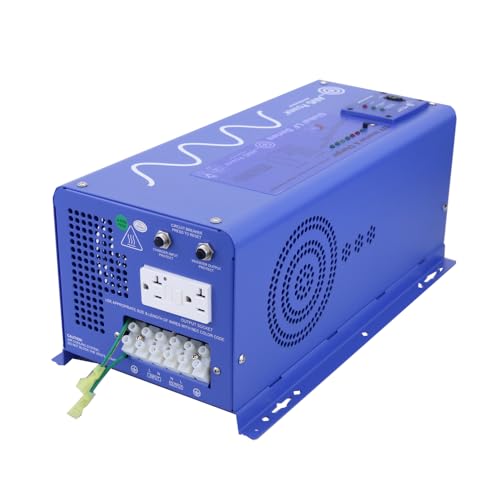
AIMS Power 3000W Pure Sine Inverter Charger
AIMS rates this unit for a 9000W surge, well above the standard 2x rating on most inverters. That headroom covers the startup spike from a well pump or power tool. An integrated charger tops off the battery bank on shore power.
Pros
- High surge rating for motor startup loads
- Integrated charger works during shore stops
- Built for demanding off-grid use
Cons
- Bulkier housing than standard inverters
- Heavy current draw needs thick-gauge cabling
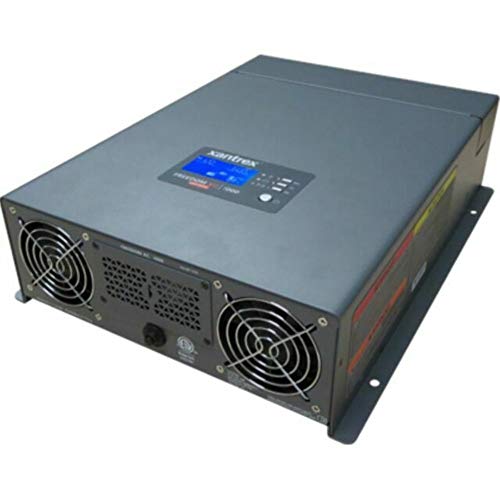
Xantrex Freedom XC 2000
Xantrex builds this inverter charger to match specs many RV manufacturers install at the factory. That simplifies replacement without rewiring the electrical bay. A low-battery shutoff protects the battery bank from deep discharge.
Pros
- Matches common factory RV wiring specs
- Low-battery shutoff protects the battery bank
- Integrated charger cuts down extra components
Cons
- 2000W ceiling limits heavy appliance use
- Less surge headroom than 3000W rivals

Krieger 3000W Power Inverter
Krieger reaches 3000W continuous output at a lower price than premium high-capacity inverters. It uses modified sine wave instead of pure sine. That tradeoff suits tools and basic appliances but not every sensitive electronic device.
Pros
- High wattage at a lower price point
- Runs most basic AC appliances fine
- Includes two AC outlets plus USB ports
Cons
- Modified sine wave unsuits some electronics
- No built-in battery charger included

Renogy 2000W Pure Sine Wave Inverter with Transfer Switch
This model adds a built-in transfer switch that shifts the RV’s AC circuit between shore power and inverter power automatically. That removes the need for a separate manual switch in the electrical bay. Output stays 2000W continuous pure sine wave.
Pros
- Automatic switching simplifies wiring work
- Pure sine output stays safe for electronics
- 2000W covers common trailer loads
Cons
- Lower ceiling than 3000W units
- No integrated battery charger included
Compared at a glance
| # | Model | Continuous power | Best for | Score | Price |
|---|---|---|---|---|---|
| 1 | Renogy 3000W Pure Sine Wave Inverter | 3000W | Best overall | 9.4 | Check price |
| 2 | Victron Energy MultiPlus 12/3000/120 | 3000VA | Best for solar setups | 9.2 | Check price |
| 3 | Go Power! 2000W Pure Sine Wave Inverter | 2000W | Best value | 8.8 | Check price |
| 4 | AIMS Power 3000W Pure Sine Inverter Charger | 3000W | Best for off-grid boondocking | 8.7 | Check price |
| 5 | Xantrex Freedom XC 2000 | 2000W | Best for factory RV integration | 8.5 | Check price |
| 6 | Krieger 3000W Power Inverter | 3000W | Best for budget-conscious 3000W | 8.2 | Check price |
| 7 | Renogy 2000W Pure Sine Wave Inverter with Transfer Switch | 2000W | Best for shore-power switching | 8.1 | Check price |
Common questions
What size inverter do I need for my RV?
Add up the running wattage of appliances used at the same time and compare it to the continuous rating. Most trailers need 2000W, while rigs running a microwave or small AC unit need 3000W or more.
Pure sine wave vs modified sine wave, which is better for an RV?
Pure sine wave works safely with all electronics and most modern appliances. Modified sine wave costs less but can cause humming or interference with sensitive devices like some microwaves.
Can a 3000W inverter run an RV air conditioner?
A 3000W pure sine wave inverter can run a small RV air conditioner alongside light loads. Check the AC unit’s starting wattage against the inverter’s surge rating first.
Is an inverter with a built-in charger worth it?
If your RV already has a separate charger or converter, a standalone inverter works fine. An inverter charger like the Victron MultiPlus simplifies wiring for a new solar or generator setup.
How does surge wattage differ from continuous wattage?
Continuous wattage is what the inverter sustains during normal operation. Surge wattage covers the brief higher draw when a compressor or motor first starts, usually two to three times the continuous rating.
What battery bank size pairs with a high-capacity inverter?
A 3000W inverter typically needs a bank capable of sustained high current output, often multiple 100Ah or larger batteries wired for the needed voltage.
Which inverter works best for boondocking off-grid?
High-surge units like the AIMS Power 3000W handle well pump and power tool startup spikes better than standard-surge inverters, which matters for off-grid camps running these loads.
Do high-capacity inverters need heavy-gauge cables?
Yes. Higher wattage inverters draw more current at 12V, which requires thicker gauge cable and properly rated fuses to prevent voltage drop and overheating.
2000W vs 3000W inverter, which size fits most RVs?
2000W fits most travel trailers running lights, a coffee maker, and laptop chargers. 3000W suits larger rigs adding a microwave or small AC unit to that load.
Can I install a high-capacity inverter myself?
Basic standalone inverters like the Krieger or Go Power connect with standard DC cabling many owners handle themselves. Integrated charger systems like the Victron MultiPlus benefit from an installer familiar with that wiring.
Our take
For RVs mixing a microwave with other appliances, the Renogy 3000W Pure Sine Wave inverter offers the clearest balance of continuous power and surge headroom. Owners building a solar-charged off-grid system should pick the Victron MultiPlus instead for its integrated charger. Trailer owners with lighter loads can save money with the Go Power 2000W over a 3000W unit.
Tony Russo
Tony trained as an automotive technician and spent years in service and parts retail before moving into writing. He focuses on garage tools, car care products and accessories from a hands-on maintenance perspective.
