Heavy Duty Trekking Poles That Survive Air Travel and Rugged Trails
The LEKI Makalu FX Carbon takes the top spot for travelers who need poles that handle rough trails and fit in a suitcase. It combines carbon fiber strength with a secure locking system, but it costs more than aluminum options.
Traveling with trekking poles is tricky. You need poles that are tough enough for rocky terrain, yet compact enough for airline luggage. Many poles break at the joints or fail to collapse small enough.
We looked at owner reports and specifications to find poles that withstand heavy use and travel abuse. The focus is on durability, secure locks, and reasonable packed length.
The shortlist, ranked

LEKI Makalu FX Carbon
This pole uses high-modulus carbon fiber with a proven locking system. Owners report it survives years of international travel and hard trails.
Pros
- Extremely durable carbon shaft
- Reliable locking mechanism
- Comfortable cork grips
Cons
- Pricey for casual hikers
- Not adjustable for very tall users

Black Diamond Trail Trek Poles
These aluminum poles are built to take abuse. They feature a simple flick lock that holds well. Travelers like the affordable price for solid performance.
Pros
- Strong aluminum build
- Easy to use locks
- Great value
Cons
- Heavier than carbon
- Grips wear over time
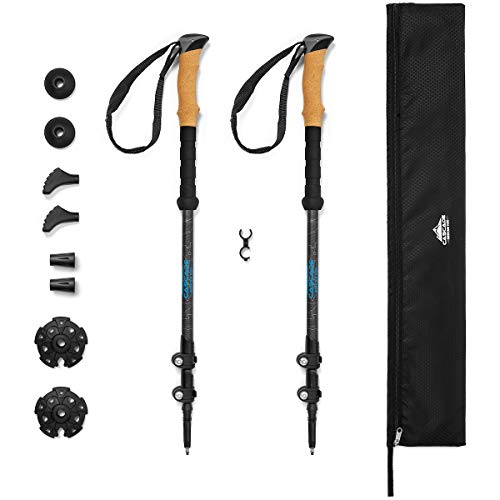
Cascade Mountain Tech Carbon Fiber Quick Lock
At just over a pound per pair, these poles are easy to carry in a backpack. The carbon fiber construction is strong, but some users note the locks need occasional tightening.
Pros
- Very lightweight
- Carbon fiber absorbs shock
- Fits in most carry-ons
Cons
- Locks may slip if not maintained
- Not for extreme heavy loads

TrailBuddy Trekking Poles
This set comes with accessories and a carrying bag. The aluminum shaft is sturdy, and the twist locks are simple. Many users report they handle rough terrain well.
Pros
- Includes mud baskets and tips
- Adjustable for all heights
- Very affordable
Cons
- Twist locks can loosen
- Heavier than carbon

Foxelli Carbon Fiber Trekking Poles
These poles feature an anti-shock system that reduces impact on knees. They are lightweight and pack well, making them a favorite for long hiking trips.
Pros
- Built-in shock absorption
- Comfortable EVA grips
- Includes travel bag
Cons
- Shock mechanism adds complexity
- Not as rigid for steep climbs

MSR Dynalock Ascent Carbon
Designed for serious alpine use, this pole has a robust carbon shaft and Dynalock system that won’t slip. It collapses to a compact size for travel.
Pros
- Excellent lock strength
- Compact folded size
- Durable for heavy use
Cons
- Expensive
- Grips are not cork

Brazos Walking Sticks Trekking Poles
These poles extend to 55 inches, making them ideal for tall users. The aluminum build is heavy but very strong, and the twist locks hold well.
Pros
- Long adjustment range
- Heavy duty aluminum
- Comes with extra tips
Cons
- Heavier than average
- Twist locks may need maintenance
How to pick the right one
How they compare
| # | Model | Material | Best for | Score | Price |
|---|---|---|---|---|---|
| 1 | LEKI Makalu FX Carbon | Carbon fiber | Best overall for durability and weight | 9.4 | Check price |
| 2 | Black Diamond Trail Trek Poles | Aluminum | Best budget heavy duty pick | 8.8 | Check price |
| 3 | Cascade Mountain Tech Carbon Fiber Quick Lock | Carbon fiber | Best lightweight carbon for air travel | 8.6 | Check price |
| 4 | TrailBuddy Trekking Poles | Aluminum | Best for budget travelers needing adjustability | 8.4 | Check price |
| 5 | Foxelli Carbon Fiber Trekking Poles | Carbon fiber | Best shock absorption for joint comfort | 8.7 | Check price |
| 6 | MSR Dynalock Ascent Carbon | Carbon fiber | Best for mountaineering and rough terrain | 9.2 | Check price |
| 7 | Brazos Walking Sticks Trekking Poles | Aluminum | Best for tall hikers needing extra length | 8.3 | Check price |
Common questions
Can I bring trekking poles in my carry-on luggage?
Most airlines do not allow trekking poles in carry-on because they can be used as weapons. Check with your specific airline, but it’s safer to pack them in checked luggage.
What is the best material for heavy duty trekking poles?
Aluminum is the most durable and affordable. Carbon fiber is lighter and better for shock absorption, but it can be more expensive and less impact-resistant.
How do I choose the right length for trekking poles?
When standing with the pole tip on the ground, your elbow should be at a 90 degree angle. Adjustable poles let you adapt to terrain, going shorter uphill and longer downhill.
Are twist locks or lever locks more reliable?
Lever locks are generally more reliable and easier to use, especially with gloves. Twist locks can slip if not tightened properly, but they are lighter and less bulky.
How much weight can trekking poles support?
Most trekking poles can support up to 250 pounds or more, but it depends on the material and build. Carbon poles may have lower weight limits, while aluminum ones are stronger.
Do trekking poles help with knee pain?
Yes, they reduce impact on knees by transferring weight to your arms. Many hikers report less knee strain on descents when using poles.
What accessories are essential for travel?
A carrying bag protects poles in luggage. Spare tips and baskets are useful for changing terrain. Some poles come with rubber feet for walking on pavement.
How do I maintain my trekking poles?
Rinse off dirt and dry them after each trip. Tighten locks regularly. Check for cracks in carbon shafts. Lubricate twist locks occasionally.
Our pick
For most travelers who need heavy duty performance, the LEKI Makalu FX Carbon is the best investment. It offers the perfect balance of strength, light weight, and compactness. If you are on a tight budget, the Black Diamond Trail Trek Poles give you solid aluminum durability at a lower cost.
Derek Holt
Derek has a background coaching recreational and amateur athletes and has worked the sales floor at specialty fitness retailers. He focuses on equipment durability, ergonomics and realistic use cases rather than marketing claims.

