Scratching Posts Built for Maine Coons and Ragdolls
SmartCat Pioneer Pet Ultimate Scratching Post wins for large cats: 32 inches of woven sisal on a 16 inch square base. Feandrea 67-Inch Cat Tree spreads scratching and perching across levels for multi-cat homes. Catit Vesper V-High Base swaps in fresh sisal posts when the old ones shred.
SmartCat Pioneer Pet Ultimate Scratching Post suits any household with a cat over 15 pounds. Woven sisal fabric runs the full 32 inch column, so a Maine Coon reaches overhead without arching. A 16 inch square base absorbs the sideways pull that topples slimmer posts. Downside: nothing perches, nothing hides, and worn sisal cannot be re-covered.
Large cats wreck posts two ways. They rock a narrow base loose, then strip a thin surface inside a season. We compared published heights against base footprints, checked frame materials, and noted which surfaces unscrew or slide out for replacement. Owner feedback from Maine Coon, Ragdoll and Bengal households filled the gap specs leave, especially around wobble after six months of daily use.
What we recommend
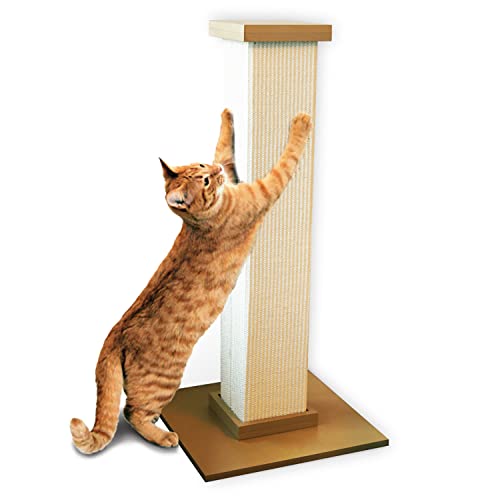
SmartCat Pioneer Pet Ultimate Scratching Post
Thirty two inches of column lets a long cat reach up instead of curling forward. Woven sisal fabric covers the whole length, so claws never snag a loose rope end. Screws fix the post into a 16 inch square base, and that footprint is why it stays planted.
Pros
- Clears a full adult stretch without arching
- Sisal fabric wears flat rather than unravelling
- Base footprint resists sideways leverage
Cons
- No perch, hideaway or toy attached
- Worn sisal cannot be re-covered

Feandrea 67-Inch Cat Tree
Five and a half feet of platforms and condos gives two or three big cats separate territory. Anti-toppling wall fittings ship in the box, which matters when a heavy cat lands on the top perch. Particleboard panels keep the structure liftable, though they rarely survive a house move.
Pros
- Separate levels cut squabbling between cats
- Included wall fittings handle heavy landings
- Sisal rope posts cover scratching and climbing at once
Cons
- Assembly runs past an hour
- Particleboard panels do not travel well

Catit Vesper V-High Base Cat Tree
MDF panels in a walnut finish carry mass that carpet-covered trees never have. Each sisal post unscrews, so a shredded column costs one part instead of the whole tree. Ragdoll owners report no flex in the top platform, while the box hideaway fits slimmer cats more comfortably.
Pros
- Individual posts unscrew and swap out
- Dense MDF frame stays still under a landing cat
- Walnut finish reads as furniture in a living room
Cons
- Hideaway box is snug for the largest breeds
- Awkward to shift once built

PetFusion Ultimate Cat Scratcher Lounge
Some big cats claw rugs and walk past every vertical post. This 34 inch deck answers that habit with dense recycled cardboard across a curved lounging surface and a sloped end. Flip it once the first face compresses, and keep a brush nearby for the crumbs.
Pros
- Long enough for a big cat to lie out flat
- Reversible deck doubles usable life
- Catches cats that refuse vertical posts
Cons
- Sheds cardboard crumbs around the base
- Compresses faster than sisal under daily clawing

FUKUMARU 33.5-Inch Cat Scratching Post
At 33.5 inches this column stands slightly taller than the SmartCat. Natural sisal rope wraps the full height and gives the coarse bite hard scratchers tend to pick. Rope does work loose at the top binding, so check the end wrap every few months. A hanging ball toy comes fitted.
Pros
- Height clears a full stretch for most adults
- Coarse rope texture suits determined scratchers
- Two part assembly takes minutes
Cons
- Top rope binding needs occasional re-securing
- Plywood base weighs less than the SmartCat platform

Hepper Hi-Lo Cat Scratcher
Birch plywood side panels hold a corrugated insert that slides free once spent. Three positions cover high, low and flat, so one frame follows a cat whose habits shift with age. Cardboard remains the weak point for a 20 pound scratcher, though swapping an insert takes seconds.
Pros
- Insert replaces instead of the whole scratcher
- Three angles match changing scratching styles
- Plywood frame outlives cardboard-only designs
Cons
- Insert wears fast under a heavy cat
- Sits too low for a vertical full stretch

Trixie Parla Cat Scratching Post
Twenty four inches falls short of a Maine Coon stretch, yet it tucks into a bedroom corner. Sisal rope covers the column and handles daily scratching from cats around 12 to 15 pounds. Set it against a wall if your cat launches onto the plush perch rather than stepping up.
Pros
- Perch and post inside a small footprint
- Sisal rope column at the budget level
- Light enough to move room to room
Cons
- Short for the largest breeds to stretch fully
- Perch rocks when a heavy cat jumps onto it
What matters most
What makes a scratching post heavy duty Three factors separate a post that lasts a year from one binned by spring. Base mass comes first, since a 20 pound cat pulling sideways applies real leverage to a narrow footprint. Surface density ranks second: woven sisal fabric and tight sisal rope both outlast carpet by a wide margin. Carpet brings a second problem, because it teaches cats that floor coverings are fair game. Repairability decides the rest. Catit Vesper posts unscrew, Hepper inserts slide out, and a shredded one-piece column has no route back.
How tall should a post be for a large cat Measure your cat standing on hind legs with front paws reaching up a doorframe, then add a few inches. Adults between 15 and 20 pounds generally need 30 inches or more, which puts the SmartCat at 32 inches and the FUKUMARU at 33.5 inches inside the range and a 24 inch post outside it. Base width close to half the post height works as a rule of thumb. Cat trees change that calculation. Past 60 inches, as with the Feandrea at 67, wall anchoring carries the stability instead of the footprint.
Sisal rope vs sisal fabric vs cardboard Woven sisal fabric wears flat, so every session meets a clean surface with no strands to pull loose. Rope bites coarser and grips harder, which many heavy scratchers prefer, though ends loosen across a year. Cardboard costs least and often attracts cats most, yet it compresses fastest under weight and leaves debris behind. Households with a genuine shredder usually run two surfaces: a sisal column for daily use plus a flat deck like the PetFusion. Skip carpet-covered posts whichever route you pick.
How to get a big cat to use the post instead of your sofa Placement beats persuasion with a determined scratcher. Put the post beside the sofa arm or doorframe already showing claw marks, not in a spare corner. Cats scratch on waking, so a column near the sleeping spot catches the first session of the day. Rub catnip into the sisal for the first week and praise use straight away. Ignoring every vertical post usually points to a horizontal scratcher, and the answer there is a flat or angled surface rather than a taller column.
Side by side
| # | Model | Height | Best for | Score | Price |
|---|---|---|---|---|---|
| 1 | SmartCat Pioneer Pet Ultimate Scratching Post | 32 in | Best overall | 9.4 | Check price |
| 2 | Feandrea 67-Inch Cat Tree | 67 in | Best for multi-cat households | 9.2 | Check price |
| 3 | Catit Vesper V-High Base Cat Tree | About 47 in | Best for heavy cats that climb | 9.0 | Check price |
| 4 | PetFusion Ultimate Cat Scratcher Lounge | 34 x 10.5 x 7.5 in | Best for horizontal scratchers | 8.8 | Check price |
| 5 | FUKUMARU 33.5-Inch Cat Scratching Post | 33.5 in | Best value tall post | 8.6 | Check price |
| 6 | Hepper Hi-Lo Cat Scratcher | Birch plywood | Best for replaceable surfaces | 8.3 | Check price |
| 7 | Trixie Parla Cat Scratching Post | 24 in | Best budget | 8.0 | Check price |
Common questions
How tall should a scratching post be for a large cat?
Aim for 30 inches minimum with cats in the 15 to 20 pound range. Measure your cat reaching up a doorframe and allow a few inches of headroom. Anything under 26 inches forces a big cat to arch, and most simply stop bothering.
Is sisal rope or sisal fabric better for heavy cats?
Fabric wears evenly and leaves no loose strands, so it stays usable longer. Rope gives coarser grip that hard scratchers often prefer. Switch to a woven fabric column like the SmartCat if your cat keeps pulling rope strands free.
Can a cat tree replace a single scratching post?
Yes, as long as the posts are sisal wrapped and the frame is anchored to the wall. A tall tree such as the Feandrea 67-Inch adds perching and climbing that a column cannot. Single posts still win on stability per inch of height and floor space used.
Which scratching posts have replaceable surfaces?
Catit Vesper columns unscrew for swapping, and Hepper Hi-Lo takes fresh cardboard inserts. One-piece designs, the SmartCat included, get replaced whole once sisal wears through to the core.
Why does my cat ignore a new scratching post?
Location and orientation cause most refusals. Move it next to the furniture already being clawed, and try a flat scratcher if your cat works on rugs rather than chair arms. Catnip rubbed into the surface helps during the first week.
Do heavy duty scratching posts tip over?
Rarely, provided base width comes close to half the post height. Narrow bases rock the moment a large cat leans in, and one wobble is often enough to put a cat off permanently. Anything above 60 inches should use its wall anchor.
Are cardboard scratchers worth it for a big cat?
As a second surface, yes. Cardboard suits cats that scratch horizontally, and the PetFusion lounge doubles as a nap spot. Expect faster compression than sisal and crumbs on the floor nearby.
How often should you replace a scratching post?
One large cat typically gets a year or more from a quality sisal post, and two cats get less. Replace it once the surface is stripped to the core, because a bare column gives claws nothing to catch and sends the cat back to your sofa.
What is the best scratching post for a Maine Coon?
Height decides it. Maine Coons regularly reach past 30 inches standing, so the SmartCat at 32 inches or the FUKUMARU at 33.5 inches fit, while a 24 inch post does not. Pair either with a wide base to handle the pull.
Will a scratching post stop a cat clawing furniture?
It redirects the behaviour rather than ending it, since scratching marks territory and sheds claw sheaths. Success depends on putting a taller, more appealing surface right where the damage is happening. Adding a second scratcher in another room removes the remaining excuse.
The verdict
Buy the SmartCat Pioneer Pet Ultimate Scratching Post for one large cat. Height clears a full stretch, woven sisal wears evenly, and the wide base refuses to rock. Two or more big cats justify the Feandrea 67-Inch Cat Tree instead, spreading climbing and scratching across levels so neither cat waits. Pick the Catit Vesper V-High Base if you want living room furniture that takes fresh posts when the old ones give out.
Olivia Hartley
Olivia spent several years working at an animal shelter and a pet-supply retailer before joining the editorial team. She researches pet gear with an emphasis on safety, comfort and the fine print that owners often miss.


