7 Heavy Duty Dog Bowls Built to Survive Aggressive Chewers
Wildone’s Elevated Dog Bowls suit large breeds that need raised feeding height, while Basis Pet’s Stainless Steel Bowl covers daily durability for most homes. Heavy chewers do best with the Neater Feeder’s stainless insert, which resists denting far longer than plastic.
Strong jaws crack plastic bowls, and smooth floors send lightweight bowls sliding across the kitchen mid-meal.
Weight, base material, and bowl depth decide how well a bowl resists tipping and chewing, so construction and capacity were weighed against owner reports of daily wear.
How to choose
What to look for in a heavy duty dog bowl Material drives both durability and how easy a bowl is to clean day to day. Stainless steel resists chewing and denting better than plastic or ceramic. A weighted or rubber base matters just as much, since even a steel bowl slides on tile without one.
Best bowls for large and giant breeds Bigger dogs need higher capacity and often benefit from raised stands that ease neck strain during meals. Elevated systems like Wildone’s also slow down dogs prone to gulping air while eating low to the ground. Capacity above 64 ounces suits breeds like Great Danes or Mastiffs better than standard bowls.
Picks for heavy chewers and food-driven dogs Dogs that bite or push their bowls need thick-gauge stainless steel rather than ceramic, since ceramic can chip under direct pressure. A bonded rubber base, not a separate rubber ring, holds up better because chewers can pry loose rings off over time. Slow-feed designs also cut down the frantic pushing that damages lighter bowls.
Budget options that still hold up Weighted plastic bowls, like the Van Ness Heavyweight, cost less than steel while resisting tipping through a wide, low base. Chew resistance never matches steel, but daily use lasts far longer than thin dollar-store bowls. Single stainless bowls sold without a stand, like Frisco’s, also keep costs down while adding durability.
What we recommend
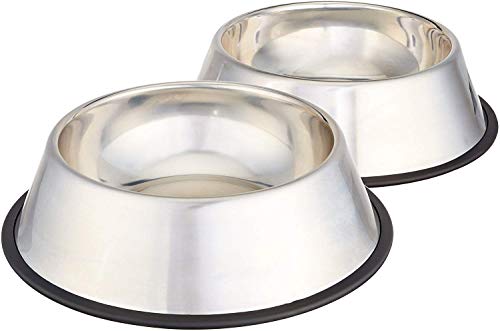
Basis Pet Stainless Steel Dog Bowl
A bonded rubber base anchors this bowl on tile and hardwood, even when a large dog shoves it around mid-meal. 18/8 stainless steel resists rust and will not hold odors the way plastic can over time. Sizes run up to 96 ounces, covering bigger breeds without a separate product line.
Pros
- Rubber base resists sliding on hard floors
- Stainless steel resists rust and odor buildup
- Wide capacity range fits small to giant breeds
Cons
- Rubber base can peel after years of daily washing
- No raised or elevated option in this line

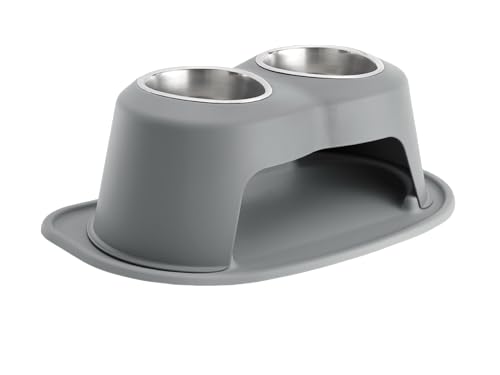
Wildone Elevated Dog Bowls
Two stainless steel bowls sit in a raised stand set to a height suited for larger dogs, cutting neck strain during meals. Powder-coated steel forms the stand itself, standing up to chewing better than wood or plastic frames. Each bowl lifts out on its own for easier washing.
Pros
- Elevated height reduces strain for large dogs
- Removable bowls simplify cleaning
- Steel stand resists chewing better than plastic frames
Cons
- Fixed height per stand, not adjustable after purchase
- Takes up more floor space than single bowls

Neater Feeder Deluxe with Stainless Bowls
A raised outer tray catches water and food spills before they hit the floor, which matters most for dogs that drink sloppily. Stainless steel bowls sit in slots that resist tipping better than a bowl sitting alone. The tray lifts off the base for quick rinsing after meals.
Pros
- Catches spilled water before it hits the floor
- Bowls resist tipping better than standalone bowls
- Tray detaches for easy rinsing
Cons
- Leg extension kit for elevation costs extra
- Plastic tray is less chew-resistant than the steel bowls

Frisco Heavy Duty Non-Skid Stainless Steel Bowl
This single bowl keeps cost low while still using a rubber ring base for slip resistance. Its steel gauge runs thicker than entry-level bowls, cutting down on denting from enthusiastic chewers. Sold individually, it lets owners mix sizes across a multi-dog household.
Pros
- Thicker steel gauge resists denting
- Wide size range up to 128oz for giant breeds
- Lower cost than multi-bowl stand systems
Cons
- Rubber ring is a separate piece that can come loose
- No lid or elevated stand included
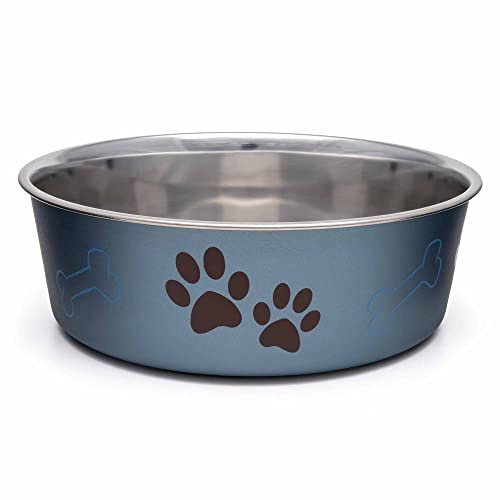
Loving Pets Bella Bowl
Ceramic construction adds natural weight, resisting slides without a rubber base underneath. The glazed finish shrugs off scratches and does not absorb odors the way porous materials can. Calmer dogs suit it better than heavy chewers, since ceramic can chip under direct biting.
Pros
- Natural weight resists sliding without rubber
- Glazed finish resists scratches and odor
- Wide range of colors and patterns available
Cons
- Can chip or crack if a dog bites the rim directly
- Heavier to lift and wash than steel bowls

K9 Konnection Stainless Steel Slow Feeder Bowl
Raised ridges inside the bowl force dogs to eat around obstacles, slowing gulping that raises bloat risk in deep-chested breeds. Stainless steel forms the bowl, with a non-slip rubber base fitted underneath. Each fill holds up to 4 cups.
Pros
- Maze pattern slows down fast eaters
- Stainless steel resists chewing damage
- Rubber base prevents sliding during use
Cons
- Maze ridges take longer to clean than a flat bowl
- Only available in one capacity size

Van Ness Heavyweight Dog Bowl
A wide, low base gives this plastic bowl more tip resistance than standard lightweight bowls, without the cost of steel or ceramic. Thicker polypropylene resists cracking better than dollar-store alternatives. Rounded edges make it easy to wipe out food residue after meals.
Pros
- Lower cost than steel or ceramic options
- Wide base resists tipping despite plastic build
- Wide capacity range for different dog sizes
Cons
- Plastic can still scratch and hold odor over time
- Not as chew-resistant as stainless steel
The lineup, side by side
| # | Model | Material | Best for | Score | Price |
|---|---|---|---|---|---|
| 1 | Basis Pet Stainless Steel Dog Bowl | 18/8 stainless steel | Best overall | 9.2 | Check price |
| 2 | Wildone Elevated Dog Bowls | Powder-coated steel | Best for large breeds | 9.0 | Check price |
| 3 | Neater Feeder Deluxe with Stainless Bowls | Stainless steel | Best for messy eaters | 8.8 | Check price |
| 4 | Frisco Heavy Duty Non-Skid Stainless Steel Bowl | Stainless steel | Best value | 8.5 | Check price |
| 5 | Loving Pets Bella Bowl | Glazed ceramic | Best ceramic option | 8.3 | Check price |
| 6 | K9 Konnection Stainless Steel Slow Feeder Bowl | Stainless steel | Best for fast eaters | 8.4 | Check price |
| 7 | Van Ness Heavyweight Dog Bowl | Heavyweight polypropylene | Best budget | 8.0 | Check price |
Good to know
What is the best heavy duty dog bowl for large dogs?
The Wildone Elevated Dog Bowls suit large breeds well since the raised stand reduces neck strain and the steel bowls resist denting.
Are stainless steel dog bowls better than plastic?
Stainless steel resists chewing, denting, and odor buildup better than plastic, though plastic costs less upfront.
Do heavy duty dog bowls stop sliding on tile floors?
Bowls with a bonded rubber base, not a loose rubber ring, stay in place best on tile and hardwood.
Ceramic vs stainless steel dog bowls, which lasts longer?
Stainless steel holds up better against chewing, while ceramic resists sliding through natural weight but can chip if bitten directly.
What size dog bowl do I need for a large breed?
Large breeds generally need bowls in the 64 to 96 ounce range, depending on food type and feeding frequency.
Can slow feeder bowls prevent bloat in dogs?
Slow feeder designs reduce gulping speed, which some owners use alongside vet guidance for deep-chested breeds prone to bloat.
Are elevated dog bowls worth it for large dogs?
Elevated stands can reduce neck strain for large and senior dogs, though the right height depends on the individual dog’s size.
How do I stop my dog from chewing its food bowl?
Switching to stainless steel over plastic removes the softer material that chewers can damage or ingest.
Which dog bowl works best for messy or sloppy drinkers?
A tray-catching system like the Neater Feeder Deluxe traps spilled water before it reaches the floor.
Is a heavy or weighted bowl better than a non-slip base?
Weight alone helps, as with ceramic bowls, but a bonded rubber base resists sliding better across most floor types.
Final word
For most households, the Basis Pet Stainless Steel Bowl covers durability, slide resistance, and capacity without extra bulk. Owners of large or giant breeds should size up to the Wildone Elevated system instead, since raised feeding height matters more as dogs grow.
Olivia Hartley
Olivia spent several years working at an animal shelter and a pet-supply retailer before joining the editorial team. She researches pet gear with an emphasis on safety, comfort and the fine print that owners often miss.