Camping lanterns that survive rain, drops and cold
Goal Zero Lighthouse 600 ranks first. It puts out 600 lumens, charges a phone over USB, and carries a hand crank for dead battery nights. Streamlight The Siege handles abuse better thanks to IPX7 sealing. Below freezing, Coleman Northstar Propane Lantern stays bright where lithium fades.
Goal Zero Lighthouse 600 suits most campers who want one light for everything. It lights a cooking area at 600 lumens, tops up a phone, and keeps working after the battery dies because of the fold out crank. Its plastic shell tolerates less abuse than Streamlight The Siege. Winter basecamps change the answer, since propane ignores cold that flattens lithium.
Brightness claims get measured at full output for a few minutes, so they say little about a four night trip. We compared IPX sealing, runtime at settings people actually use, power source, and how each lantern hangs or stands. Owner reports on cracked lenses, failed switches and cold weather drop off broke the close calls.
The top picks, ranked
Goal Zero Lighthouse 600
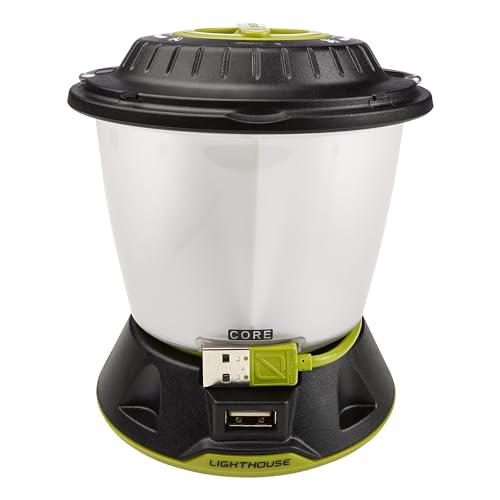
Two LED panels run independently, so half output roughly doubles the burn time. A USB port feeds a phone from the internal pack, and the fold out crank revives the lantern once that pack empties. Folding legs let it stand on a picnic table or hang from a ridgeline.
Pros
- Tops up a phone without a separate power bank
- Hand crank removes the dead battery scenario
- Single panel mode stretches runtime a long way
Cons
- Not rated for submersion like the Siege
- Cranking returns only a small amount of charge
Streamlight The Siege
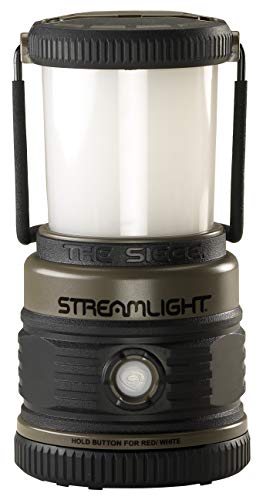
Built for the same buyers as Streamlight work lights, this one shrugs off brief submersion at IPX7. Pull the opaque cover off and a diffused camp light becomes a directional area light. D cell alkalines supply the power, which matters on trips with nowhere to plug in.
Pros
- Handles drops and standing water
- Spare alkaline cells sell anywhere
- Steel D ring hangs it upside down in a tent
Cons
- Peak output trails the rechargeable rivals
- No USB port for charging devices

BioLite AlpenGlow 500
Colour rendering drives this design. A warm to cool range keeps food and faces looking normal rather than blue, and dimming drops low enough for tent use. Inside sits a 6,400 mAh cell that doubles as a phone charger over USB, while shaking the body cycles colour modes that entertain children far more than adults.
Pros
- Warm setting is easier on eyes at a table
- Large cell refills a phone completely
- Dimming range reaches genuinely low levels
Cons
- Rechargeable only, with no spare cell option
- Colour modes drain the pack quickly

Coleman Quad Pro 800L LED Lantern
Four panels lift off the central body, so each person carries their own light to a tent or the toilet block. Docked together they reach 800 lumens, the highest LED figure in this group. D cells keep it running through a week with no electricity anywhere nearby.
Pros
- Splits into four separate lights
- Brightest LED pick in this lineup
- Cheap D cells run it for days
Cons
- Bulky and heavy inside a pack
- Panels are dim once separated

Black Diamond Apollo Lantern
Collapsible legs and a double hook cover both uneven ground and a tent loop. A frosted globe spreads light evenly instead of burning a hotspot into the ceiling. Power arrives from a rechargeable pack or AA cells, so one lantern handles weekend trips and week long ones.
Pros
- Hangs securely inside small tents
- Takes AA cells when charging is impossible
- Dimmer wheel drops low enough for reading
Cons
- Peak output sits below the Coleman Quad Pro
- Legs are the part owners break first

Coleman Northstar Propane Lantern
Propane burned through a mantle makes roughly 1,540 lumens, well past any LED here. Warmth comes free with the light, and a cylinder ignores the cold that drains lithium cells. Open flame rules apply, so this one stays outside the tent and clear of fabric.
Pros
- Brightest option by a wide margin
- Performance holds when temperatures drop
- Adds noticeable warmth at a table
Cons
- Never safe to run inside a tent
- Fragile mantles mean packing spares
Etekcity Portable LED Camping Lantern CL10
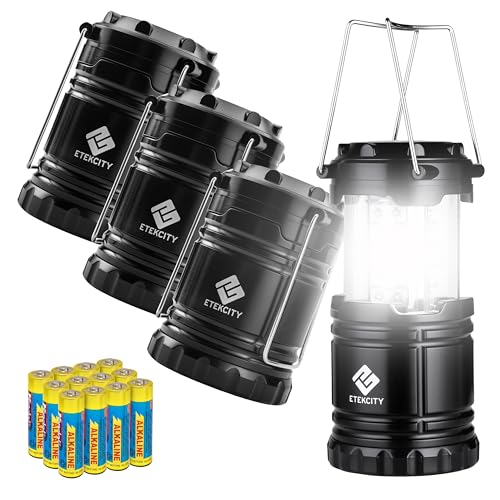
Pulling the collapsible body upward switches it on, which is about as simple as a lantern gets. Three AA cells run it a long time at the modest output it produces. Most owners buy a multipack and scatter them through tents, vehicles and a blackout kit rather than leaning on one light.
Pros
- Affordable enough to keep several on hand
- Collapses flat for glovebox storage
- No charging routine to remember
Cons
- Modest brightness for a whole campsite
- Water resistant only, not submersible
What to look for
What to look for in a heavy duty lantern Sealing comes first. IPX4 splash resistance and the IPX7 submersion rating on Streamlight The Siege are two very different promises. Drops kill more lanterns than rain does, usually a fall from a picnic table onto gravel. Check the hanging hardware next, because a moulded plastic hook snaps where a steel D ring holds. Runtime at a usable low setting tells you more than any headline lumen figure. One more question is worth asking before you buy: can it charge a phone? That turns a single item into two.
Lumens, runtime and the tradeoff between them Peak lumens sell lanterns. Nobody runs full output for long. Six hundred lumens on high might last a few hours, while the same unit on its lowest useful setting stretches into days. Coleman Quad Pro 800L LED Lantern leads the LEDs at 800 lumens combined, and propane roughly doubles that again. Around a table, warm light beats bright light, which is where BioLite AlpenGlow 500 and its adjustable colour temperature pull ahead. Plan on one bright lantern for the cooking area plus a dim one per tent, rather than a single powerful light for the whole site.
Rechargeable cells, alkaline batteries or propane Rechargeable lanterns cost the least to run and often double as power banks. Car camping near an outlet or a solar panel suits them well. Long trips expose the weakness, and lithium capacity falls once temperatures drop. Alkaline models such as the Siege and Coleman Quad Pro 800L LED Lantern keep going as long as you carry cells, and spares weigh almost nothing. Black Diamond Apollo Lantern hedges by accepting a rechargeable pack or AA batteries. Propane sits in its own category: unbeatable below freezing, but tied to cylinders, spare mantles and outdoor only use.
Best lantern for tent nights, storm camps and blackouts Inside a tent, hanging position and low end dimming matter far more than raw power. Black Diamond Apollo Lantern and Goal Zero Lighthouse 600 both hang cleanly and dim low enough to read beside a sleeping child. Storm camping points to the sealed Siege, since a lantern left standing in a puddle should still work at dawn. Power cuts at home favour the Goal Zero crank and a cheap Etekcity multipack, because neither needs planning or a charging routine. Skip the Northstar entirely if your camping happens under canvas in summer, as its open flame and carbon monoxide rule out tent use and its warmth is wasted.
The lineup, side by side
| # | Model | Max output | Best for | Score | Price |
|---|---|---|---|---|---|
| 1 | Goal Zero Lighthouse 600 | 600 lumens | Best overall | 9.4 | Check price |
| 2 | Streamlight The Siege | IPX7 rated waterproof | Best for rough handling | 9.2 | Check price |
| 3 | BioLite AlpenGlow 500 | 500 lumens | Best light quality at camp | 9.0 | Check price |
| 4 | Coleman Quad Pro 800L LED Lantern | 800 lumens combined | Best for family campsites | 8.7 | Check price |
| 5 | Black Diamond Apollo Lantern | Rechargeable pack or AA batteries | Best for tents and hanging | 8.5 | Check price |
| 6 | Coleman Northstar Propane Lantern | About 1,540 lumens | Best for cold weather | 8.3 | Check price |
| 7 | Etekcity Portable LED Camping Lantern CL10 | 3 AA batteries | Best budget | 8.0 | Check price |
Common questions
How many lumens does a camping lantern need?
Roughly 300 lumens covers a cooking area for four people. Tents need far less, often under 50. Coleman Quad Pro 800L LED Lantern handles a big group site, while the Etekcity CL10 is enough inside a tent or during a blackout at home.
Which camping lantern is the most waterproof?
Streamlight The Siege carries an IPX7 rating, so brief submersion does not end the trip. Splash resistance is all the other picks here claim. Canoe trips, coastal weekends and storm prone areas make that gap the whole decision.
Are rechargeable or battery powered lanterns better for camping?
Rechargeable models cost less to run and often refill a phone, which fits car camping. Alkaline lanterns keep working across a week with no power, and cold hurts them less. Black Diamond Apollo Lantern takes either, if you would rather not choose.
Can you use a propane lantern inside a tent?
No. Coleman Northstar Propane Lantern produces an open flame, carbon monoxide and enough heat to melt tent fabric. Run it under an open awning or at an outdoor table, then switch to an LED for anything under canvas.
What lantern works best in freezing temperatures?
Propane, because a gas cylinder keeps burning while cold cuts lithium capacity. Winter basecamps point straight at the Northstar. Prefer LED? Keep the battery inside a jacket until dusk, and pack an alkaline lantern such as the Siege as backup.
Do camping lanterns charge phones?
Some do. Goal Zero Lighthouse 600 and BioLite AlpenGlow 500 both include USB output, and the AlpenGlow carries a 6,400 mAh cell. Alkaline lanterns like the Siege and Coleman Quad Pro 800L LED Lantern offer no charging function at all.
Is a hand crank lantern worth having?
As insurance, yes. Cranking the Lighthouse 600 buys a modest amount of light rather than a full recharge. Treat it as cover for a flat battery on the last night, never as your main power source.
LED lantern vs propane lantern: which should I buy?
LED wins on tent use, portability and safety around children. Propane wins on brightness, warmth and cold weather reliability. Regular campers often run both, putting the Northstar over the cooking table and an LED in each tent.
What is the best camping lantern for a family group site?
Coleman Quad Pro 800L LED Lantern, because its four panels detach and walk off with four different people. Combined output of 800 lumens still covers the main table. Cheap D cells also remove the nightly charging queue that rechargeable lanterns create.
Final word
Buy Goal Zero Lighthouse 600 if you want one lantern to cover everything, since it lights a camp, refills a phone and keeps a crank in reserve for the night the battery quits. Campers who are hard on gear, or who paddle and camp in wet country, are better served by the IPX7 rated Streamlight The Siege. Winter basecamps flip the answer to Coleman Northstar Propane Lantern at roughly 1,540 lumens, provided you accept cylinders, spare mantles and strictly outdoor use.
Derek Holt
Derek has a background coaching recreational and amateur athletes and has worked the sales floor at specialty fitness retailers. He focuses on equipment durability, ergonomics and realistic use cases rather than marketing claims.