Heated Chicken Waterers vs Heat Lamps: Which Stops Freezing
Farm Innovators HB-60P Heated Poultry Drinker tops this list for its three gallon capacity and built in thermostat. Farm Innovators HPF-100 heated base suits owners who already own a metal fount. RentACoop keeps bedding and droppings out with sealed horizontal nipples.
Farm Innovators HB-60P Heated Poultry Drinker leads this comparison, since three gallons covers a small flock for a full day and its thermostat limits power draw. Owners who already run a metal fount get the same result cheaper with the Farm Innovators HPF-100 base. RentACoop’s horizontal nipples keep shavings and droppings out of the water entirely, which matters most in coops that fill with dust over winter.
A flock drinks less within days of water freezing over, and laying drops soon after. We compared published capacities, wattage figures, thermostat behavior and cord protection across current heated poultry waterers and de icer bases, then weighed recurring keeper feedback about refilling in the cold. Ranking favored units that stay open through a sustained freeze without turning into a daily chore.
The top picks, ranked

Farm Innovators HB-60P Heated Poultry Drinker
Three gallons of capacity carries a small backyard flock through a full day without a refill. A thermostatic element only draws power once temperatures approach freezing, keeping running costs modest. Keepers report the wide base stays stable on uneven coop floors, and the fill opening is large enough for gloved hands.
Pros
- Covers a small flock for a full day
- Thermostat keeps running costs low
- Wide opening usable with gloves
Cons
- Open trough collects bedding debris
- Cord exits at the base and needs routing

Farm Innovators HPF-100 Heated Base for Poultry Fount
This base sits under a metal double wall fount instead of replacing it outright. A thermostat controls a higher wattage element, rated to handle the larger founts bigger flocks need. Only metal founts work with it, so confirm compatibility before ordering.
Pros
- Extends the life of an existing fount
- Rated for large capacity founts
- Lowest cost route to unfrozen water
Cons
- Will not work with plastic waterers
- Draws more power than integrated drinkers

RentACoop Heated Chicken Waterer with Horizontal Nipples
Horizontal nipples let birds drink from a sealed bucket rather than an open trough. Shavings, droppings and algae never reach the water, which cuts winter scrubbing to almost nothing. Birds typically need a short training period before they find the nipples reliably.
Pros
- Water stays clean without daily scrubbing
- Sealed design cuts spillage
- Nipples resist bedding contamination
Cons
- Birds need training to find the nipples
- Valves can stick in deep cold if unchecked
Little Giant Heated Poultry Fount
Capacity steps up here for keepers running more birds than a three gallon drinker can serve. Double wall galvanized metal transfers heat efficiently and survives rough handling better than plastic. Expect real weight once it is full, which matters if the coop sits far from the tap.
Pros
- Serves larger flocks without extra refills
- Metal build resists knocks and dents
- Transfers heat efficiently
Cons
- Heavy to carry once filled
- Metal base can freeze to a wet floor

Harris Farms Heated Poultry Drinker
A smaller footprint fits coops where a three gallon drinker eats too much floor space. Lower capacity means more frequent topping up, a fair tradeoff for tight quarters. Its molded handle makes hauling water from the tap straightforward.
Pros
- Fits small or crowded coops
- Light enough to carry full
- Same thermostat control as larger units
Cons
- Needs refilling more often
- Not sized for larger flocks
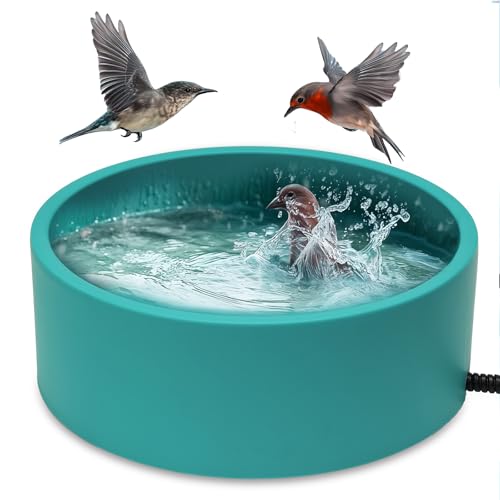
K&H Pet Products Thermo-Poultry Waterer
K&H applies the low wattage approach it uses across its heated pet products to poultry waterers. Power draw runs below the category average while still holding water open in ordinary winter weather. Sustained deep cold pushes this unit harder than higher output models.
Pros
- Lowest power draw among these drinkers
- Cord covering resists pecking damage
- Suits coops on limited circuits
Cons
- Struggles through sustained deep freezes
- Trough shape is awkward to scrub

VEVOR Heated Chicken Waterer
A sealed bucket with drinking cups keeps water enclosed at the lowest price point here. Cups fill on demand, cutting spillage into bedding compared to open troughs. Build quality trails the established poultry brands, so check seals before the first hard frost.
Pros
- Enclosed water at the lowest cost here
- Cups reduce spillage into bedding
- Reasonable capacity for the price
Cons
- Seals need checking before winter
- Cups can clog with sediment
How to choose
How much waterer capacity does a flock need? Plan on roughly a pint of water per bird per day, more in a heated coop with dry air. A three gallon drinker covers a small backyard flock for a full day. Larger flocks need a bigger fount or a second unit, since running dry mid afternoon during a freeze causes more harm than an oversized drinker taking up floor space.
Are enclosed nipple and cup designs worth the switch? Open troughs fill with shavings, droppings and feed within hours, and winter fouling happens faster once water is the only unfrozen source in the coop. Nipple and cup designs, like the RentACoop and VEVOR units, turn a daily scrub into an occasional one. That trade matters most when chores happen in the dark and cold before work.
How do you keep the cord and circuit safe? Coops stay damp and dusty, and birds peck at anything within reach, so cord protection is a safety issue rather than a nicety. Route cable through conduit or along a beam out of reach, use an outdoor rated extension if needed, and protect the circuit with a residual current device. Manufacturer guidance consistently points to cord damage as the most common cause of failure in this category.
What wattage suits your winter? Sixty watt drinkers keep water open through ordinary winters and cost little to run, since the thermostat idles most of the time. Sustained deep cold calls for the higher output bases and founts instead. Add up total load if a coop light or heated perch shares the circuit, because older outbuilding wiring often carries less capacity than people assume.
The lineup, side by side
| # | Model | Capacity | Best for | Score | Price |
|---|---|---|---|---|---|
| 1 | Farm Innovators HB-60P Heated Poultry Drinker | 3 gallons | Best overall | 9.4 | Check price |
| 2 | Farm Innovators HPF-100 Heated Base for Poultry Fount | Heated base plate | Best value | 9.2 | Check price |
| 3 | RentACoop Heated Chicken Waterer with Horizontal Nipples | Multi gallon bucket | Best for clean water | 9.0 | Check price |
| 4 | Little Giant Heated Poultry Fount | Above 3 gallons | Best for larger flocks | 8.8 | Check price |
| 5 | Harris Farms Heated Poultry Drinker | About 2 gallons | Best for small coops | 8.6 | Check price |
| 6 | K&H Pet Products Thermo-Poultry Waterer | About 3 gallons | Best low wattage | 8.3 | Check price |
| 7 | VEVOR Heated Chicken Waterer | Multi gallon bucket | Best budget bucket | 8.0 | Check price |
Questions worth asking
Do chickens need heated water in winter?
Yes, more than extra feed. Birds cannot eat enough without drinking, and keepers report laying drops within days of intermittent access. Water availability matters most in winter care.
Is it safe to run a heated chicken waterer?
It is, as long as the unit has a thermostat, the cord stays protected from pecking and moisture, and the circuit runs through a residual current device. Heated waterers carry far less fire risk than heat lamps.
How much does a heated poultry waterer cost to run?
A sixty watt drinker cycles on and off near freezing rather than running constantly, so real world cost stays low. Higher output bases near one hundred twenty five watts draw more, so match wattage to how cold winters actually get.
Can a heated base be used under a plastic waterer?
No. Heated bases are built for metal double wall founts that conduct heat upward, and a plastic waterer can soften or melt on one. Manufacturers specify metal founts for this reason.
Do nipple waterers freeze even with heating?
The reservoir stays open, but the nipple itself sits at the coldest point and can occasionally stick in extreme cold. A quick check and press during a hard freeze usually clears it.
How often should a heated chicken waterer be cleaned?
Open trough designs need rinsing every day or two in winter as bedding and droppings build up fast. Enclosed nipple and cup systems go considerably longer between cleanings.
Can heated waterers be used outside the coop?
Yes, provided the cord and connection carry an outdoor rating and stay off wet ground. Sheltered spots out of the wind reduce how hard the element has to work.
Should a heated waterer run year round?
There is no need, since the thermostat does nothing above freezing anyway. Most keepers unplug and store the unit in spring, using the break to inspect the cord and seals.
What size heated waterer fits a small flock?
A two to three gallon unit like the Harris Farms drinker suits four to six birds without oversized floor space. Smaller flocks can accept more frequent refills in exchange for a compact footprint.
Nipple waterer vs open trough for winter, which is better?
Nipple and cup designs stay cleaner and need less winter maintenance, while open troughs cost less and refill faster. Flocks in muddy or dusty coops benefit most from switching to a sealed design.
Final word
Farm Innovators HB-60P remains the straightforward pick for most backyard flocks, giving a full day of water on a thermostat that keeps costs modest. Owners with an existing metal fount get the same result for less through the HPF-100 base. Anyone tired of scrubbing bedding out of an open trough should switch to the RentACoop nipple waterer instead.
Olivia Hartley
Olivia spent several years working at an animal shelter and a pet-supply retailer before joining the editorial team. She researches pet gear with an emphasis on safety, comfort and the fine print that owners often miss.


