How to Pick a Heat Press That Won’t Scorch Your Shirts
Cricut’s EasyPress 3 suits most home crafters, delivering even heat and precise timing without the bulk of a full press. The PowerPress 15 by 15 clamshell applies far more pressure for volume shirt work, and the Cricut Autopress automates the effort for small studios.
For home vinyl and sublimation projects, the Cricut EasyPress 3 is the machine to start with. The PowerPress 15 by 15 clamshell is the right upgrade once shirt volume climbs, and the Cricut Autopress removes the physical effort for small studios pressing all day.
Heat presses are hard to compare on paper because pressure and heat evenness barely show up in a listing. A handheld press relies on you leaning into it, a clamshell locks in consistent force, and a swing away design gives clearance for thick items, yet all three quote similar temperature ranges. We compared platen dimensions, stated temperature ranges, pressure adjustment methods and machine footprints, then weighed those against what owners report about cold spots, handle force and how much bench space each one actually needs.
Our top picks

Cricut EasyPress 3
A ceramic coated plate heats evenly across its surface, addressing the main weakness of cheaper handheld presses. Bluetooth connects it to the Cricut app, which supplies the correct time and temperature for whatever material is loaded. Pressure still comes from leaning on it, so results depend on consistent technique.
Pros
- Even heat across the whole plate
- App supplies correct settings per material
- Stores in a cupboard rather than on a bench
Cons
- Pressure depends on how hard you press
- Slower than a clamshell for batches

PowerPress Industrial Quality Digital Sublimation Heat Press 15×15
A full 15 by 15 inch clamshell applies more even pressure than any handheld press can manage, which shows up on large front designs and thicker garment fabrics. The digital controller holds temperature steadily while the timer beeps at cycle end. Bench space is the trade off, since it stays put and stays heavy.
Pros
- Consistent pressure across large designs
- Handles thick garments and multiple layers
- Digital timer and temperature control
Cons
- Heavy and needs permanent bench space
- Clamshell gives little clearance for bulky items

Cricut Autopress
Closing, pressing and lifting all happen automatically, removing the repetitive strain of pulling a clamshell handle dozens of times a shift. A large platen covers most shirt designs in one pass. Footprint and outlay both scale up accordingly, better suited to sellers than to occasional gift making.
Pros
- No handle pulling, easier on wrists and shoulders
- Very consistent pressure between pressings
- Large platen suits full shirt fronts
Cons
- Big footprint and heavy to move
- Costly for occasional crafters

HTVRONT Auto Heat Press Machine
Automatic pressing arrives here at a much lower outlay, closing under its own weight and releasing when the timer ends. A compact platen suits pocket designs, tote bags and children’s shirts more than full adult fronts. Temperature stays even in the middle but drops slightly at the plate edges.
Pros
- Automatic cycle at a fraction of studio prices
- Small enough to leave out on a craft table
- Consistent pressing without handle force
Cons
- Platen too small for large adult designs
- Slight temperature drop at the plate edges

VEVOR Heat Press Machine 15×15
A full size 15 by 15 platen undercuts the established brands here, and swing away versions clear space for thick items or multi part layouts. Build quality is functional rather than refined. Owners report checking platen temperature with an infrared thermometer is worth the extra minute.
Pros
- Full size platen for a modest outlay
- Swing away version clears bulky items
- Wide temperature range
Cons
- Temperature accuracy varies between units
- Finish and hardware feel basic
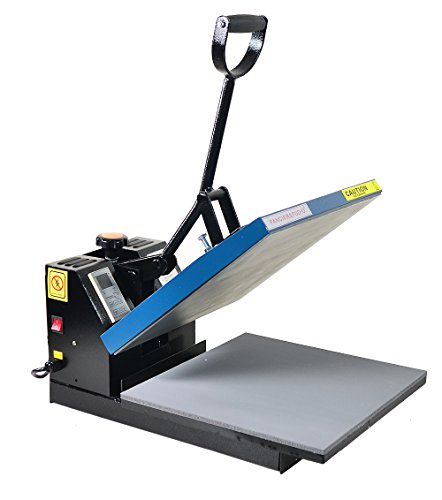
Fancierstudio Power Heat Press
A straightforward digital controller and clamshell design need no setup beyond plugging in, which is why this has been an entry point for years. Shirts, bags and mouse mats all press without complication. Pressure adjustment is coarse, so fine tuning for thin fabrics takes patience.
Pros
- Low cost route into a full size press
- Simple controls with a short learning curve
- Handles a wide range of blank types
Cons
- Coarse pressure adjustment
- Heavy handle action over long sessions

Cricut EasyPress Mini
Shoes, hats, seams, pockets and stuffed toys are the places a flat platen cannot reach, and that gap is exactly what the Mini fills. Its small tip heats quickly and works around curves and awkward shapes. Pressing a full shirt front with it would take far too long, so it complements a larger press instead.
Pros
- Reaches curves, seams and small areas
- Heats up in moments
- Very easy to store
Cons
- Far too small for shirt sized designs
- Only three preset heat levels
Before you buy
What matters more, pressure or temperature Heat transfer vinyl and sublimation both need firm, even pressure for the full dwell time. A handheld press depends on leaning into it, fine for small designs but inconsistent on large ones. Clamshell and automatic presses lock in the same force every time, which is why sellers upgrade once volume climbs past a few items a week.
Clamshell, swing away or automatic, how they differ Clamshells take the least bench space and cycle fastest, though the upper platen sits close over the work and puts heat near your hands. Swing away designs move the heat aside entirely, safer for thick items and multi layer layouts. Automatic presses close and lift themselves, removing repetitive strain while keeping pressure identical across a run.
What platen size actually fits your projects A 15 by 15 inch platen covers a full adult shirt front in one pressing. Smaller platens mean repositioning halfway through a large design, risking a visible line where the two pressings meet. Pocket logos, tote bags and children’s clothing suit a compact press just fine, and it stores far more easily.
How to check a press for cold spots before you trust it Uneven heat is the most common cause of transfers lifting at one corner. An inexpensive infrared thermometer lets you check several points across the platen against the display reading. Owners report budget presses commonly run cooler at the edges, worth knowing before an important design lands there.
Compared at a glance
| # | Model | Platen | Best for | Score | Price |
|---|---|---|---|---|---|
| 1 | Cricut EasyPress 3 | 12 by 10 inches | Best overall | 9.4 | Check price |
| 2 | PowerPress Industrial Quality Digital Sublimation Heat Press 15×15 | 15 by 15 inches | Best for shirt volume | 9.2 | Check price |
| 3 | Cricut Autopress | Large format, 15 by 12 inches | Best automatic press | 9.0 | Check price |
| 4 | HTVRONT Auto Heat Press Machine | Compact format around 10 by 10 inches | Best value automatic | 8.8 | Check price |
| 5 | VEVOR Heat Press Machine 15×15 | 15 by 15 inches | Best budget full size | 8.6 | Check price |
| 6 | Fancierstudio Power Heat Press | 15 by 15 inches | Best for beginners on a budget | 8.3 | Check price |
| 7 | Cricut EasyPress Mini | Small precision plate | Best for small and curved items | 8.0 | Check price |
Questions worth asking
Do I need a heat press or is an iron enough?
An iron cannot hold a steady temperature or apply even pressure across a design, which is why ironed on transfers tend to lift at the edges after washing. A press holds both constant for the full dwell time.
What size heat press do I need for shirts?
A 15 by 15 inch platen such as the PowerPress covers a full adult front in one pressing. Smaller platens still work but require repositioning, which can leave a visible pressing line.
Is the Cricut EasyPress 3 a real heat press?
It is a handheld press rather than a clamshell, so it holds temperature accurately but relies on you for pressure. Small to medium designs come out comparable to a full press with good technique.
Clamshell or swing away, which is better?
Clamshell saves space and cycles faster between pressings. Swing away gives clearance for thick items and keeps the hot platen away from your hands while laying out multi layer designs.
Can one press handle both vinyl and sublimation?
Yes, provided the temperature range covers both and heat stays even. Sublimation needs higher temperatures and longer dwell times than most heat transfer vinyl, so check the top of the stated range.
How do I press hats, shoes and curved items?
A small precision tool such as the Cricut EasyPress Mini, or a dedicated hat press attachment, gets into curves. Flat platens cannot make even contact with curved surfaces.
Why is my transfer peeling after washing?
Usually insufficient pressure, too short a dwell time or a cold spot on the platen. Check the platen temperature at several points with an infrared thermometer and confirm the material’s recommended settings.
How much space does a full size press need?
Plan on a sturdy bench with clearance around it, since a 15 by 15 press is heavy and runs hot. Handheld presses like the EasyPress 3 store away in a cupboard when not in use.
Which heat press is best for a small craft business?
The Cricut Autopress suits sellers pressing many shirts a day, since automatic pressure removes repetitive strain and keeps results consistent between orders. Occasional crafters rarely need that scale.
The verdict
The Cricut EasyPress 3 remains the right first heat press for most people, since the even plate and app guided settings remove the two variables beginners usually get wrong. Step up to the PowerPress 15 by 15 clamshell once full shirt fronts become routine, or to the Cricut Autopress if repetitive handle work becomes the bottleneck. Verify platen temperature before committing an expensive blank either way.
Jake Monroe
Jake worked as a residential contractor for over a decade before shifting to full-time writing. He evaluates power tools, hand tools and workshop gear through the lens of someone who has actually used them on job sites, not just read the box.