How to Choose a Heat Press for Curved Hat Panels
Cricut’s Hat Press leads for even crown heat and simple app-guided settings. HTVRONT’s Auto Hat Heat Press Machine adds hands-free clamping so pressure stays consistent across every cap. Budget-focused buyers pressing in volume should consider the VEVOR Cap Heat Press, which pairs a curved element with steady digital temperature control.
A flat press only touches the center of a curved crown, leaving the edges of a transfer under-pressed. Cap-specific presses solve that with a shaped platen matched to the curve. Cricut’s Hat Press offers the simplest path to even results, HTVRONT’s Auto model automates pressure and timing, and VEVOR’s Cap Heat Press covers buyers pressing caps in volume on a tighter budget.
Crown curves run in two directions at once, and the seam sits exactly where most designs need pressure. We compared these seven presses on curved-platen fit, temperature range, timer accuracy, and how forgiving each is for a first-time user, based on manufacturer specifications and patterns owners report across cap-pressing communities.
Before you buy
Why a curved platen changes the result A cap crown curves in two directions, so a flat plate only touches the center. Edges of a design end up under-pressed, and vinyl or transfer film peels there first. A curved platen spreads heat and pressure across the whole crown, which is the biggest factor in how long a press lasts through washing and wear.
Manual presses versus auto presses Manual presses cost less and pack down small, but the operator supplies pressure and counts the dwell time by hand. That invites uneven results until muscle memory kicks in. Auto presses clamp and time every cap the same way, so shops running volume orders usually recover the extra cost through fewer ruined caps.
Temperature range and dwell time Heat transfer vinyl, sublimation paper, and printed transfers each call for a different temperature and dwell window. A wider range gives more room to work across materials without buying a second machine. Look for a digital controller that holds its set point through back-to-back presses instead of drifting as the plate reheats.
Matching fit to cap style Most curved platens are sized for standard six-panel caps. Structured trucker fronts, foam panels, and low-profile styles can sit differently against the plate. Check platen dimensions against the caps already in use, since seams near the design area sometimes need repositioning to avoid pressure marks.
Our top picks

Cricut Hat Press
Cricut’s curved platen matches a standard cap crown, so heat spreads evenly instead of pooling in the center. Bluetooth pairing with the Heat app sets time and temperature automatically, removing guesswork for new users. Among the seven models compared here, it offers the most beginner-friendly setup.
Pros
- Even heat across the whole crown
- App sets time and temperature automatically
- Compact footprint stores easily
Cons
- Manual clamping needs a steady hand
- Sized mainly for standard cap fits

HTVRONT Auto Hat Heat Press Machine
This auto-clamp model closes and times each press the same way, cap after cap. Owners report fewer scorch marks once the manual hold step disappears from the process. A digital panel displays temperature and countdown throughout the cycle.
Pros
- Pressure and dwell time stay consistent
- Auto timing cuts down on scorching
- Hands stay free during the press cycle
Cons
- Takes up more space on a workbench
- Priced above comparable manual presses
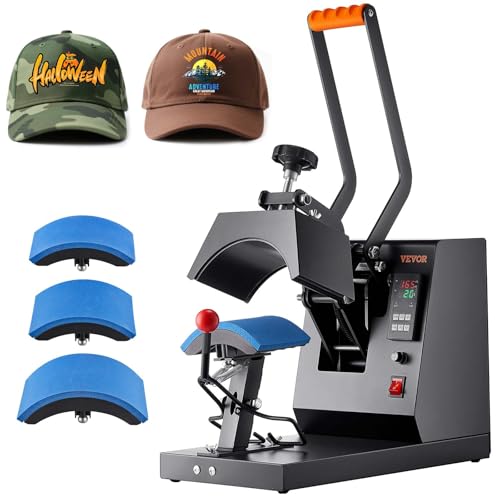
VEVOR Cap Heat Press
VEVOR pairs a curved heating element with a sturdy swing-away arm for solid pressure at a moderate cost. Small shops running back-to-back presses rely on the digital controller to hold a steady set point. Most six-panel cap styles fit the platen without adjustment.
Pros
- Strong pressure relative to the cost
- Steady heat through repeated presses
- Steel frame built for regular use
Cons
- Heavier than compact travel presses
- Manual pressure takes some practice

PowerPress Digital Cap Heat Press
PowerPress reaches a wider temperature ceiling than most cap presses, which suits repeated commercial runs. A firm clamp locks pressure in place for consistent results press after press. Owners note the basic interface holds up well during long sessions.
Pros
- Wide temperature range for varied materials
- Firm clamp repeats pressure reliably
- Handles daily commercial use well
Cons
- Interface looks plain and dated
- No auto-open feature included
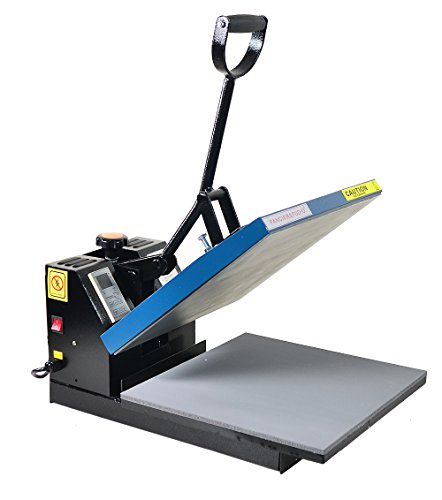
Fancierstudio Cap Heat Press
Fancierstudio keeps the price low while still including a curved platen and digital timer. Hobbyists testing whether cap pressing fits their workflow get a low-risk entry point. Build quality runs lighter than pricier models but holds up for occasional projects.
Pros
- Lowest entry cost in this lineup
- Curved plate fits standard cap sizes
- Simple enough to learn quickly
Cons
- Frame feels lighter than pro models
- Heat runs less even near the edges
TUSY Hat Heat Press Machine
TUSY sticks to a simple layout, pairing a clear display with a curved plate sized for everyday caps. Owners say the smooth swing arm makes alignment easier on a first attempt. Hobby-level projects fit comfortably within its capabilities.
Pros
- Controls stay simple and readable
- Swing arm aligns smoothly
- Comfortable fit for hobby volume
Cons
- Not built for all-day production runs
- Pressure feel rates only average
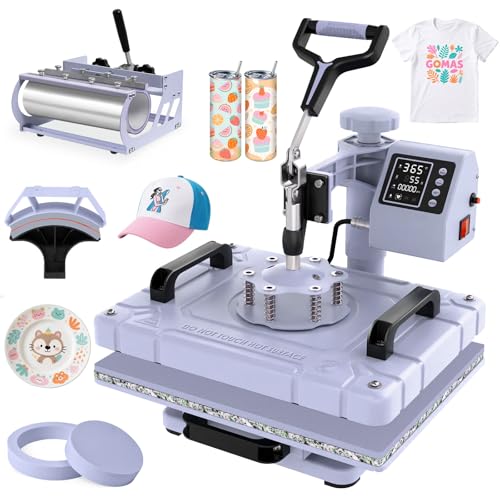
Slendor Hat Press Machine
Slendor trims the footprint down for cramped craft spaces without dropping the curved element caps need. It reaches pressing temperature quickly and tucks away between projects. Light, occasional pressing suits it better than production runs.
Pros
- Small footprint fits tight spaces
- Heats up fast before each session
- Stores away easily when not in use
Cons
- Best suited to lighter workloads
- Platen area runs smaller than rivals
Compared at a glance
| # | Model | Plate shape | Best for | Score | Price |
|---|---|---|---|---|---|
| 1 | Cricut Hat Press | Curved for caps | Best overall | 9.4 | Check price |
| 2 | HTVRONT Auto Hat Heat Press Machine | Curved auto-clamp | Best for consistency | 9.2 | Check price |
| 3 | VEVOR Cap Heat Press | Curved element | Best value | 8.8 | Check price |
| 4 | PowerPress Digital Cap Heat Press | Curved for caps | Best for small shops | 8.6 | Check price |
| 5 | Fancierstudio Cap Heat Press | Curved platen | Best budget | 8.3 | Check price |
| 6 | TUSY Hat Heat Press Machine | Curved for caps | Best for beginners | 8.2 | Check price |
| 7 | Slendor Hat Press Machine | Curved element | Best compact pick | 8.0 | Check price |
Common questions
Do I need a dedicated hat press for cap projects?
For occasional single caps you can improvise with a pillow and a flat press, but results stay inconsistent. A curved hat press gives even contact across the whole crown, so transfers hold up far better through washing and wear.
What temperature works best for heat transfer vinyl on caps?
Follow the guidance printed on the vinyl packaging, since blends vary by brand. Most heat transfer vinyl for caps falls in the mid-300 F range, and the press only needs to hold that setting steadily through the dwell time.
Can a hat press handle sublimation transfers?
Yes, as long as the press reaches the higher temperatures sublimation requires and the cap fabric is polyester or coated for dye transfer. Check both the machine’s temperature range and the blank’s material before pressing.
Is a manual or auto hat press better for beginners?
Manual presses cost less and are simple to learn on. An auto press removes the two most common beginner mistakes, uneven pressure and inconsistent timing, which shortens the learning curve considerably.
Does one curved platen fit every cap style?
No single platen shape fits every cap. Standard six-panel caps sit easiest on most curved plates, while foam trucker fronts and low-profile styles sometimes need repositioning or a different plate size.
How long does a typical cap press cycle take?
Most transfers finish in about a minute once the plate reaches temperature. Complex designs that cross seams or curves sometimes get split into sections and pressed separately.
Are auto hat presses worth the extra cost over manual models?
For anyone pressing more than a few caps per session, the consistent pressure and hands-free timing usually pay off. Fewer scorched or lifting transfers offset the higher upfront cost over time.
What is the difference between a hat press and a flat heat press?
A flat press only contacts the center of a curved crown, leaving the edges under-pressed. A hat press uses a shaped platen built to match that curve, so heat and pressure reach the whole design.
Do hat presses need a heat-resistant pad or pillow?
A small cap pad or pressing pillow lifts the design above seams and buttons, so pressure lands on the graphic instead of the hardware underneath. Skipping the pad often shows up as uneven spots near seams.
Which hat heat press works best for a small shop running daily orders?
PowerPress and VEVOR both suit repeated commercial runs, since their firm clamps and steady digital controllers hold up through back-to-back presses. A wider temperature range also helps when a shop switches between materials often.
The verdict
Cricut’s Hat Press delivers the most even, beginner-friendly results of the seven models compared here, and its app guidance removes most of the setup guesswork. Shops pressing higher volumes gain more from HTVRONT’s Auto Hat Heat Press Machine, since hands-free timing keeps every cap consistent. Buyers watching their budget can still get solid pressure from the VEVOR Cap Heat Press without stepping up to a pricier machine.
Jake Monroe
Jake worked as a residential contractor for over a decade before shifting to full-time writing. He evaluates power tools, hand tools and workshop gear through the lens of someone who has actually used them on job sites, not just read the box.