Hangboards Compared by Edge Depth and Grip Range
Metolius Wood Grips Deluxe II suits most climbers, with 15 wood grips spanning jugs to sharp crimps. Tension Climbing Grindstone Mk2 is the pick for measured edge progression. Anyone under two years of climbing should start on the Metolius Simulator 3D, where deeper holds keep sessions survivable.
Metolius Wood Grips Deluxe II is the default recommendation for home training. Wood spares skin across high volume repeaters, and 15 grips cover jugs, four edge depths, pockets and sloper rails on a single panel. Width is the catch, since roughly 25 inches needs a clear span above the frame. Tight doorways rule it out.
Photos flatten the differences between boards, yet a few millimetres of edge depth changes the exercise entirely. We compared stated edge sizes, hold variety, material and its effect on skin, mounting width, and what coaches recommend at each level. Boards that never publish a smallest edge measurement were dropped, because that number sets the training ceiling.
The top picks, ranked

Metolius Wood Grips Deluxe II Training Board
Solid wood carries no abrasive grain, so a repeater session ends before your fingertips do. Fifteen positions run from deep jugs through four edge depths, three pocket sizes and two sloper rails. Roughly 25 inches of width sets hands near shoulder spacing for most climbers, and mounting hardware is in the box.
Pros
- Wood allows high volume training without wrecking skin
- Grip range spans warm up through maximum hangs
- Sloper rails add open hand and shoulder work
Cons
- Demands about 25 inches of clear mounting width
- Chalk buildup makes wood slick until you brush it
Tension Climbing Grindstone Mk2
Tension machines a graded ladder from roughly 8 millimetres up to a 25 millimetre warm up rail, all in hardwood. Radii stay consistent between rails, so dropping a depth means a genuine step up in load. Two and three finger pockets sit alongside for climbers training specific grip positions.
Pros
- Graded rails make progress measurable session to session
- Machined radii stay consistent across the board
- Hardwood takes chalk without sanding fingertips
Cons
- No jugs, so warm ups need a separate bar
- Smallest rails tempt beginners into injury territory
Beastmaker 1000 Series Fingerboard
Beastmaker sized the 1000 Series for climbers past their first year, keeping holds more forgiving than the advanced 2000. Wood spans 58 centimetres across jugs, 35 and 45 degree slopers, four edge depths and pockets. A free companion app runs timed protocols mapped to that exact layout.
Pros
- App protocols remove the need to design a session
- Two sloper angles build open hand strength in steps
- 58 centimetre span clears most door frames
Cons
- Middle two finger pockets punish newer climbers
- Supply fluctuates, so listings appear and vanish

Trango Rock Prodigy Training Center
Two halves mount independently, letting you set the span to your own shoulder width instead of a fixed panel width. Polyurethane grips are shaped to load the finger pads rather than the joints. Written programming from the Anderson brothers ships with the board and structures a full season.
Pros
- Custom spacing eases shoulder impingement under load
- Shaped grips guide fingers into a safer position
- Bundled season plan replaces protocol guesswork
Cons
- Resin texture wears skin faster than wood
- Two piece install takes measuring and patience
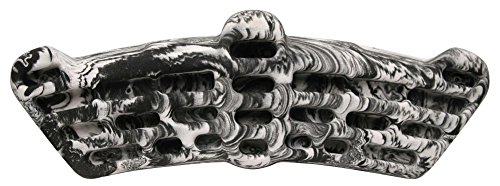
Metolius Simulator 3D Training Board
Hold depths run deeper here than on advanced wood boards, which is what a climber two years in actually needs. Polyurethane bites positively, helping people still learning to hang with engaged shoulders. Jugs, graded edges, pockets and slopers all fit across a panel about 24 inches wide.
Pros
- Deeper holds keep early finger training sustainable
- Positive texture forgives imperfect grip technique
- Jugs on the board cover pull ups and warm ups
Cons
- Smallest edges stay too deep for advanced max hangs
- Resin abrades soft skin during long sessions
So iLL Iron Palm Hangboard
So iLL keeps the Iron Palm narrow enough for doorways that will never take a 25 inch panel. Three edge depths plus a sloping top rail cover the grips that matter, in sanded unpainted wood. Without jugs, warm ups happen on a bar or on the deepest rail instead.
Pros
- Narrow span fits tight frames and hallway walls
- Wood surface supports repeaters several times a week
- Sparse layout keeps a session focused on a few grips
Cons
- No jugs or pockets for grip variety
- Narrow mounting pulls hands inside shoulder width

Metolius Project Board
Metolius pares the range back to jugs, two edge sizes, two pockets and a sloper in polyurethane. Low weight means a short plywood backer above a door gives enough support. Serious max hang work outgrows it inside a year, though warm ups and basic repeaters are covered.
Pros
- Lightest board here for temporary or rented installs
- Jugs included, so no separate pull up bar is needed
- Small hold set suits a first training block
Cons
- Grip variety runs out for advanced protocols
- Edges are not graded finely enough to track progression
Compared at a glance
| # | Model | Material | Best for | Score | Price |
|---|---|---|---|---|---|
| 1 | Metolius Wood Grips Deluxe II Training Board | Solid wood | Best overall | 9.4 | Check price |
| 2 | Tension Climbing Grindstone Mk2 | Solid hardwood | Best for precise edge training | 9.2 | Check price |
| 3 | Beastmaker 1000 Series Fingerboard | Wood | Best for intermediate climbers | 9.0 | Check price |
| 4 | Trango Rock Prodigy Training Center | Polyurethane | Best for a guided program | 8.8 | Check price |
| 5 | Metolius Simulator 3D Training Board | Polyurethane | Best for beginners | 8.6 | Check price |
| 6 | So iLL Iron Palm Hangboard | Wood | Best compact wood board | 8.3 | Check price |
| 7 | Metolius Project Board | Polyurethane | Best budget | 8.0 | Check price |
How to choose
What to look for in a hangboard Edge depth is the number that defines the exercise, because a 20 millimetre rail and an 8 millimetre crimp load fingers differently. Look for a graded ladder rather than scattered holds, since progression needs steps you can measure. Width sets shoulder position, and a span narrower than your shoulders drags the joints inward under load. Check for a jug too, because warming up on small edges is where most injuries begin.
Wood vs polyurethane hangboards Wood carries no abrasive grain, so skin recovers fast enough for three sessions a week. Polyurethane bites harder when hands are damp, which suits climbers still learning to hang with engaged shoulders. Resin edges feel shallower than their measured depth because texture does part of the gripping. Coaches usually move athletes onto wood as weekly volume climbs, which is why every advanced board listed here is wood.
Mounting a hangboard in a rental or small flat Door frame mounts skip the drilling but push the board forward, adding swing and changing the hang angle. Screwing a board to a plywood backer spreads load across studs and remains the standard permanent install. Span across the frame is the usual limit, which is where the So iLL Iron Palm and Metolius Project Board earn their place. Leave headroom to hang with straight arms and bent knees without brushing the floor.
Protocols, and who should wait before hangboarding Repeaters, seven seconds on and three off, build endurance in the finger flexors. Maximum hangs near ten seconds under added load target recruitment, and they suit climbers with two years of steady volume behind them. Below that, actual climbing builds more, since tendon and pulley tissue adapts slower than muscle. Existing finger pain rules out small edges completely until it clears.
Good to know
How long should you climb before starting a hangboard?
Most coaches ask for one to two years of regular climbing first. Tendons and pulleys adapt far slower than muscle, so early finger loading carries real injury risk. Beginners who do start belong on deep holds like those on the Metolius Simulator 3D.
Is a wooden hangboard better than a resin one?
Wood treats skin gently and allows more frequent sessions, which is why advanced training boards use it. Resin grips more positively when hands sweat and helps newer climbers hold position. Choose wood once you plan to hangboard twice a week or more.
What edge size should you train on?
A 20 millimetre edge is the standard reference for most protocols and for comparing progress over time. Drop to 14 or 10 millimetres once you can hang 20 with added weight. Below 10 millimetres belongs to experienced climbers only.
Can you mount a hangboard without drilling?
Yes, using a pull up bar mount that clamps into a door frame. Hanging further forward adds swing and shifts the body angle slightly. Where drilling is allowed, a plywood backer screwed into studs stays the more stable option.
Beastmaker 1000 vs 2000: which should you buy?
The 1000 Series keeps hold depths forgiving and fits intermediate climbers. Its 2000 sibling sharpens the edges and shallows the pockets for advanced work. Buying the 2000 too early usually leaves most of the board unused.
How many hangboard sessions per week is enough?
Two sessions weekly, spaced at least 48 hours apart, is the common recommendation. Wood boards permit a third for climbers whose skin can take it. Recovery rather than enthusiasm sets the real ceiling on finger training.
Do you need pockets on a hangboard?
Pockets train the two and three finger grips found on limestone and pocketed sandstone. Load concentrates on fewer tendons, which raises injury risk if you use them too soon. Climbers on crimpy granite or plastic train perfectly well on edges alone.
Which hangboard is best for a narrow doorway?
So iLL Iron Palm mounts under 24 inches while keeping a wood surface, which is rare at that span. Metolius Project Board is the lighter alternative at about 23 inches. Both trade grip variety for the ability to fit at all.
Should you hangboard before or after climbing?
Hangboard first if finger strength is the session goal, since fresh fingers recruit harder. After a hard climbing day, the board mostly adds fatigue and injury risk. A short warm up on jugs comes before either version.
Is a hangboard worth it for outdoor climbers?
Finger strength transfers straight to rock, and a board delivers controlled loading that routes never repeat. Sessions run about 20 minutes, fitting around a work week better than a gym trip. Movement practice still has to happen elsewhere, so treat it as a supplement.
The bottom line
Metolius Wood Grips Deluxe II takes the recommendation for most climbers, since wood plus 15 graded grips covers warm ups, repeaters and max hangs from one panel. Climbers who track progress in millimetres should buy the Tension Climbing Grindstone Mk2 instead, because its machined ladder turns every step into data. Under two years of climbing, skip both and start on the deeper holds of the Metolius Simulator 3D.
Derek Holt
Derek has a background coaching recreational and amateur athletes and has worked the sales floor at specialty fitness retailers. He focuses on equipment durability, ergonomics and realistic use cases rather than marketing claims.
You might also need

Push-Up Boards Compared: Which Grip System Wins
Stair Steppers Compared: Twist, Mini and Full-Size Picks

Top Home Gym Treadmills Compared for Real Workouts
