Linen Aprons That Stay Cool Through a Long Kitchen Shift
HANEE’s 80/20 linen-cotton apron is the strongest all-rounder, built heavier for daily cooking with two deep front pockets. NEWGEM suits anyone who wants a no-tie cross-back fit, and Caldo fits chefs and baristas who need a traditional bib style with tool pockets.
HANEE’s premium linen-cotton blend apron leads this list because its heavier weave holds up to daily spills without feeling stiff. It works for anyone who cooks most nights and wants one apron that does not wear thin by month three.
Linen aprons vary more than they look. Strap style, pocket depth and blend ratio change how an apron feels after an hour of standing, so this list leans on listed fabric composition, pocket layout and owner feedback on durability rather than looks alone.
The best picks, ranked

HANEE Premium Linen-Cotton Blend Apron
This apron uses a heavier 80/20 linen-cotton weave than most entries on this list. Owners report it resists soaking through during saucier dinners, and the two front pockets sit deep enough for a phone and a towel.
Pros
- Heavier weave resists soak-through
- Deep pockets fit a phone comfortably
- Adjustable neck strap fits most heights
Cons
- Heavier fabric runs warmer in summer kitchens
- Neck strap buckle can loosen during long shifts
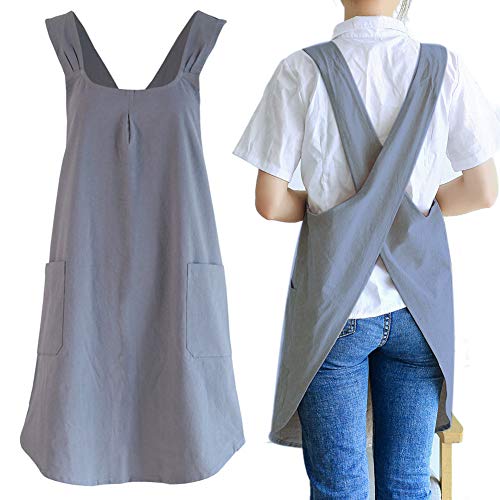
NEWGEM Japanese Cotton Linen Cross-Back Apron
The cross-back strap design removes the neck tie entirely, so there is nothing to adjust before baking. Two front pockets hold small tools, and the lighter cotton-linen blend breathes better than heavier bib styles.
Pros
- No neck strap to tighten or loosen
- Lighter weave suits warm kitchens
- Quick to put on and take off
Cons
- Less coverage than a full bib apron
- Side ties can slip loose during active cooking
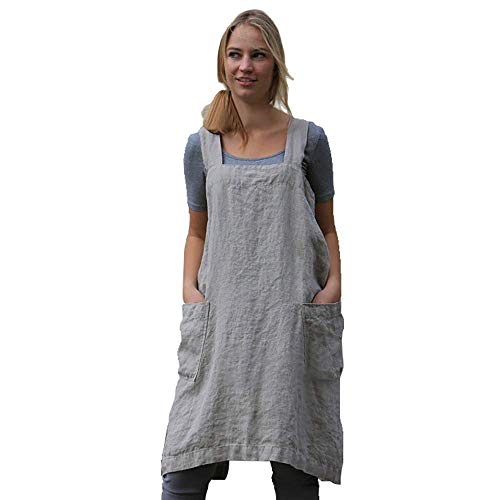
Larmliss Pinafore Cross-Back Linen Blend Apron
Larmliss cuts its apron as a full pinafore dress rather than a bib, covering the hips and upper legs. That makes it a better pick for flour-heavy baking or kneeling garden work than a standard waist apron.
Pros
- Covers more than a waist-only apron
- Split pockets separate tools from phone
- Cross-back straps need no tying
Cons
- Dress-style fit runs looser on smaller frames
- Extra fabric gets warm during long bakes

APRONNER Adjustable Cross-Back Cotton Linen Apron
APRONNER adds buckle sliders to its cross-back straps, which pulls the fit tighter for shorter cooks or looser for taller ones. The cotton-linen blend softens noticeably after a few washes.
Pros
- Buckles fine-tune length better than fixed straps
- Blend softens with repeated washing
- Works for taller and shorter cooks alike
Cons
- Buckles can dig in if overtightened
- Thinner fabric than heavyweight linen options

VLZUFE Cross-Back Cotton Linen Pinafore Apron
VLZUFE offers the pinafore silhouette at a lower cost than Larmliss, trading a slightly thinner weave for a lower entry point. It still covers the torso and upper legs for baking or gardening sessions.
Pros
- Lower-cost entry into the pinafore style
- Pullover design is fast to put on
- Decent pocket depth for small tools
Cons
- Thinner weave than premium blends on this list
- Color options are limited compared to competitors

Caldo Linen Bib Apron for Chefs and Baristas
Caldo keeps the classic bib shape with a neck strap and waist ties, which suits servers and baristas who need a familiar silhouette. The 100% linen fabric wrinkles but resists heat better than synthetic blends.
Pros
- Classic bib cut reads as professional
- Pure linen handles heat near a grill or espresso machine
- Waist pocket holds a notepad or tool
Cons
- Wrinkles more than blended fabric
- Neck strap is fixed length on some batches

ATLINIA 100% Linen Apron
ATLINIA skips cotton entirely, which makes the weave more breathable in a hot kitchen than any blend on this list. It softens with washing, though the all-linen construction creases faster than a cotton blend.
Pros
- Most breathable option for summer cooking
- Softens noticeably after repeated washes
- Natural fiber with no synthetic feel
Cons
- Creases more easily than blended fabric
- Runs slightly more expensive than blends of similar size
How they stack up
| # | Model | Fabric | Best for | Score | Price |
|---|---|---|---|---|---|
| 1 | HANEE Premium Linen-Cotton Blend Apron | 80% linen, 20% cotton | Best overall for daily cooking | 9.4 | Check price |
| 2 | NEWGEM Japanese Cotton Linen Cross-Back Apron | Cotton-linen blend | Best no-tie cross-back fit | 9.1 | Check price |
| 3 | Larmliss Pinafore Cross-Back Linen Blend Apron | Cotton-linen blend | Best for baking and gardening | 8.9 | Check price |
| 4 | APRONNER Adjustable Cross-Back Cotton Linen Apron | Cotton-linen blend | Best adjustable fit across sizes | 8.8 | Check price |
| 5 | VLZUFE Cross-Back Cotton Linen Pinafore Apron | Cotton-linen blend | Best budget pinafore pick | 8.6 | Check price |
| 6 | Caldo Linen Bib Apron for Chefs and Baristas | 100% linen | Best for professional or barista use | 8.9 | Check price |
| 7 | ATLINIA 100% Linen Apron | 100% linen | Best 100% linen for hot kitchens | 8.7 | Check price |
Before you buy
What to look for in a linen apron Fabric blend matters more than color. A 100% linen apron breathes best but creases fast, while an 80/20 linen-cotton blend resists wrinkling and holds up to repeated washing. Pocket depth and strap style decide comfort during a long cooking session.
Cross-back versus bib straps Cross-back straps skip the neck entirely, distributing weight across both shoulders, which helps during hours of standing. Traditional bib straps look more formal and suit service roles, but they can dig into the neck over a full shift.
Best for heavy daily cooking Anyone cooking most nights of the week should prioritize a heavier blend like HANEE’s 80/20 linen-cotton. Thinner single-layer linen wears through faster at the pocket seams when it is used daily rather than occasionally.
Best for baking, gardening or messier work A pinafore-style apron from Larmliss or VLZUFE covers more skin than a waist apron, which matters when flour or soil gets thrown around. Standard bib aprons stay cooler but leave the legs exposed.
Common questions
Do linen aprons shrink after washing?
Linen can shrink slightly on the first few washes, usually a few percent. Cotton-linen blends shrink less than 100% linen, so check the care label and wash in cold water the first time.
Are linen aprons good for grilling?
Linen tolerates heat better than polyester blends, which can melt or scorch near open flame. A heavier bib style like Caldo’s gives more coverage for grill splatter than a lighter cross-back design.
Is cross-back or bib style better for tall cooks?
Cross-back styles with adjustable buckles, like APRONNER’s, tend to fit a wider height range than fixed-strap bib aprons, since the straps can be lengthened rather than relying on a single neck loop.
How many pockets does a typical linen apron have?
Most linen aprons on this list include two front pockets, split or side by side. A few premium models add a waist pocket or tool loop for servers and baristas.
Does 100% linen wrinkle more than a blend?
Yes. Pure linen like ATLINIA’s creases faster than a linen-cotton blend such as HANEE’s, though both soften and relax with repeated washing.
Can a linen apron go in the dryer?
Most listings recommend line drying or a low tumble setting. High heat accelerates shrinkage and can weaken the stitching at pocket corners over time.
What is the difference between a pinafore and a bib apron?
A pinafore apron is cut like a short dress, covering the chest, torso and upper legs with cross-back straps. A bib apron covers mainly the torso and ties around the neck and waist.
Are handmade linen aprons washable the same way as mass-produced ones?
Yes, as long as the fabric is linen or a linen blend, the care routine is the same regardless of who sewed it: cold wash, mild detergent, and air or low-heat drying.
Do linen aprons work for both men and women?
Most of these designs, including NEWGEM and APRONNER, use adjustable straps that fit a range of body types rather than being cut for one gender specifically.
The bottom line
HANEE’s 80/20 linen-cotton apron is the pick for anyone who cooks several nights a week and wants a pocket layout and fabric weight that holds up without feeling stiff. Servers and baristas who need a traditional silhouette should look at Caldo instead, and bakers who want more coverage than a waist apron gives should pick Larmliss’s pinafore cut.
Dana Whitfield
Dana spent eight years buying and merchandising for a regional kitchenware retailer before moving into editorial work. She has handled thousands of SKUs across cookware, small appliances and kitchen organization, and focuses on the practical differences that matter once a product is actually in daily use.


