Handheld gimbals ranked by payload and pocket size
DJI RS 4 carries 3 kg, so a full-frame body with a mid zoom balances without counterweight tricks. Phone shooters gain more from the DJI Osmo Mobile 6, which folds to pocket size. Filming alone? Hohem iSteady M7 tracks you from a detached screen.
DJI RS 4 suits mirrorless shooters who mount a full-frame body with a 24-70mm zoom. Axis locks on all three arms drop repeat balancing to about a minute. Weight near 1.4 kg becomes the limit on long walking takes. Phone-only creators avoid that bulk entirely with the DJI Osmo Mobile 6.
Payload is the hidden wall in gimbal shopping. A phone clamp cannot hold a zoom lens, and a camera rig makes a quick walk-and-talk clip exhausting. We compared published payload figures, folded dimensions, runtime claims and mount hardware across seven models. Owner feedback on balancing time, motor noise and app reliability broke the close calls.
What we recommend

DJI RS 4
Three axis locks hold each arm while you adjust the next, which cuts repeat setups to roughly a minute. Payload tops out at 3 kg, covering a full-frame body, a 24-70mm zoom and a shotgun mic. Vertical shooting is built into the second generation plate, so portrait cuts need no separate bracket.
Pros
- Carries full-frame bodies with standard zooms
- Switches to vertical without a bracket
- Axis locks shorten rebalancing between lenses
Cons
- About 1.4 kg tires the wrist on long takes
- Accessories mount through a proprietary port
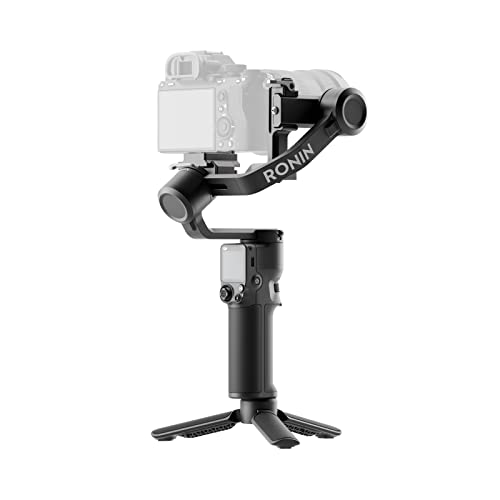
DJI RS 3 Mini
Roughly 850 g of gimbal makes this the one still in your hand at hour four. Payload stops at 2 kg, which covers an a7 series body with a 35mm prime but rules out fast telephoto glass. Vertical mode is included, so one shoot can feed both landscape and vertical edits.
Pros
- Light enough for all day carry
- Folds into a camera backpack
- Shoots vertical without added hardware
Cons
- A 2 kg ceiling rules out large zooms
- Runtime falls short of the full size RS 4

Zhiyun Crane M3S
Swapping between a compact camera, an action cam and a phone is the job this one takes. Payload sits near 2 kg on a body around 730 g, and mounting uses a standard quarter inch plate. Grip battery pops out, so a spare pack replaces a charging break on location.
Pros
- Removable grip battery avoids charging downtime
- Mounts phones, action cams and compacts
- Short arms fit a shoulder bag
Cons
- Rebalancing takes longer each time the rig changes
- App connection drops for some owners
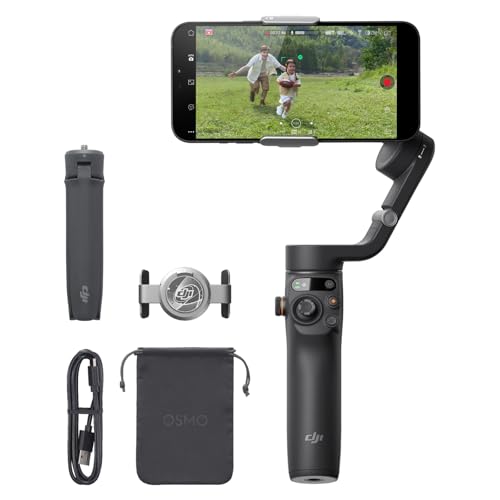
DJI Osmo Mobile 6
Folded weight lands around 309 g, small enough for a jacket pocket. Magnetic clamp snaps the handset on, and a built-in rod extends about 215 mm for higher framing. Tracking runs through ActiveTrack in the DJI Mimo app rather than a sensor on the gimbal itself.
Pros
- Magnetic clamp mounts a phone in seconds
- Extension rod reaches over a crowd
- Folds flat for a pocket or small bag
Cons
- Tracking depends on the DJI Mimo app
- Thick rugged cases block the clamp
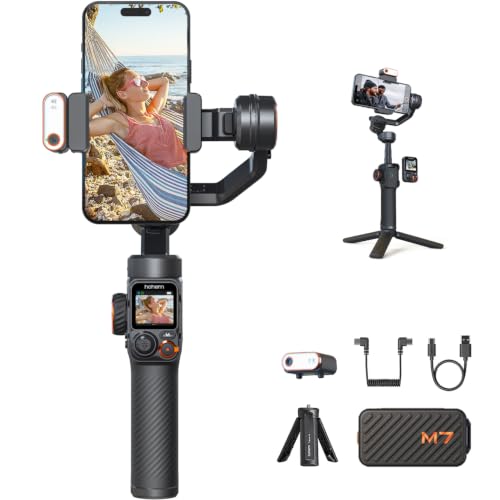
Hohem iSteady M7
A tracking module detaches from the arm and keeps its own touchscreen. Set it on a desk, step back, and framing follows you with no phone app running. Magnetic fill light clips beside the clamp, which covers talking head clips in rooms lit only by a window.
Pros
- Tracks without running a phone app
- Detached module works as a monitor
- Fill light rescues dim indoor scenes
Cons
- Bulkier than a folding phone gimbal
- Two batteries to keep charged

Zhiyun Smooth 5S
Physical dials handle zoom and focus pulls, so reframing never means hunting through a touchscreen menu. Bundled magnetic fill light ships with colour filters for warm or cool interiors. Body weight near 625 g and a fixed arm shape favour planned shoots over grab shots.
Pros
- Fill light with colour filters in the box
- Dials beat menu diving mid-shot
- Clamp opens to 90 mm for large phones
Cons
- Does not fold as small as rival phone gimbals
- 625 g feels heavy across long walking shots
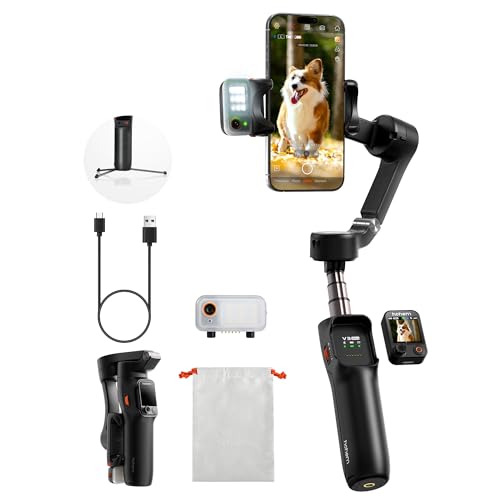
Hohem iSteady V3
Subject tracking sits inside the clamp, and a raised palm starts or stops the follow. Arm folds into a slim shape that drops into a bag pocket, with a small fill light mounted above the phone. Plus-size handsets in thick cases push the motors, so travel light with this one.
Pros
- Gesture tracking runs without an app
- Folds small enough for a bag pocket
- Few controls to learn on day one
Cons
- Phones only, with no camera mount
- Motors strain under heavy cased handsets
Side by side
| # | Model | Rated payload | Best for | Score | Price |
|---|---|---|---|---|---|
| 1 | DJI RS 4 | 3 kg | Best overall | 9.4 | Check price |
| 2 | DJI RS 3 Mini | 2 kg | Best for compact mirrorless | 9.2 | Check price |
| 3 | Zhiyun Crane M3S | About 2 kg | Best for hybrid shooters | 9.0 | Check price |
| 4 | DJI Osmo Mobile 6 | About 309 g | Best value | 8.8 | Check price |
| 5 | Hohem iSteady M7 | About 500 g | Best for solo creators | 8.5 | Check price |
| 6 | Zhiyun Smooth 5S | About 625 g | Best for lighting on the move | 8.2 | Check price |
| 7 | Hohem iSteady V3 | About 490 g | Best budget | 8.0 | Check price |
How to pick the right one
What to look for in a handheld gimbal Payload sets the ceiling for every other decision. Weigh the camera with lens, battery, card and anything you leave bolted on, then shop above that number. Folded size ranks second, because a stabilizer that will not fit the bag stays home. Runtime figures assume a balanced rig, so a nose-heavy setup drains the pack faster. Removable batteries beat a high headline figure once a shoot runs past its estimate.
Phone gimbal vs camera gimbal: which one do you need? Phone models clamp the handset directly and weigh a few hundred grams. Camera models use a quarter inch plate, an arca style base and a sliding counterweight for lens balance. Hybrids such as the Zhiyun Crane M3S take both, at the cost of longer rebalancing every time you swap devices. Buy for the camera you shoot with weekly, not the one sitting on a wishlist.
Best handheld gimbal for solo vlogging Filming yourself reorders the priority list. On-gimbal tracking keeps working when a call interrupts the phone, which app-based ActiveTrack cannot promise. A detachable screen, like the module on the Hohem iSteady M7, lets you check framing from three metres back. Indoors, fill light matters more than payload, since window light fades by late afternoon. Gesture control saves the walk back to press a button between takes.
Gimbals for travel and long shooting days Weight compounds across an afternoon of walking shots. Under 900 g stays comfortable for most hands; past 1.4 kg, hand swaps become constant. Lock the arms before packing, because an unlocked motor takes knocks in transit. Measure the folded shape yourself rather than trusting a case listing, since arm geometry varies far more than spec sheets suggest. Pack a spare grip pack if the model accepts one.
Common questions
What is the best handheld gimbal for a mirrorless camera?
DJI RS 4 fits most mirrorless kits, with 3 kg of payload covering a full-frame body and a standard zoom. Under 2 kg total, the RS 3 Mini does the same work with half a kilo less in the hand.
How do I know if my camera is too heavy for a gimbal?
Weigh body, lens, battery, card and any mounted microphone together. Compare that total against the rated payload and leave roughly 15 percent headroom. Motors running at their ceiling overheat and drift mid-take.
Do handheld gimbals work with a phone case on?
Thin cases usually clamp fine. Magnetic mounts like the Osmo Mobile 6 clamp struggle with rugged cases and pop sockets. Measure your phone with the case fitted, then check it against the clamp width range.
Is a gimbal worth it if my camera has in-body stabilisation?
IBIS smooths small handshake within a few degrees. It cannot cancel the bounce of a walking step or a slow drift during a pan. Gimbals handle that whole body motion, which is why many shooters run both at once.
Can a handheld gimbal track me while I film alone?
Yes, and the method changes the reliability. DJI models track through the Mimo app on the phone. Hohem builds a sensor into the gimbal or a detachable module, so tracking survives switching to another camera app.
Gimbal vs steadicam: which is easier for beginners?
Motorised gimbals correct automatically and need no counterweight practice. Passive steadicam rigs never need charging and add no electronics to fail, yet take weeks of drills to hold steady. Most new shooters see usable footage sooner with a gimbal.
How long does balancing a gimbal take?
Budget 5 to 10 minutes the first time on a camera model. Axis locks, fitted to the RS 4, cut later setups to roughly a minute because each arm stays put while you adjust the next.
Which handheld gimbal is best for travel?
Under 900 g is the comfortable ceiling for a full day on foot. DJI RS 3 Mini at about 850 g covers compact mirrorless kits, and the 309 g Osmo Mobile 6 disappears into a jacket pocket for phone-only trips.
Can one gimbal hold both a phone and a camera?
Hybrids do it. Zhiyun Crane M3S mounts phones, action cams and compacts on the same quarter inch plate. Expect to rebalance each time the load changes, which costs a few minutes per swap.
Are budget handheld gimbals worth buying?
Entry models such as the Hohem iSteady V3 stabilise a phone well in decent light. What drops away is payload headroom, build materials and long-term firmware support. Anyone mounting a real camera should skip the budget tier outright.
The bottom line
Buy the DJI RS 4 if you shoot a mirrorless body with real glass, because 3 kg of payload plus axis locks shortens the part of the day that eats time. Phone-first creators should take the Osmo Mobile 6 instead, since 309 g folded and a magnetic clamp beat payload they will never use. Anyone filming themselves without a crew gets more out of the Hohem iSteady M7 and its detachable tracking screen.
Marcus Chen
Marcus covered consumer electronics for enthusiast tech publications for six years before joining ChoiceCrest. He specializes in translating manufacturer spec sheets into plain-language buying advice, with a focus on audio, computing accessories and smart-home gear.
You might also need
AlyKets Nikon UC-E6 Replacement USB Cable: Does a $7.95 Cord Work as Well as the Original?

Digiroot iPad Stylus Pencil: A $6.99 Apple Pencil Alternative Worth Trying?

Hicarer 360 Rotating Display Turntable: Good Enough for Product Photography?
