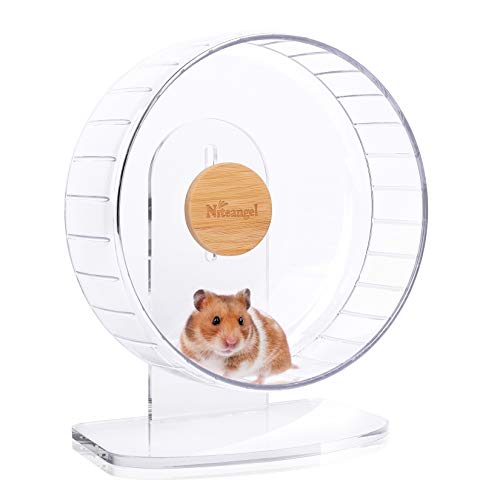
Which Hamster Habitat Actually Fits Your Space?
The Niteangel Vista Hamster Cage leads on usable floor space and deep bedding for a thriving hamster. The Prevue Pet Products 528 balances room against cost. The Kaytee CritterTrail Habitat is the gentlest starter pick when budget is tight.
A thriving hamster needs unbroken floor space to roam and deep bedding to dig real tunnels. The Niteangel Vista tops this list by delivering both in one large footprint. Plenty of room at a lower price comes from the Prevue 528, while the Kaytee CritterTrail keeps setup simple for a first-time owner.
Many habitats marketed as roomy fall short of the floor space experts recommend, and tube-heavy designs can trap stale air. That makes habitat shopping trickier than it looks. We compared continuous floor area, bar spacing, bedding capacity and ventilation, drawing on published dimensions and what owners report.
How to choose
How much continuous floor space does a hamster habitat need? Hamsters roam far at night, so unbroken floor area matters more than tubes or extra levels. Welfare guides point to a large minimum of continuous floor. A single wide base beats a tall cage split into small platforms. When comparing habitats, add up true ground-level space rather than counting decorative shelves.
What bar spacing keeps a habitat escape-proof? Dwarf hamsters slip through wide bars, so spacing around 0.4 inch or less is the safe target, while Syrians tolerate slightly more. Solid glass or deep plastic bases remove the gap issue entirely at ground level. A roomy but poorly spaced cage becomes an escape risk overnight.
How deep should bedding be for burrowing? Burrowing is a core hamster behavior, so the base needs to hold several inches of bedding without spilling. Deep tray or glass-bottomed habitats support real tunnels, while shallow wire trays cap how much fits. Prioritize base depth to see natural digging behavior in daily use.
Do tube habitats provide enough airflow? Tube-heavy plastic habitats look fun but can trap stale air and humidity, so ventilation deserves attention. A wire top or open glass design breathes far better. If tubes are part of the setup, keep runs short, clean them often, and keep the main living area well aired.
The best picks, ranked

Niteangel Vista Hamster Cage
A wide glass-front lower section pairs with a wire top, giving a large unbroken floor and room for deep bedding. The tall base lets a hamster burrow properly rather than skim the surface. Owners cite it as the go-to choice for generous, natural space.
Pros
- Very large usable floor
- Deep bedding for burrowing
- Clear view through glass front
Cons
- Heavy and takes real space
- Higher price than wire cages
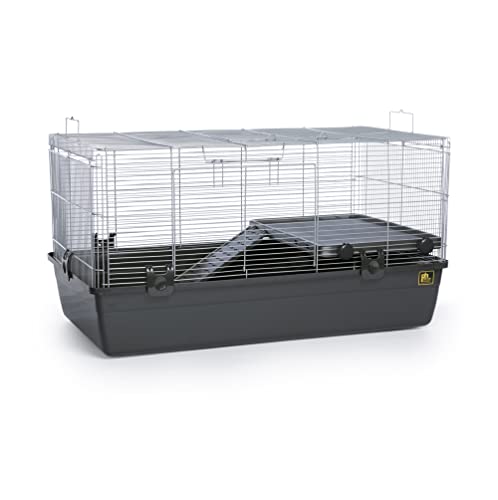
Prevue Pet Products 528 Universal Small Animal Home
A large wire cage sits on a deep plastic base, giving a hamster plenty of ground to roam. The tall base holds a good bedding layer, and a wide door makes cleaning straightforward. Owners note the size to price ratio beats most alternatives here.
Pros
- Big footprint for the money
- Deep base holds bedding
- Excellent airflow through bars
Cons
- Wire top offers little climb barrier
- Basic look and finish

Kaytee CritterTrail Habitat
Tube ports for expansion and a low price make this a familiar entry-level habitat. Specifications place it well for a dwarf hamster or a first pet. Owners note it works best paired with add-on space as the pet grows.
Pros
- Very affordable entry point
- Expandable with tube kits
- Secure for small dwarf hamsters
Cons
- Floor space is on the small side
- Tubes can limit airflow

Savic Hamster Heaven Metro Cage
A wheel, tubes and platforms ship in the box with this spacious wire cage. The wide base and included accessories make it a strong all-in-one setup. Owners report it suits a Syrian hamster that genuinely needs room to explore.
Pros
- Big footprint plus accessories
- Good airflow through wire
- Multiple doors for easy access
Cons
- Bulky to house and move
- Shallow tray limits bedding depth
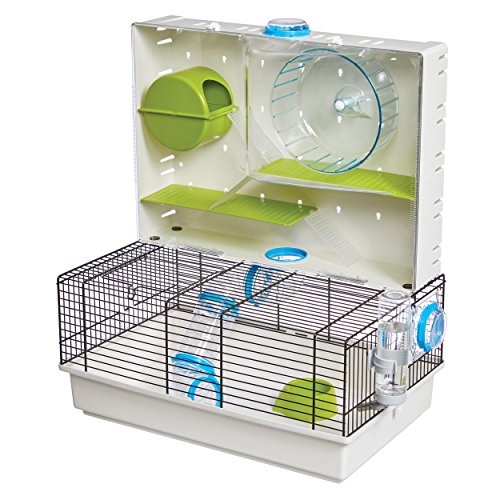
MidWest Critterville Arcade Hamster Cage
A deep base pairs with a wire upper section that includes a wheel and a hideout. Assembly and cleaning stay simple, which suits a first hamster owner. It fits a smaller home better than the larger wire cages on this list.
Pros
- Deep base for bedding
- Comes with starter accessories
- Easy to clean and set up
Cons
- Floor space suits dwarfs best
- Wheel is smaller than ideal

Living World Deluxe Habitat Large
A deep plastic base meets a wire top and a raised balcony section for extra activity. The deep tray keeps bedding contained, and owners say the balcony adds usable area without shrinking the main floor. It suits owners who want more than a flat single level.
Pros
- Deep base contains bedding well
- Balcony adds vertical interest
- Solid airflow up top
Cons
- Balcony ramp not to every hamster’s taste
- Assembly takes a little patience
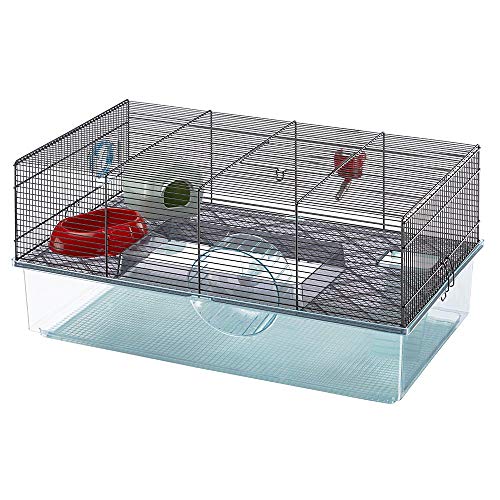
Ferplast Favola Hamster Cage
A deep base, tube tunnel, wheel and water bottle come included on this well-equipped starter. Specifications suit a dwarf hamster or a young Syrian best. The deep tray helps hold a decent bedding layer despite the compact footprint.
Pros
- Fully kitted out of the box
- Deep base for bedding
- Good value starter bundle
Cons
- Best for smaller hamsters
- Tube tunnel needs frequent cleaning
How they stack up
| # | Model | Floor space | Best for | Score | Price |
|---|---|---|---|---|---|
| 1 | Niteangel Vista Hamster Cage | Large continuous base | Best overall | 9.4 | Check price |
| 2 | Prevue Pet Products 528 Universal Small Animal Home | Large single level | Best value | 9.0 | Check price |
| 3 | Kaytee CritterTrail Habitat | Compact single level | Best budget starter | 8.3 | Check price |
| 4 | Savic Hamster Heaven Metro Cage | Large single level | Best large wire cage | 8.8 | Check price |
| 5 | MidWest Critterville Arcade Hamster Cage | Medium single level | Best for beginners | 8.4 | Check price |
| 6 | Living World Deluxe Habitat Large | Large with balcony | Best hybrid design | 8.2 | Check price |
| 7 | Ferplast Favola Hamster Cage | Medium single level | Best guided starter | 8.0 | Check price |
Common questions
How much space does a hamster really need?
Welfare groups recommend a large area of continuous floor space, well beyond many pet store cages. When in doubt, choose the biggest single level footprint you can house, since more unbroken ground beats extra tubes or shelves for a hamster’s wellbeing.
Are wire cages or glass tanks better?
Both work if sized well. Wire cages breathe better and are lighter, while glass or deep based habitats hold much more bedding for burrowing. Many owners pick a hybrid with a deep base and wire top to get airflow and digging depth together.
What bar spacing is safe for a dwarf hamster?
Aim for bar spacing around 0.4 inch or narrower for dwarves, since they squeeze through surprisingly small gaps. Syrian hamsters can handle slightly wider bars, but tighter spacing or a solid based cage is always the safer choice.
Do hamsters need tubes and tunnels?
Tubes add enrichment but are not essential, and they can trap humid air if overused. Deep bedding for natural burrowing usually matters more. If you include tubes, keep the runs short, ventilated, and easy to clean.
How deep should the bedding be?
Several inches at minimum so the hamster can dig real tunnels, which is why base depth is a key buying factor. Glass or deep tray habitats hold the most bedding, while shallow wire trays limit how much you can pile in.
Can two hamsters share one habitat?
Syrian hamsters are solitary and must live alone, or they will fight, sometimes fatally. Some dwarf species can occasionally cohabit if introduced young and given ample space, but even then separation is often needed, so plan for solo housing.
How often should I clean the cage?
Spot clean soiled bedding and the toilet corner daily, and do a fuller bedding change every week or two depending on size and smell. Avoid a total clean out too often, since keeping some familiar scent reduces stress for the hamster.
Is a bigger wheel important?
Yes, a wheel that is too small forces the back to arch painfully, so pick one sized for your hamster with a solid running surface. Many starter cages include a small wheel, so budget for a larger upgrade if needed.
Glass tank vs wire cage, which holds bedding better?
A glass or deep plastic base contains loose bedding far better than open wire sides, which is why several habitats here pair a solid base with a wire top instead of going fully open on all sides.
The bottom line
For an owner who wants a genuinely spacious home, the Niteangel Vista Hamster Cage delivers the floor space and bedding depth a hamster needs to burrow and roam. The Prevue Pet Products 528 offers much of that room at a lower cost, and the Kaytee CritterTrail is a fair starting point for a first dwarf hamster on a tight budget.
Olivia Hartley
Olivia spent several years working at an animal shelter and a pet-supply retailer before joining the editorial team. She researches pet gear with an emphasis on safety, comfort and the fine print that owners often miss.