What Makes a Hammock Comfortable for All-Day Lounging?
ENO’s DoubleNest wins for all-round camping and backyard use. The Wise Owl Outfitters DoubleOwl matches much of that comfort with straps included, and the Vivere double cotton hammock with a steel stand is the best pick when no trees are available for hanging.
ENO’s DoubleNest suits the widest range of uses, from backcountry trails to lazy backyard afternoons. Wise Owl’s DoubleOwl matches much of that comfort at a lower cost. Vivere’s cotton hammock with a steel stand solves a yard that has no trees to hang from.
Camping hammocks and backyard loungers get compared as if they are the same product, yet a packable nylon body and a spreader-bar stand serve different purposes entirely. Many listings leave suspension straps out of the box without saying so clearly. We compared published weights, capacities, and fabric specs, then weighed in what owners report about comfort across a full night versus a short afternoon nap.
What we recommend

ENO DoubleNest Hammock
ENO’s DoubleNest is the hammock most first-time buyers picture. Ripstop nylon stuffs into an attached sack in seconds, so it travels rather than sitting in a closet. Two adults fit side by side, and straps are sold separately.
Pros
- Packs small enough for a daypack side pocket
- Wide enough for two people or a diagonal solo sprawl
- Ripstop nylon holds up across many seasons
Cons
- Suspension straps cost extra
- Nylon feels cool without a pad or underquilt

Wise Owl Outfitters DoubleOwl Hammock
Wise Owl ships the DoubleOwl with tree straps and carabiners already in the box. That means the listed price covers everything needed to hang it, unlike hammocks sold body-only. Parachute nylon and stitching come close to premium brands, close enough that casual users rarely notice a gap.
Pros
- Straps and carabiners included at no extra cost
- Comfort rivals pricier premium hammocks
- Light enough to carry on a day hike
Cons
- Included carabiners weigh more than premium ones
- Stitching lags a step behind top-tier brands
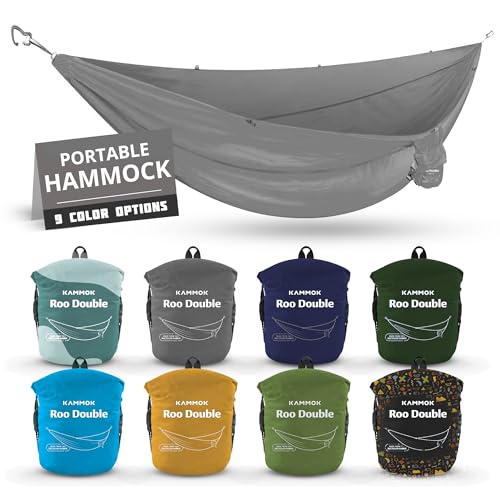
Kammok Roo Double Hammock
Kammok builds the Roo from a proprietary ripstop fabric engineered for a high strength-to-weight ratio. Every ounce matters on a multi-day trail, and this hammock compresses smaller than most double-width bodies. An integrated stuff pocket becomes a gear sling once hung, keeping a headlamp or phone within reach.
Pros
- Strength-to-weight ratio suits serious backpacking
- Built-in gear pocket keeps essentials reachable
- Compresses into a small trail-ready package
Cons
- Premium pricing for the hammock body alone
- Suspension straps are a separate purchase
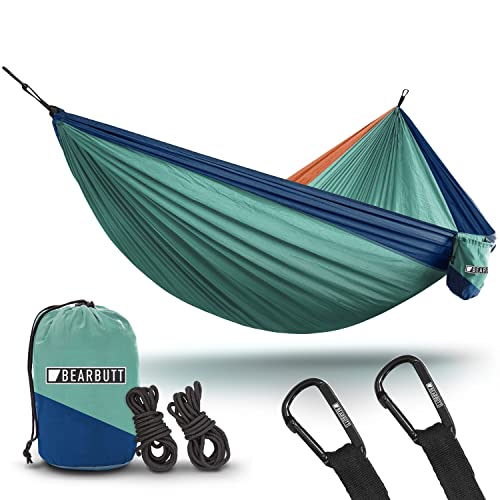
Bear Butt Double Hammock
Bear Butt fits the moment you want three or four hammocks for a group trip without overthinking the purchase. Straps and carabiners typically ship in the box, and parachute nylon holds up fine for casual weekend use. Extra bulk and basic hardware make it a step below backpacking-grade gear.
Pros
- Low enough cost to buy several at once
- Hardware needed to hang it ships in the box
- Comfortable for casual afternoons in the yard or campsite
Cons
- Heavier than premium backpacking hammocks
- Hardware quality stays basic

Vivere Double Cotton Hammock with Space Saving Steel Stand
Vivere solves the problem of a yard with no trees. A space-saving steel stand assembles without tools, and spreader bars hold the cotton fabric flat for an open lie. Reading and napping feel easier here than in a cocoon-style camping hammock, though the setup stays in one spot.
Pros
- No trees or fixed anchors needed
- Flat, open lie is easy to enter and exit
- Steel stand assembles without tools
Cons
- Cotton needs to come indoors before rain
- Steel stand is heavy and not portable

Lazy Daze Hammocks Quilted Fabric Hammock with Spreader Bars
Lazy Daze pads its spreader-bar hammock with quilted polyester fabric, which softens long afternoons compared to plain woven cotton. A pillow typically ships with it, and the fabric shrugs off occasional light rain better than untreated cotton. Trees or a separately bought stand are required to hang it.
Pros
- Quilted padding stays comfortable for hours
- Spreader bars keep the lie flat and open
- Polyester tolerates occasional weather better than raw cotton
Cons
- Bulky build limits portability
- Stand usually costs extra
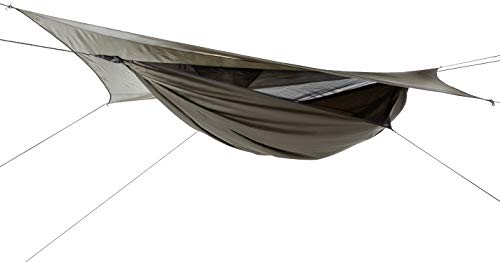
Hennessy Hammock Expedition Asym Zip
Hennessy’s Expedition Asym Zip works as a full shelter rather than a plain hammock. An asymmetric cut lets you lie on the diagonal for a flatter position, and a zip-in bug net keeps insects out overnight. A rain tarp ships with it, so nothing extra needs buying for a night outdoors.
Pros
- Integrated bug net and tarp cover real overnight camping
- Asymmetric cut delivers a flatter sleeping angle
- Complete system needs no additional shelter purchase
Cons
- Setup takes longer than a bare hammock body
- Weighs more than a simple hammock alone
Before you buy
Camping hammock vs backyard stand hammock Gathered-end camping hammocks, like the ENO and Kammok models, wrap around your body and compress into a small stuff sack. That build suits camping, travel, and anywhere portability matters most. Spreader-bar hammocks hold the fabric open so you rest flat on top instead of cocooned inside. Reading and quick naps feel easier in that flat position, but the frame is bulkier and tips more easily than a hung hammock. Settle this choice first before comparing fabric or price.
What actually comes in the box? Premium hammock brands often sell the body alone, leaving straps and carabiners as a separate purchase that adds to the real cost. Budget brands like Wise Owl and Bear Butt typically bundle straps and carabiners, which is a big part of their value. Look for tree-friendly webbing straps instead of rope, since rope cuts into bark and resists adjustment. Spreader-bar buyers should also confirm whether a stand ships with the hammock or gets sold separately.
How do you hang a hammock correctly? Comfort in a gathered-end hammock depends on hang angle more than fabric choice. Straps set at roughly thirty degrees from horizontal, with visible sag rather than a tight line, produce the flattest lie. A hammock pulled too tight squeezes the shoulders and forces an uncomfortable curve. Sitting height should let your feet touch the ground, which makes getting in and out easier.
Which fabric handles heat, rain, and cold nights? Nylon dries quickly, compresses small, and sheds light rain, which explains why it dominates camping hammocks. Cotton breathes better in heat but absorbs moisture and mildews, so it needs to come indoors after use. A hammock provides zero insulation underneath, since body weight compresses any sleeping bag fill beneath you. An underquilt hung below the hammock, or a sleeping pad placed inside it, solves cold nights once temperatures drop.
Compared at a glance
| # | Model | Fabric | Best for | Score | Price |
|---|---|---|---|---|---|
| 1 | ENO DoubleNest Hammock | Breathable ripstop nylon | Best overall | 9.4 | Check price |
| 2 | Wise Owl Outfitters DoubleOwl Hammock | Parachute nylon | Best value | 9.2 | Check price |
| 3 | Kammok Roo Double Hammock | Proprietary lightweight ripstop | Best for backpacking | 9.0 | Check price |
| 4 | Bear Butt Double Hammock | Parachute nylon | Best budget | 8.8 | Check price |
| 5 | Vivere Double Cotton Hammock with Space Saving Steel Stand | Cotton with spreader bars | Best with a stand | 8.6 | Check price |
| 6 | Lazy Daze Hammocks Quilted Fabric Hammock with Spreader Bars | Quilted padded polyester | Best for backyard lounging | 8.3 | Check price |
| 7 | Hennessy Hammock Expedition Asym Zip | Complete hammock shelter system | Best for hammock camping | 8.0 | Check price |
Questions worth asking
Do hammocks come with straps included?
It depends on the brand. Wise Owl and Bear Butt usually bundle tree straps and carabiners in the box. ENO and Kammok often sell the hammock body alone, so add straps to the total cost. Pick wide webbing straps over rope to avoid damaging bark.
How far apart should trees be for a hammock?
Twelve to fifteen feet works for most double camping hammocks, and adjustable straps add flexibility on either side of that range. Hang angle matters more than exact distance. Trees spaced too far apart pull the straps tight and ruin comfort.
Is sleeping in a hammock all night comfortable?
Most people find it comfortable once they lie on the diagonal instead of straight down the centerline. Two mistakes ruin the experience: hanging it too tight and skipping insulation underneath. Fix both and a full night rivals a good mattress.
Why do hammocks feel cold at night?
Body weight compresses any padding directly beneath you, and moving air under the hammock pulls heat away fast. A sleeping bag alone will not fix this. An underquilt hung outside the fabric, or a pad placed inside it, blocks that heat loss once temperatures drop.
What weight can a double hammock hold?
Most double camping hammocks carry several hundred pounds of rated capacity, and the fabric rarely fails first. Suspension straps, carabiners, and anchor points are the weaker links, so check hardware ratings too and inspect trees before trusting them.
Can a hammock stay outside permanently?
Nylon tolerates weather reasonably well but breaks down under constant sun exposure, so bring it in between uses. Cotton hammocks need shelter from rain or they mildew quickly. Some backyard loungers use weather-treated polyester, which survives being left out far longer.
Do I need a stand, or can I use trees?
A stand only matters if your yard lacks solid trees or fixed anchor points. Stands make a hammock usable on a patio, deck, or open lawn, and most spreader-bar hammocks pair with one. Trees work fine and cost nothing extra when they are available.
What is the correct hammock hang angle?
Around thirty degrees from horizontal, with visible sag in the fabric, gives the flattest and most comfortable lie. A hammock pulled tight and flat squeezes the shoulders, which is the most common setup mistake among first-time buyers.
Camping hammock vs hammock with a stand: which should I buy?
Choose a camping hammock like the ENO or Kammok for portability and trail use. Choose a stand-mounted hammock like the Vivere when your yard has no trees or when you want a fixed, no-assembly backyard spot.
The bottom line
ENO’s DoubleNest remains the strongest all-around pick for anyone who wants one hammock that works at camp and in the backyard, as long as straps get added to the order. Wise Owl’s DoubleOwl delivers nearly the same comfort with hardware already included, which suits a first hammock purchase. When a yard has no trees at all, Vivere’s cotton hammock with its steel stand solves that in a single purchase.
Sierra Daniels
Sierra's background is in landscape design and nursery retail. She focuses on lawn and garden equipment, outdoor furniture and gear durability, weighing published specs against how materials actually hold up outside.


