Gym rubber mats that survive dropped bumper plates
Rubber-Cal Elephant Bark rolls fit most home gyms, covering a garage bay in quarter inch recycled rubber. IncStores 3/4 in mats belong under a barbell, where dropped plates need mass. For a whole spare room, IncStores 8mm Strong Rubber Rolls cut seams and install fastest.
Rubber-Cal Elephant Bark rolls are the default for a garage gym floor, since quarter inch recycled rubber lies flat on concrete and takes equipment feet without denting. Barbells are the limit: drop a loaded bar and impact reaches the slab. Lifters should layer IncStores 3/4 inch mats into the pulling zone and run the roll everywhere else.
Flooring goes wrong in two directions. Too thin and a plate finds the concrete, too thick and a treadmill rocks on a spongy base. Format matters as much as depth, because rolls seam least, tiles travel between rentals, and single mats armour one platform. We compared stated thickness, rubber density, install method and subfloor suitability, then read owner feedback on odor, curling ends and how each surface handles chalk and sweat.
The best picks, ranked
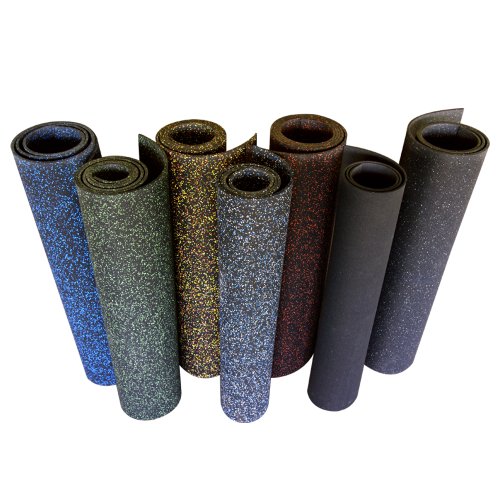
Rubber-Cal Elephant Bark Rubber Flooring Roll
Recycled rubber arrives as a long roll, so a garage bay finishes with two or three seams instead of dozens. Weight alone holds it down on concrete, and most owners loose lay it, then trim to the wall with a hook blade. At a quarter inch it guards a slab from equipment feet and controlled plate placement, not from repeated overhead drops.
Pros
- Two or three seams cover a full garage bay
- Heavy enough to stay flat without adhesive
- Recycled rubber shrugs off chalk and sweat
Cons
- Quarter inch is thin for dropped barbells
- Cut ends curl until something weights them

IncStores 3/4 in Rubber Gym Mat
Vulcanized rubber at three quarters of an inch is standard platform depth, and it swallows impact before a slab feels it. Each 4 by 6 foot mat needs two people to carry, and that same mass is why plates stop dead instead of bouncing. Closed garages hold the factory smell for a few weeks before it fades.
Pros
- Absorbs dropped plates and heavy dumbbells
- Mass keeps mats still under a loaded rack
- Textured face holds grip once chalk falls
Cons
- Rubber odor lingers for several weeks
- One person cannot lay a mat alone

IncStores 8mm Strong Rubber Rolls
Eight millimeters sits between protection and practicality, enough for machines, benches and moderate dumbbell work without lifting a door off its threshold. Long rolls leave a spare room with few seams to collect dust. Trimming asks for a sharp hook blade, since 8mm rubber blunts a standard utility knife quickly.
Pros
- Few seams across a full spare room
- Handles machines, benches and dumbbells
- Color fleck hides dust between sweeps
Cons
- Rolls are awkward to carry upstairs
- Clean cuts need a hook blade knife
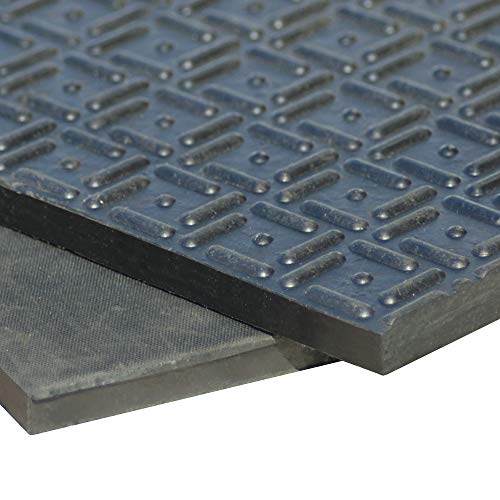
Rubber-Cal Shark Tooth Heavy-Duty Rubber Mat
Deep tread channels give footing where shoes arrive wet, which suits a garage door entry or the walkway beside a rack. Grit falls into the grooves rather than grinding underfoot. Coverage is one zone rather than a room, so pair it with roll flooring instead of replacing it.
Pros
- Tread keeps grip with wet shoes
- Grooves trap grit off the walking surface
- Cuts cleanly to fit a doorway width
Cons
- Chalk settles in the tread and needs brushing
- Uneven face is poor for floor exercises

RevTime Interlocking Rubber Floor Tiles
Two foot squares suit rentals and awkward room shapes, because only the edge tiles need cutting and the rest move house intact. Puzzle edges hold alignment better than butted mats once a rack sits on top. Seams are the tradeoff, gathering dust and lifting occasionally where a tile meets a doorway.
Pros
- One person can carry and lay each tile
- Layout bends around posts and odd corners
- Damaged tiles swap out individually
Cons
- Seams collect chalk dust
- Edges lift along high traffic paths

SuperMats 15GS Heavy Duty Equipment Mat
Cut to a treadmill footprint, this mat damps vibration and stops belt motion walking a machine sideways over weeks of use. Solid PVC sheds no rubber crumb and carries little smell, unlike fresh recycled stock. Density targets machine feet, so barbell work belongs on thicker rubber.
Pros
- Fits most treadmill and bike footprints
- Cuts vibration passing into the floor
- No rubber crumb or lingering odor
Cons
- PVC rather than recycled rubber
- Not rated for dropped free weights

Gorilla Mats Premium Large Exercise Mat
Floor work drives this design, with cushioned non slip backing for yoga, stretching and kettlebell flows on hardwood or carpet. Rolling it up and sliding it behind a sofa keeps a shared living room usable between sessions. Rack feet and machine wheels press permanent dents into the cushioning, so keep iron off it.
Pros
- Cushioning suits stretching and mat work
- Stores away in a shared living space
- Grips hardwood from either side
Cons
- Equipment feet leave permanent dents
- Not built as permanent gym flooring
What matters most
What to look for in gym rubber flooring Thickness and density carry most of this decision. Recycled rubber at 8mm shields a slab from equipment feet and rolling dumbbells, while 3/4 inch handles a loaded bar. Format sets the install effort: rolls seam least, tiles lift out, single mats armour one zone. Check whether a product is genuine recycled rubber or PVC, since the two differ on odor, grip and impact absorption. Subfloor counts as well, because rubber laid straight onto vinyl or laminate can stain it over time.
Matching thickness to how you train Cardio machines and bodyweight circuits want cushioning and vibration control, which 8mm rolls or a dedicated equipment mat supply. Racks, benches and dumbbells up to moderate loads sit stable on that same 8mm. Dropping a loaded bar changes everything, and 3/4 inch mats belong under the pulling platform. Going thicker across the whole room wastes material and leaves machine feet rocking.
Rubber rolls vs interlocking tiles vs single mats Rolls give the cleanest finish across a garage bay and leave almost no edges to catch a toe. Renters usually land on tiles, which lift out cleanly and travel to the next address. Single heavy mats work as targeted armour under a rack, layered over thinner flooring. Mixing two formats is the common result in home gyms, and it costs less than covering every square foot in 3/4 inch rubber.
Garage, basement and apartment floors Concrete garages are the easy case, since weight holds rubber flat and moisture stays manageable. Basements add humidity, so lift tiles occasionally and check for trapped damp underneath. Apartments face a different problem: rubber deadens surface clatter but structural vibration still travels through the joists to the flat below. New recycled rubber also smells strongly in a closed room, and airing it outdoors for a few days before install spares you the worst of it.
Side by side
| # | Model | Thickness | Best for | Score | Price |
|---|---|---|---|---|---|
| 1 | Rubber-Cal Elephant Bark Rubber Flooring Roll | 1/4 inch | Best overall | 9.4 | Check price |
| 2 | IncStores 3/4 in Rubber Gym Mat | 3/4 inch | Best for deadlifts | 9.2 | Check price |
| 3 | IncStores 8mm Strong Rubber Rolls | 8mm | Best for covering a full room | 9.0 | Check price |
| 4 | Rubber-Cal Shark Tooth Heavy-Duty Rubber Mat | 3/8 inch | Best for entryways and walkways | 8.7 | Check price |
| 5 | RevTime Interlocking Rubber Floor Tiles | 1/2 inch | Best for renters | 8.5 | Check price |
| 6 | SuperMats 15GS Heavy Duty Equipment Mat | 4 ft x 7.5 ft | Best under cardio machines | 8.2 | Check price |
| 7 | Gorilla Mats Premium Large Exercise Mat | 8mm cushioned | Best for bodyweight and floor work | 8.0 | Check price |
Frequently asked questions
How thick should gym rubber mats be?
Use 8mm for cardio machines, bodyweight work and light dumbbells. Step up to 3/4 inch anywhere a loaded barbell might land. Quarter inch handles scuffs and equipment feet only.
Are rubber rolls or interlocking tiles better for a home gym?
Rolls leave fewer seams and finish tidier across a full room. Tiles win on portability, since one person can carry, cut and reinstall them after a move.
Do rubber gym mats protect a concrete floor?
Yes for equipment feet, dropped dumbbells and general wear. Repeated barbell drops still crack a slab unless a platform with 3/4 inch rubber sits underneath.
Why do new rubber gym mats smell so strong?
Recycled rubber off gasses as it airs out, worst in warm enclosed rooms. Owners report the smell fading within about a month once mats are aired outdoors and washed with mild detergent.
Can you put rubber mats over carpet?
Thin rolls wrinkle and creep on carpet pile. Heavy 3/4 inch mats stay put, though moisture can collect underneath, so lift and air them every few months.
What mat works best under a treadmill?
An equipment mat such as the SuperMats 15GS matches a machine footprint, absorbs belt vibration and stops the treadmill walking across the room.
Will rubber flooring stop noise for downstairs neighbors?
It muffles surface clatter, not structural impact. Weights dropped on an upper floor transmit through joists whatever rubber sits on top.
How do you clean rubber gym flooring?
Sweep or vacuum grit first, then mop with warm water and a little dish soap. Skip bleach and solvent cleaners, since both break recycled rubber down.
Is 3/4 inch rubber overkill for a garage gym?
Across a whole garage, yes for most people. Restrict it to the deadlift and rack zone, and run 8mm or quarter inch rubber over the rest of the floor.
Final word
Buy Rubber-Cal Elephant Bark rolls as the base floor. They lie flat on concrete, leave few seams and take chalk, sweat and equipment feet without complaint. Anyone pulling heavy deadlifts should drop two IncStores 3/4 inch mats into that zone rather than paying to thicken the entire room. Renters have a different answer: RevTime interlocking tiles install alone, adapt to odd shapes and come up cleanly when the lease ends.
Derek Holt
Derek has a background coaching recreational and amateur athletes and has worked the sales floor at specialty fitness retailers. He focuses on equipment durability, ergonomics and realistic use cases rather than marketing claims.