Gym Flooring Options That Handle Heavy Dropped Weights
The ProsourceFit Extra Thick Puzzle Exercise Mat is our overall pick for general home gym use. Rubber-Cal Shark Tooth flooring suits areas where weights get dropped. Gorilla Mats’ Premium Large Exercise Mat works best for open floor training without seams.
For most home gym setups, the ProsourceFit Extra Thick Puzzle Exercise Mat is the sensible default, Rubber-Cal Shark Tooth Rubber Flooring belongs under a barbell, and the Gorilla Mats Premium Large Exercise Mat suits seamless open floor work.
Gym flooring gets tricky because the properties making a surface comfortable underfoot, thickness and softness, are the same properties that make a rack unstable and let a dropped dumbbell dent the surface permanently. We compared seven currently sold options on thickness, material density, coverage per pack, seam and interlock design and stated subfloor protection, then weighed those specs against what owners report about rubber odour, foam tiles separating and dents that never recover.
Our top picks

ProsourceFit Extra Thick Puzzle Exercise Mat
Half inch EVA foam tiles strike the balance most home gyms need: cushioning for floor work, enough support for a bench and light dumbbells, and easy removal when the room serves another purpose. Interlocking edges hold together well on a flat subfloor. Heavy barbell work marks them, a known limit of foam.
Pros
- Comfortable for floor work and stretching
- Easy to lift and store when not in use
- Border strips included for a finished edge
Cons
- Dents permanently under dropped weights
- Tiles shift on very smooth or uneven subfloors
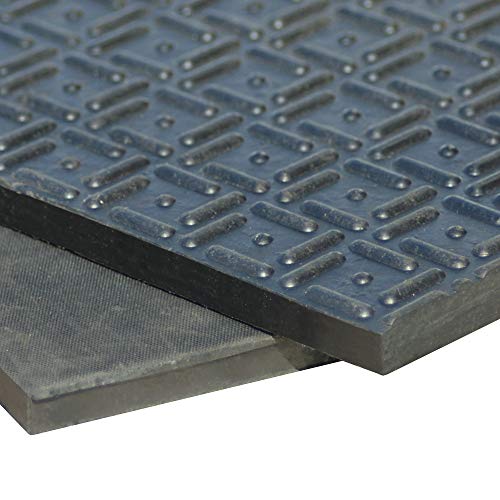
Rubber-Cal Shark Tooth Heavy Duty Rubber Flooring Mat
Recycled rubber genuinely tolerates dropped weights, unlike anything else here, and the textured face grips even when damp. Weight alone keeps it in place without adhesive, which also makes moving it a two person job. A strong rubber smell lingers for the first couple weeks before fading with ventilation.
Pros
- Handles dropped dumbbells and plates
- Stays in place under its own weight
- Textured surface grips well
Cons
- Strong rubber odour for the first few weeks
- Very heavy to move or reposition

Gorilla Mats Premium Large Exercise Mat
A single large mat skips seams entirely, which matters for burpees, sled drags and anything where a foot catching a tile edge poses a real risk. Rolling up for storage keeps it manageable, and grip works on both faces. Cushioning is solid, though it won’t protect a subfloor from heavy dropped weights.
Pros
- No seams to catch a foot or separate
- Rolls away for storage in shared rooms
- Grippy on both sides without slipping
Cons
- Not rated for dropped barbell work
- Single mat limits total coverage area

BalanceFrom Puzzle Exercise Mat
Foam tiles at the most accessible price come in half inch and thicker versions with a water resistant surface that wipes clean. Coverage per pack runs generous, so filling a spare room takes fewer orders than expected. Density trails the ProsourceFit tiles, so it compresses more under equipment feet.
Pros
- Generous coverage for the outlay
- Available in multiple thicknesses
- Surface wipes clean after sweaty sessions
Cons
- Lower density compresses under equipment feet
- Interlocks loosen with repeated assembly

SuperMats Heavy Duty Equipment Mat 15GS
A dense PVC mat sized to sit under a treadmill, rower or elliptical dampens vibration and stops machine feet grinding into carpet or laminate. Dust and belt debris that machines shed collect on its surface too. This isn’t a training surface, so pair it with foam or rubber rather than replacing them.
Pros
- Noticeably reduces machine vibration and noise
- Protects carpet and laminate from machine feet
- Catches belt dust and debris
Cons
- Single purpose, not a training surface
- Fixed size may not match every machine footprint

IncStores 8mm Strong Rubber Flooring Rolls
Buying rubber by the roll delivers a near continuous surface with far fewer seams than tiles, the professional approach for a garage or basement gym. Installation takes planning, a sharp knife and usually a second pair of hands. Once down it’s effectively permanent, exactly what a dedicated space wants.
Pros
- Very few seams across a whole room
- Durable enough for permanent installation
- Even surface for racks and platforms
Cons
- Installation is a real project, not a quick job
- Difficult to remove or relocate afterwards

Yes4All Interlocking Exercise Foam Mats
Lightweight foam tiles go down and come up in minutes, aimed at converting a living room or spare bedroom for a session before clearing it afterward. A thinner profile keeps storage manageable. Cushioning stays modest, so pair these with a thicker mat for floor work on your back.
Pros
- Fast to lay out and pack away
- Light enough to move single handed
- Stores in a small stack
Cons
- Thin profile offers limited cushioning
- Not suitable under heavy equipment
How they compare
| # | Model | Material | Best for | Score | Price |
|---|---|---|---|---|---|
| 1 | ProsourceFit Extra Thick Puzzle Exercise Mat | High density EVA foam | Best overall | 9.4 | Check price |
| 2 | Rubber-Cal Shark Tooth Heavy Duty Rubber Flooring Mat | Recycled rubber | Best for lifting | 9.2 | Check price |
| 3 | Gorilla Mats Premium Large Exercise Mat | Non toxic foam composite | Best for open floor training | 9.0 | Check price |
| 4 | BalanceFrom Puzzle Exercise Mat | EVA foam | Best budget | 8.8 | Check price |
| 5 | SuperMats Heavy Duty Equipment Mat 15GS | Dense PVC | Best for treadmills and machines | 8.6 | Check price |
| 6 | IncStores 8mm Strong Rubber Flooring Rolls | Recycled rubber roll | Best for whole room coverage | 8.3 | Check price |
| 7 | Yes4All Interlocking Exercise Foam Mats | EVA foam | Best for temporary setups | 8.0 | Check price |
What matters most
What does the flooring need to survive? One question decides the material: will weights hit it? Bodyweight training, yoga, dumbbells under about fifty pounds and cardio machines all fall comfortably within what foam tiles handle. Dropped barbells, kettlebell swings that end early and plate loading demand rubber instead, since foam takes a permanent dent the first time and never recovers.
Thickness and density solve different problems A thick low density foam tile feels plush but compresses under a rack foot, making equipment rock. A thinner high density rubber mat feels harder underfoot but supports load far better. Half inch high density foam is the usual sweet spot for general training. Under a squat rack or platform, density beats cushioning every time, with a separate mat added for floor work.
Planning around the smell and off gassing New recycled rubber carries a strong odour, genuinely unpleasant in a closed garage or basement for the first few weeks. Unrolling it outdoors on a dry day, then ventilating the room well once installed, shortens that period considerably. Foam tiles smell far less, though the cheapest ones still off gas, so air them before laying in a windowless room.
Protecting the subfloor underneath Foam tiles trap moisture against a concrete slab, a real issue in a basement where damp rises through the floor. A moisture barrier underneath offers cheap protection on concrete. On laminate or engineered wood, grit working under the tiles can grind the finish, so lift and sweep periodically. Carpet complicates everything, since thick pile makes any surface unstable under a rack.
Frequently asked questions
How thick should home gym flooring be?
For general training, half inch foam tiles cover most needs. If you drop weights, 3/8 inch rubber is the practical minimum and thicker is better under a lifting platform. Cardio machines need less cushioning than they need vibration damping, so a dense quarter inch mat is usually enough underneath a treadmill.
Can I put gym flooring over carpet?
You can, but be careful with anything heavy. Foam tiles over low pile carpet work acceptably for bodyweight training and light dumbbells. Over thick pile, the surface flexes and a rack or bench will rock noticeably, a genuine safety issue. A rigid plywood sheet under the flooring is the usual workaround.
How long does the rubber smell last?
Owners typically report the strongest odour in the first two to three weeks, fading substantially over one to two months with ventilation. Airing the material outdoors before installation makes the biggest difference. If the room has no window or extractor, expect the smell to linger noticeably longer than in a ventilated space.
Will foam tiles dent under a squat rack?
Yes, under the rack feet, which concentrate a lot of load into a small area. Dents may partly recover if the rack is moved, but usually not fully. Placing rubber pads or plywood squares under each rack foot spreads the load and offers a simple fix while keeping foam elsewhere in the room.
Are rubber rolls better than rubber tiles?
Rolls give far fewer seams, meaning less chance of edges lifting and a cleaner look across a whole room. Tiles are easier to carry, install alone and replace individually if one gets damaged. Rolls suit a permanent dedicated gym; tiles fit a shared or rented space better.
How do I clean gym flooring?
Sweep or vacuum grit first, since abrasive particles do more damage than sweat does. Foam wipes down with mild soap and water and shouldn’t be soaked, since water gets between the tiles. Rubber tolerates a damp mop with a neutral cleaner. Avoid solvent based cleaners on both materials, since they degrade the surface.
Do I need a moisture barrier on concrete?
In a basement or garage where the slab contacts damp ground, yes. Concrete wicks moisture upward and flooring traps it, which leads to mould underneath foam in particular. A polyethylene sheet under the flooring is inexpensive insurance and adds very little extra time during installation.
How much flooring do I actually need?
Measure the training footprint rather than the whole room. A typical home setup needs enough for the rack or bench area plus a clear zone in front for floor work, often around a hundred square feet. Buying one extra pack is worth it, since colours and batches vary and matching later can be difficult.
Is interlocking foam flooring safe for a home gym?
Yes for bodyweight and light dumbbell work, provided it sits on a flat, stable subfloor. Loose or curling edges create a trip hazard, so replace tiles once interlocks stop gripping. Heavy barbell training needs rubber instead, since foam won’t hold up.
What’s the difference between EVA foam and rubber gym flooring?
EVA foam is lighter, cheaper and softer underfoot, suited to floor work and moderate loads. Rubber costs more, weighs more and resists denting under dropped weights in a way foam simply can’t. Pick foam for comfort, rubber for impact protection.
Our take
The ProsourceFit Extra Thick Puzzle Exercise Mat suits most home gyms, cushioning floor work and protecting the subfloor without a permanent installation. Anyone dropping loaded barbells should put Rubber-Cal Shark Tooth Rubber Flooring in the lifting zone instead, since foam won’t survive it. Gorilla Mats’ Premium Large Exercise Mat remains the seamless option for open floor training in a shared room.
Derek Holt
Derek has a background coaching recreational and amateur athletes and has worked the sales floor at specialty fitness retailers. He focuses on equipment durability, ergonomics and realistic use cases rather than marketing claims.