Gym chalk compared: flake, block, liquid and socks
FrictionLabs Unicorn Dust ranks first, since flaked magnesium carbonate clings through a full working set. SPI Gymnastics blocks deliver identical grip for home gyms at lower cost per ounce. Black Diamond Liquid White Gold dries in seconds and leaves no cloud where powder is banned.
FrictionLabs Unicorn Dust suits lifters whose sets end when the bar slips, not when the back quits. Milled flakes bond to skin instead of puffing away, so one dip covers a full set of heavy pulls. Cost per ounce runs well above block chalk, and that is the trade.
Chalk looks interchangeable on a listing page. We compared magnesium carbonate purity, particle size, added drying agents and format across seven products. Owner feedback on split fingertips, residue left on barbells and complaints from gym staff moved several picks up or down.
Our top picks

FrictionLabs Unicorn Dust Chalk
Unicorn Dust is milled into flakes rather than crushed into dust, so particles sit on the skin and hold. No limestone filler and no drying agent go in, which keeps fingertips from splitting over a long training block. Resealable pouches take a beating in a gym bag.
Pros
- Flake particles stay put through long sets
- No drying agent to crack fingertips
- Resealable pouch stops bag spills
Cons
- Cost per ounce runs above block chalk
- Loose powder breaks the rules at many commercial gyms
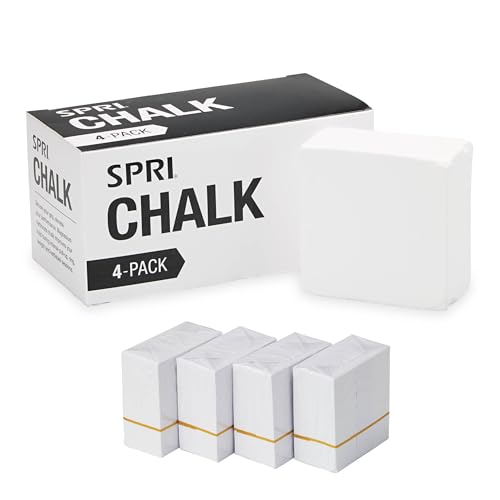
SPI Gymnastics Gym Chalk Blocks
Eight blocks of two ounces each add up to a pound of plain magnesium carbonate. Crush coarse for barbell knurling or fine for rings and grips. Nothing is added, so it behaves like the chalk bowls in gymnastics halls.
Pros
- One pound covers a home gym for months
- Crush coarse or fine to suit the implement
- Blocks store for years without clumping
Cons
- Crushing sends powder into the air
- Blocks shatter when dropped on concrete

Primo Chalk
Primo mixes magnesium carbonate with an essential oil blend built around tea tree. Oils cut the stripping effect that leaves pure chalk splitting calluses. Scent carries across a room, so a home rack suits it better than a shared chalk bowl.
Pros
- Oils reduce cracking during high volume weeks
- Fine grind spreads evenly over the palm
- Gentler on skin than plain magnesium carbonate
Cons
- Scent is strong for shared gym floors
- Heavy sweaters reapply between sets

Black Diamond Liquid White Gold Chalk
Alcohol carries magnesium carbonate onto skin, evaporates in about 20 seconds and leaves a bonded white layer. Nothing goes airborne, which answers most no chalk policies. One coat usually covers a session, with a top up before a heavy single.
Pros
- Produces zero airborne dust
- One application lasts most of a session
- Packs easier than powder for travel
Cons
- Alcohol base dries skin with daily use
- Soap is needed to wash it off

Metolius Super Chalk
A drying agent joins the magnesium carbonate here, which pays off when sweat builds slowly across a long hold. Climbers reach for it on crimps, and it transfers well to farmer walks and heavy carries. That additive treats skin more harshly than filler free chalk.
Pros
- Drying agent extends grip on long holds
- Fine grind fills small crimps and grooves
- Bag reseals for topping up a chalk bag
Cons
- Dries skin faster than filler free chalk
- Fine dust settles on nearby equipment
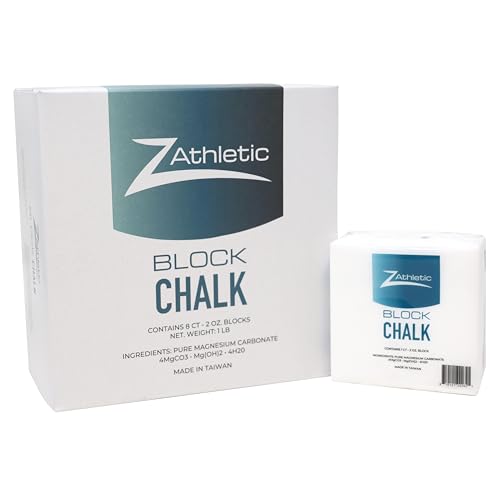
Z ATHLETIC Gymnastics Chalk
Plain magnesium carbonate blocks arrive in bulk quantities aimed at gymnastics clubs. Garage gyms sharing chalk with training partners get grip equal to premium blocks, because the material is the same compound. Block density shifts between batches, so some crush finer than others.
Pros
- Lowest cost per ounce in this group
- Same active material as premium chalk
- Bulk quantity suits shared training spaces
Cons
- Density varies between batches
- Thin packaging tears in transit
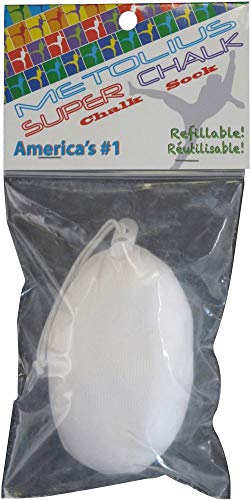
Metolius Refillable Chalk Sock
Squeeze the fabric ball and chalk passes through a permeable weave, which cuts airborne dust sharply. Refill it from any loose powder, including crushed SPI blocks. Coverage lands lighter than dipping into a bowl, so sweaty hands squeeze more often.
Pros
- Contains dust well enough for most commercial gyms
- Refills from inexpensive block chalk
- Keeps a gym bag clean in transit
Cons
- Lighter coverage than a direct dip
- Weave clogs if filled with damp chalk
Before you buy
What gym chalk does for your grip Gym chalk is magnesium carbonate, a salt that pulls moisture off skin. Dry skin presses into knurling instead of sliding across it. Purity matters here: budget chalk cuts in limestone, which absorbs less and smears more onto the bar. Particle size then decides how long a coat lasts, because flakes sit on the surface while milled dust packs into the creases of your palm. Lifters with naturally dry hands gain little from any of it.
Block chalk vs loose powder vs liquid chalk Blocks cost least per ounce and let you set texture by how hard you crush them. SPI Gymnastics and Z ATHLETIC both work that way. Loose powder such as FrictionLabs Unicorn Dust skips crushing and arrives at a consistent grind. Liquid suspends chalk in alcohol, dries in roughly 20 seconds and leaves no cloud, which is how Black Diamond Liquid White Gold passes a no powder rule. Plenty of lifters run liquid as a base coat, then dust over it before a top single. Chalk socks sit between the two, releasing powder through a woven shell.
Best chalk for deadlifts, pull ups and climbing Deadlifts strip grip fastest, since a spinning bar loads the fingers for 10 seconds or longer. Flake chalk, or liquid under powder, holds best against that. Pull up bars are smooth, so drying beats knurling fill and a fine powder like Primo Chalk is enough. On small crimps contact time runs long, which is where the drying agent in Metolius Super Chalk earns its place. Farmer walks and heavy carries behave more like climbing than like a one rep pull. Match particle size to how long your hand stays on the implement.
Gym rules, mess and hand care Loose powder is banned in plenty of commercial gyms, because it settles into vents, floors and machine pads. Liquid formats and the Metolius Refillable Chalk Sock usually clear that rule. Ask staff before your first session rather than after a warning. Skin is the other cost: chalk strips oil, and heavy bar work then splits the calluses it dried out. Primo Chalk adds oils to soften that effect. Washing with soap after training and filing calluses every few weeks does more for hand health than switching brands.
Side by side
| # | Model | Composition | Best for | Score | Price |
|---|---|---|---|---|---|
| 1 | FrictionLabs Unicorn Dust Chalk | Pure magnesium carbonate | Best overall | 9.4 | Check price |
| 2 | SPI Gymnastics Gym Chalk Blocks | Magnesium carbonate | Best value | 9.2 | Check price |
| 3 | Primo Chalk | Magnesium carbonate with oils | Best for dry or cracked hands | 9.0 | Check price |
| 4 | Black Diamond Liquid White Gold Chalk | Magnesium carbonate in alcohol | Best liquid chalk | 8.8 | Check price |
| 5 | Metolius Super Chalk | Magnesium carbonate with drying agent | Best for climbing grip | 8.5 | Check price |
| 6 | Z ATHLETIC Gymnastics Chalk | Magnesium carbonate | Best budget | 8.2 | Check price |
| 7 | Metolius Refillable Chalk Sock | Refillable fabric ball | Best for mess control | 8.0 | Check price |
Frequently asked questions
What is gym chalk made of?
Magnesium carbonate, a salt that absorbs sweat from skin. Some products add drying agents or essential oils, while budget chalk may include limestone filler that absorbs less.
Is liquid chalk better than powder chalk?
Liquid lasts longer per application and creates no dust, so it works where powder is banned. Powder reapplies faster between sets and treats skin more gently over months.
Which gym chalk is best for deadlifts?
Flake chalk grips knurling longest, which puts FrictionLabs Unicorn Dust first here. A liquid base coat under powder holds even better on maximal pulls.
Does gym chalk damage your hands?
It dries skin, raising the odds of a callus split during high volume weeks. Oils in Primo Chalk offset some of that, though filing calluses helps more than swapping brands.
Can you use climbing chalk for weightlifting?
Yes, since the active ingredient is identical magnesium carbonate. Climbing chalk runs finer and often carries a drying agent, which suits long holds more than fast heavy sets.
Why do gyms ban chalk?
Airborne powder settles on equipment, floors and ventilation, and cleaning it costs staff time. A chalk sock or liquid formula usually satisfies the policy, but confirm with the front desk.
How much chalk should you put on your hands?
One thin, even layer across palms and fingers does the job. Caking it on reduces contact with the bar instead of improving it.
Block chalk vs loose chalk, which is better for a home gym?
Blocks cost less per ounce and let you crush to any texture you want. Loose powder removes the crushing step and delivers the same grind every time.
Is gym chalk worth it if your hands barely sweat?
Gains are small below about 225 pounds on the bar for most people. Above that, chalk mainly buys reps by delaying the point where fingers open.
How often does a chalk sock need refilling?
Refill once squeezing stops leaving a visible layer, which lands every few weeks for regular lifters. Keep the fill dry, since damp chalk clogs the weave permanently.
Final word
FrictionLabs Unicorn Dust earns the recommendation for heavy pulling, because flake texture survives sets where crushed block chalk gives up. Home gym owners stocking a year of supply should buy SPI Gymnastics blocks and crush them by hand instead. Under a no powder rule, Black Diamond Liquid White Gold is the only pick here that keeps you training legally.
Derek Holt
Derek has a background coaching recreational and amateur athletes and has worked the sales floor at specialty fitness retailers. He focuses on equipment durability, ergonomics and realistic use cases rather than marketing claims.


