Gravel Vacuums That Make Aquarium Cleanup Easier
The Python No Spill Clean and Fill wins for water changes on larger tanks. The Aqueon Siphon Vacuum is the reliable hand-siphon value pick. The hygger Electric Gravel Cleaner suits nano tanks where no bucket is wanted at all.
Hand siphon versus electric is the first real decision in substrate cleaning, and it shapes everything else. The Python No Spill Clean and Fill removes the bucket entirely for big tanks. The Aqueon Siphon Vacuum stays the dependable manual value pick, while the battery-run hygger keeps small tanks tidy without moving a drop of water.
This choice is trickier than it looks because a hand siphon changes water while it cleans, but a battery cleaner only recirculates and filters what is already in the tank. We compared seven gravel vacuums on suction strength, tank-size fit, mess produced, and where a manual siphon beats an electric unit, using product specifications and long-term owner reports.
The top picks, ranked

Python No Spill Clean and Fill System
A faucet connection uses tap flow to start the siphon, so draining, vacuuming and refilling happen without ever carrying a bucket. Medium and large tanks benefit most from this setup. Owners report it turns a dreaded chore into a quick routine on bigger aquariums.
Pros
- No buckets to lift or spill
- Drains, cleans, and refills in one flow
- Excellent for large tanks
Cons
- Needs a nearby compatible faucet
- Long hose is more to store
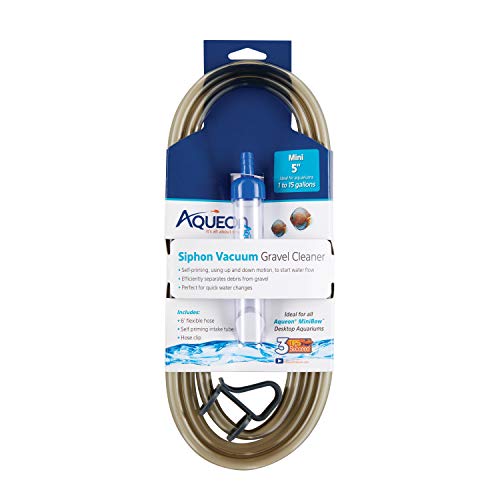
Aqueon Siphon Vacuum Gravel Cleaner
A self-priming squeeze bulb starts flow without any need to suck on the hose. Water changes and gravel cleaning happen in the same pass. Owners praise it as a no-fuss manual cleaner that simply works trip after trip.
Pros
- Self-priming bulb, no mouth siphon
- Changes water as it cleans
- Affordable and dependable
Cons
- Requires a bucket for drained water
- Manual pace on very large tanks

Laifoo Aquarium Siphon Vacuum Gravel Cleaner
A hand pump primer and an adjustable flow clamp handle routine water changes and light gravel cleaning at low cost. The clamp lets you control drain speed precisely. Owners say it works as a solid entry point for a first vacuum.
Pros
- Very affordable
- Flow clamp controls drain speed
- Easy hand-pump priming
Cons
- Thinner build than premium siphons
- Bucket still required
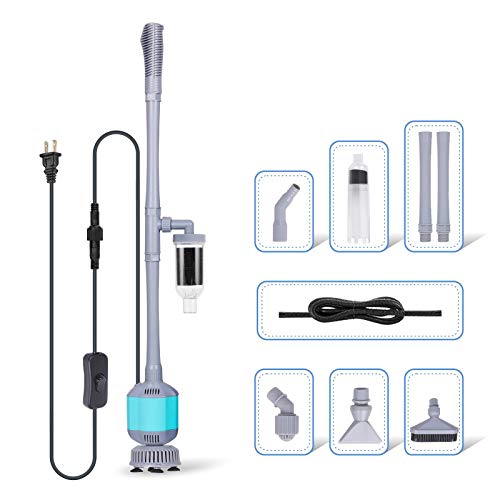
hygger Electric Aquarium Gravel Cleaner
Debris gets pulled up, filtered through a sponge, and clean water returns to the tank, so spot-cleaning needs no water change at all. A multi-function nozzle set adapts between sand and gravel. Owners like it for quick touch-ups between full changes.
Pros
- Cleans substrate without a bucket
- Filters and returns water to the tank
- Nozzle set adapts to sand and gravel
Cons
- Does not change water on its own
- Cord limits reach from the outlet

NICREW Automatic Gravel Cleaner
Strong corded suction digs into gravel and sand to lift waste trapped below the surface. Included attachments extend the unit to water changes and tank washing too. Owners report it pulls up debris that a gentle siphon leaves behind.
Pros
- Strong suction reaches deep waste
- Multiple attachments included
- Handles gravel and sand
Cons
- Corded and less portable
- Strong suction can lift fine sand

Eheim Quick Vac Pro
A battery-powered handheld stirs and collects mulm into an internal cartridge while returning water to the tank, so nothing spills. Full submersion makes quick spot cleaning possible anywhere in the tank. Owners like it for daily touch-ups without setting up hoses.
Pros
- Fully cordless and portable
- No hoses or buckets to set up
- Great for quick spot cleaning
Cons
- Small cartridge fills quickly
- Not for full water changes

Fluval Edge Gravel Cleaner
A slim hand siphon fits small and nano aquariums where a full-size tube would be too aggressive. The narrow intake reaches tight corners around plants and decor. Owners report it cleans compact tanks gently without disturbing the aquascape.
Pros
- Sized right for nano tanks
- Narrow tube reaches tight spots
- Gentle on delicate aquascapes
Cons
- Too small for large tanks
- Slower flow than full-size siphons
Compared at a glance
| # | Model | Type | Best for | Score | Price |
|---|---|---|---|---|---|
| 1 | Python No Spill Clean and Fill System | Faucet-powered hand siphon | Best overall | 9.4 | Check price |
| 2 | Aqueon Siphon Vacuum Gravel Cleaner | Hand siphon with squeeze primer | Best value | 9.0 | Check price |
| 3 | Laifoo Aquarium Siphon Vacuum Gravel Cleaner | Hand siphon with pump primer | Best budget | 8.6 | Check price |
| 4 | hygger Electric Aquarium Gravel Cleaner | Corded electric gravel cleaner | Best electric | 8.9 | Check price |
| 5 | NICREW Automatic Gravel Cleaner | Corded electric multi-function | Best for deep cleaning | 8.7 | Check price |
| 6 | Eheim Quick Vac Pro | Cordless battery handheld | Best cordless spot cleaner | 8.5 | Check price |
| 7 | Fluval Edge Gravel Cleaner | Compact hand siphon | Best for nano tanks | 8.4 | Check price |
How to choose
Hand siphon or electric: the core decision A hand siphon pulls water out of the tank as it lifts debris, doubling as your water change and requiring a bucket or drain hookup. An electric or battery cleaner recirculates the same water, filtering waste out and returning it, so it spot-cleans between changes but never lowers the water line. Many keepers own one of each type for different jobs.
Match the tool to tank size Large tanks reward a faucet-driven system like the Python, since carrying repeated buckets from a big aquarium becomes exhausting fast. Medium tanks do well with a self-priming manual siphon. Nano and small tanks need a slim compact tube or a gentle battery unit so strong suction does not disturb the aquascape or pull in fish.
Handling mess and water changes together Gravel cleaning and water changes overlap, so the least messy setup handles both at once. Faucet systems drain straight to a sink and refill from the tap, avoiding spills entirely. Bucket siphons benefit from a flow-control clamp that slows the drain and stops before too much water leaves the tank.
Best gravel vacuum for sand, plants, and shrimp Fine sand and planted tanks need a gentler touch than a coarse gravel bed. Hover the tube just above sand rather than plunging in, use a lower-suction nozzle where available, and keep the intake clear of small fish and shrimp. Adjustable-flow siphons and soft-suction battery cleaners give delicate setups the control they need.
Questions worth asking
What is the difference between a hand siphon and an electric gravel vacuum?
A hand siphon uses gravity to pull water and debris into a bucket, changing water while it cleans. An electric or battery vacuum recirculates the tank’s own water, filtering waste out and returning it, which spot-cleans substrate without lowering the water level.
Which gravel vacuum is better for a large aquarium?
A faucet-powered hand siphon like the Python is ideal for large tanks, since it drains and refills through a hose with no buckets involved. That advantage grows once a tank is too big to empty by hand comfortably.
Do electric gravel vacuums change the water too?
No. Electric and battery cleaners such as the hygger and Eheim Quick Vac Pro filter debris and return the same water, so a separate water change on a normal schedule is still needed. Treat them as spot-cleaning tools between full changes.
Can I use a gravel vacuum on sand substrate?
Yes, with care. Hold the tube just above the sand rather than pushing into it, lifting floating waste without pulling up the sand itself. Several electric cleaners include a lower-suction nozzle made specifically for fine sand beds.
How often should aquarium gravel be vacuumed?
Vacuuming during a routine water change every one to two weeks keeps waste from building up in most tanks. Heavily stocked or messy setups may need it more often, while lightly stocked planted tanks can stretch the interval further.
Will a gravel vacuum hurt my fish?
It should not if the intake stays clear of fish and shrimp, which typically swim away from the tube. Tiny fish in small tanks are safer with a gentler compact siphon or soft-suction battery cleaner.
Do I need a bucket for a gravel vacuum?
Traditional hand siphons drain into a bucket, so yes for those models. Faucet-connected systems drain straight to a sink and skip the bucket, and electric recirculating cleaners need none since they return water to the tank.
Is a battery gravel cleaner as strong as a hand siphon?
Battery cleaners like the Eheim Quick Vac Pro handle light, frequent spot cleaning of loose surface waste well but have gentler suction than corded units. Deep cleaning of packed gravel calls for a hand siphon or corded electric vacuum instead.
Best gravel vacuum for a nano or small aquarium?
The Fluval Edge fits nano and small tanks best, since its narrow intake reaches tight corners without disturbing plants or decor. Full-size siphons tend to overwhelm tanks under ten gallons.
Our take
Pick based on tank size and cleaning habits. The Python No Spill Clean and Fill wins for large tanks by making water changes bucket-free, while the Aqueon Siphon Vacuum remains the dependable hand-siphon value choice. For quick substrate touch-ups without a water change, the electric hygger or battery-powered Eheim does that job better.
Olivia Hartley
Olivia spent several years working at an animal shelter and a pet-supply retailer before joining the editorial team. She researches pet gear with an emphasis on safety, comfort and the fine print that owners often miss.