Luggage GPS trackers ranked by network and battery
Apple AirTag ranks first for iPhone owners because the Find My network is dense inside airports. Tile Pro fits households mixing Android and iOS handsets. Tracki GPS Tracker reports its own position over 4G, so a bag sitting in a cargo warehouse still shows up on a map.
Apple AirTag suits iPhone travellers first. Every passing Apple device quietly relays a sighting, and baggage halls are thick with them. Precision Finding then walks you through the last few metres. Android phones cannot register it, which rules the tag out for a large share of travellers.
Two very different technologies share this one search term. Bluetooth tags hold no GPS receiver and depend on strangers’ phones to report a location. Cellular trackers fix their own position and send it over a mobile network for a monthly plan. We compared network size, battery chemistry and rated life, water resistance, and airline guidance on lithium cells. Owner reports about update gaps in cargo holds and quiet regional airports shaped the final order.
The top picks, ranked
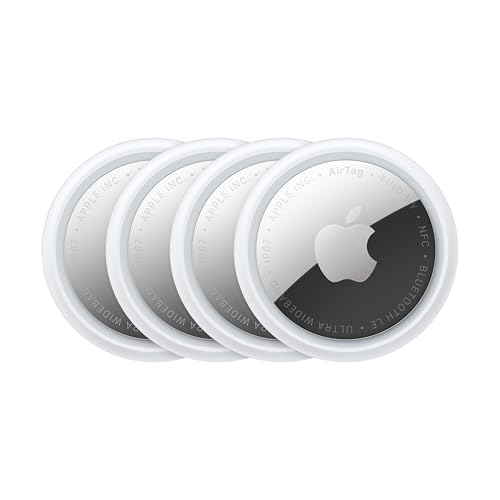
Apple AirTag
Find My puts hundreds of millions of Apple devices to work as passive reporters, and a baggage hall is full of them. Ultra wideband on iPhone 11 and newer drives Precision Finding, an arrow that points straight at the bag from a few metres away. Volume is the weak spot, since the chime struggles through packed clothing.
Pros
- Reporting network dwarfs every rival in this group
- Precision Finding narrows the search to a metre
- CR2032 swaps out by hand in under a minute
Cons
- Android phones cannot set it up or track it
- Chime is muffled inside a full suitcase
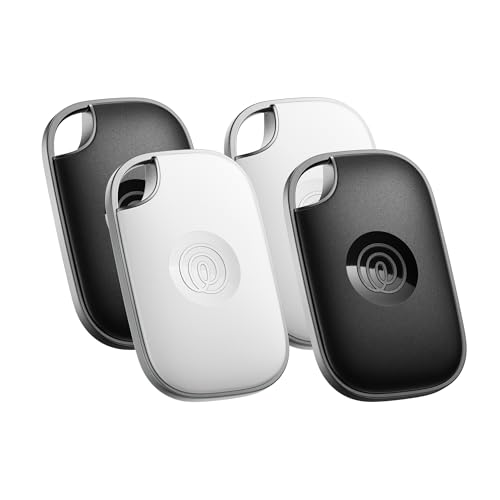
Tile Pro
Feature parity across Android and iOS makes this the household pick when handsets differ. Bluetooth reaches roughly 400 feet in the open, the longest claim here, and the alert tone is the loudest of the seven. Sightings depend on other Tile users, and that community runs far thinner than Apple’s. Quiet regional airports expose the gap.
Pros
- Identical app and features on either platform
- Loudest alert here, useful in a hotel room
- Moulded hole takes a keyring or zip clip
Cons
- Finding network trails Apple and Samsung by a wide margin
- Smart alerts sit behind a paid plan

Samsung Galaxy SmartTag2
SmartThings Find turns nearby Galaxy phones into reporters, so coverage tracks Samsung market share country by country. Power saving mode stretches one CR2032 to a quoted 500 days, the longest figure in this ranking. Compass View adds ultra wideband guidance on supported Galaxy models. Registration demands a Samsung handset, so a Pixel owner is locked out.
Pros
- Quoted 500 day runtime beats every coin cell rival here
- Compass View closes the last few metres
- Loop body threads onto a zip pull without a holder
Cons
- Only a Samsung Galaxy phone can register it
- Network density swings sharply between countries

Tracki GPS Tracker
Actual GPS sits inside this one, paired with a 4G radio and a required monthly plan. Position arrives from a cargo warehouse, a courier van or a foreign city with no passing traveller involved. Geofence alerts fire when the bag crosses out of a chosen zone, and history replays the route afterwards. Recharging every few days is the cost of that independence.
Pros
- Reports position with no crowd sourced network involved
- Geofence alerts flag a bag leaving the airport perimeter
- Location history shows where a missing case travelled
Cons
- Stops reporting the moment the plan lapses
- Needs a recharge every few days
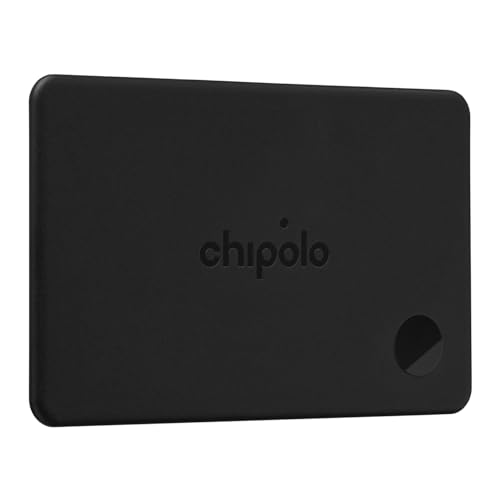
Chipolo CARD Spot
Card format measures 2.4 mm thick, thin enough for a suitcase document sleeve, a passport wallet or a laptop pocket. Reporting runs through Apple Find My, so coverage matches AirTag exactly. Sealed construction rates the cell at roughly two years, after which the whole card gets replaced. IPX5 handles splashes rather than a soaking.
Pros
- Lies flat in a lining where a puck would bulge
- Joins the Apple network with no holder to buy
- Two year cell outlasts standard coin cell tags
Cons
- Battery cannot be replaced at home
- Apple accounts only, no Android setup

Pebblebee Clip Universal
Setup asks which ecosystem you want, Apple Find My or Google Find My Device, then holds that choice until a factory reset. USB-C charging removes coin cells from the routine, with up to a year between top ups. A clip grabs a zip pull straight out of the packaging. Bulk is the tradeoff against flat card tags, and IPX6 covers rain rather than immersion.
Pros
- USB-C charging ends the coin cell cycle
- Joins either the Apple or Google finding network
- Integrated clip attaches to a zip without hardware
Cons
- Changing ecosystems means a full reset
- Thicker than a card style tracker

Eufy SmartTrack Link
Eufy strips the format back to essentials: Apple Find My support, a replaceable CR2032 and a keyring hole moulded into the body. Second and third bags get covered with little compromise. Alert volume and useful range both sit below Tile Pro. Separation alerts arrive through the eufy app rather than Find My itself.
Pros
- Simplest route onto the Apple Find My network
- Keyring hole removes the need for a holder
- Replaceable cell keeps it useful for years
Cons
- Quieter chime than Tile Pro or Pebblebee
- No Android support
How they stack up
| # | Model | Network | Best for | Score | Price |
|---|---|---|---|---|---|
| 1 | Apple AirTag | Apple Find My | Best overall for iPhone users | 9.4 | Check price |
| 2 | Tile Pro | Tile network, iOS and Android | Best for Android and iPhone | 9.2 | Check price |
| 3 | Samsung Galaxy SmartTag2 | Samsung SmartThings Find | Best for Samsung phones | 9.0 | Check price |
| 4 | Tracki GPS Tracker | GPS with 4G cellular reporting | Best for real time tracking | 8.7 | Check price |
| 5 | Chipolo CARD Spot | Apple Find My | Best slim card design | 8.5 | Check price |
| 6 | Pebblebee Clip Universal | Apple Find My or Google Find My Device | Best rechargeable option | 8.2 | Check price |
| 7 | Eufy SmartTrack Link | Apple Find My | Best budget | 8.0 | Check price |
How to choose
How luggage trackers actually find a bag Most tags in this category carry no GPS receiver. Each one broadcasts an encrypted Bluetooth beacon, and any phone on the matching network reports that sighting back to your app. Airports, baggage halls and hotel lobbies are dense with phones, which is why the method works so well on travel routes. Cellular trackers such as Tracki invert the model. They calculate their own GPS fix and push it over a mobile network, funded by a monthly plan.
Matching a tracker to the phone in your pocket Ecosystem decides this purchase more than any spec on the box. iPhone owners draw the widest coverage from Apple AirTag, Chipolo CARD Spot or Eufy SmartTrack Link. Galaxy owners should take SmartTag2, because SmartThings Find accepts Samsung handsets only at registration. Mixed households need Tile Pro or Pebblebee Clip Universal, since both cross the platform divide. Anyone who switches phones every couple of years is safer on those two as well.
Bluetooth tags vs cellular GPS for checked bags A coin cell tag costs nothing to run and lasts about a year, but it goes silent in a cargo hold until someone walks past. Cellular units keep reporting from almost anywhere with mobile signal, which matters when a bag is driven to another city overnight. Subscriptions and a recharge every few days are the price of that reach. Frequent long haul flyers often carry one of each, with the tag inside the case and the cellular unit in a jacket pocket.
Placement, airline battery rules and pre trip checks Aviation regulators and major airlines allow coin cell trackers in checked baggage, because the lithium content sits far below restricted levels. Bury the tag under clothing rather than clipping it to an outside strap, where it can be cut off in seconds. Register the serial number and leave separation alerts switched on. Swap the cell before any long trip, since a dead tag is worse than none at all. Snap a photo of the packed bag too, because a claim moves faster with a location pin and a picture together.
Good to know
Are GPS luggage trackers allowed on planes?
Yes. Airlines and aviation authorities permit trackers running on small lithium coin cells inside checked bags, because their lithium content falls well under restricted levels.
Do AirTags work in the cargo hold of a plane?
Reporting pauses in flight, since no Apple devices sit close enough to relay the beacon. Updates resume within minutes of the bag reaching a baggage hall full of phones.
What is the best luggage tracker for Android?
Tile Pro runs fully on Android, and Pebblebee Clip Universal can join Google Find My Device during setup. AirTag, Chipolo CARD Spot and Eufy SmartTrack Link are Apple only.
Which luggage trackers work without a subscription?
AirTag, Samsung Galaxy SmartTag2, Chipolo CARD Spot, Pebblebee Clip Universal and Eufy SmartTrack Link all run with no monthly fee. Only Tracki needs a plan, because it uses a cellular network.
How long does a luggage tracker battery last?
Coin cell models run roughly a year. Samsung quotes up to 500 days in power saving mode, Chipolo CARD Spot seals in about two years, and Tracki needs charging every few days.
Is a Tile or an AirTag better for travel?
AirTag locates bags faster in most airports because Apple devices outnumber Tile users heavily. Tile Pro wins if you carry an Android phone or want the louder ring for searching a hotel room.
Can an airline use my tracker location to find the bag?
Staff will not retrieve a case on a screenshot alone. A location pin still sharpens the claim, so file the standard mishandled baggage report and attach the coordinates as supporting detail.
Where should a tracker go inside a suitcase?
Inside an interior pocket, under a layer of clothing. Outer straps and luggage tags detach in seconds, and a visible tracker invites removal.
Do I need a tracker in every bag?
One per checked bag is the useful rule, since a tag only reports its own case. Carry on luggage rarely needs one, though a card tracker in a laptop sleeve covers theft risk on trains and in cafes.
The verdict
Apple AirTag takes the recommendation for iPhone travellers, because network density beats every number printed on a box and airports are where that density peaks. Android and mixed households should buy Tile Pro for equal platform treatment and the loudest alert here. Add Tracki only on long international routes, where a position that never waits for a passing stranger is worth the monthly plan and the charging habit.
Sierra Daniels
Sierra's background is in landscape design and nursery retail. She focuses on lawn and garden equipment, outdoor furniture and gear durability, weighing published specs against how materials actually hold up outside.