Low Spin or High Launch: Golf Drivers for Every Swing
The TaylorMade Qi10 is the strongest overall golf driver, balancing high forgiveness with a sliding weight track for real shot shape adjustment. Faster swingers chasing lower spin should consider the Titleist GT3 instead, while golfers on a tighter budget fit better with the Wilson Dynapower Carbon.
The TaylorMade Qi10 stands out because its carbon crown and sliding weight track combine strong forgiveness with real shot shape control. Its main limitation is price, typical of a current-generation flagship driver.
We compared published spin profile, forgiveness ratings, loft range and adjustability features across each listing based on manufacturer specifications.
The top picks, ranked

TaylorMade Qi10
A carbon crown lowers overall clubhead weight, letting TaylorMade move more mass low and back for stability on off-center hits. A sliding weight track adjusts bias toward a draw or fade without needing a different head. Loft options span from a low 8 degrees for faster swingers to 12 degrees for higher launch needs.
Pros
- High MOI design improves forgiveness on mis-hits
- Sliding weight track adjusts shot shape bias
- Wide loft range suits different swing speeds
Cons
- Premium pricing typical of a current-generation flagship driver
- Adjustability features add complexity versus simpler fixed-weight drivers
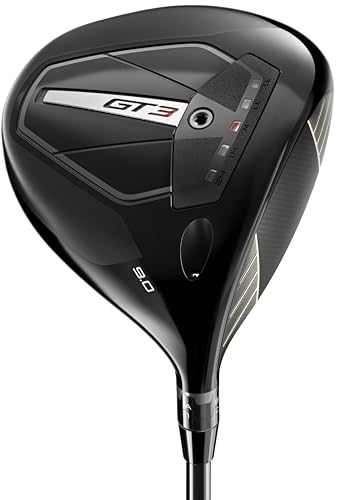
Titleist GT3
Titleist positions the GT3 as the lower-spin, more workable option in its driver lineup, aimed at faster swingers who already control shot shape well. A SureFit hosel adjusts loft and lie angle without swapping heads. Compared to the more forgiving GT2, the GT3 trades some mis-hit forgiveness for tighter dispersion in skilled hands.
Pros
- Lower spin profile suits faster, more consistent swingers
- SureFit hosel allows loft and lie fine-tuning
- Tighter shot dispersion for players who already shape shots well
Cons
- Less forgiving on off-center hits than Titleist’s own GT2
- Not the ideal choice for higher handicap golfers seeking more launch help
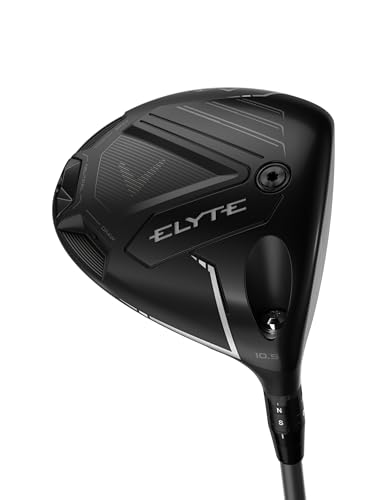
Callaway Elyte
Callaway’s AI-assisted face design aims to keep ball speed consistent across more of the clubface, reducing the penalty for a slightly off-center strike. An OptiFit hosel adjusts loft similarly to competing adjustable hosels. Wider internal weighting targets higher launch and forgiveness over outright low spin.
Pros
- AI-designed face maintains ball speed on off-center strikes
- Higher launch profile suits moderate swing speeds
- OptiFit hosel allows loft adjustment
Cons
- Spin tends to run higher than low-spin models like the Titleist GT3
- Less workable for players wanting to intentionally shape shots

PXG 0311 XF Gen6
The XF designation stands for Extreme Forgiveness, PXG’s most mis-hit-tolerant driver in its Gen6 lineup, aimed squarely at higher handicap golfers. An adjustable weight and hosel system lets fitters dial in launch and spin beyond the stock setting. Loft options run from 9 to 12 degrees to support slower swing speeds needing more launch.
Pros
- Highest forgiveness in PXG’s current driver lineup
- Adjustable weight system allows real fitting customization
- Loft range suits players needing extra launch help
Cons
- Premium PXG pricing sits above most competitors at this forgiveness level
- Maximum forgiveness design sacrifices some low-spin control for better players

Cobra Darkspeed LS
The LS designation signals Cobra’s lowest-spin configuration in its Darkspeed line, aimed at players who already generate enough speed and need less spin to control distance. MyFly8 technology adjusts loft across eight settings without a separate adapter kit. A carbon composite crown keeps weight low to support discretionary mass placement.
Pros
- Lowest spin option in Cobra’s current driver lineup
- Eight-setting loft adjustment offers fine control
- Carbon crown frees weight for distance-focused placement
Cons
- Low spin design can be harder to launch for slower swing speeds
- Narrower forgiveness margin than Cobra’s more forgiving Darkspeed MAX model

Mizuno ST-Z 230
Mizuno’s Wave Sole technology flexes at impact to help maintain ball speed, a different approach than pure face-flex designs used by some competitors. A mid-low spin profile sits between the lowest-spin and highest-launch drivers on this list, giving room to shape shots deliberately. A Quick Switch adapter handles loft and lie adjustments.
Pros
- Wave Sole technology helps maintain ball speed at impact
- Mid-low spin profile supports intentional shot shaping
- Quick Switch adapter simplifies loft and lie changes
Cons
- Less forgiving than max-forgiveness drivers for off-center strikes
- Smaller brand presence can mean fewer fitting options at some retailers

Wilson Dynapower Carbon
A carbon crown paired with a titanium face brings a construction approach similar to pricier flagship drivers at a lower price point. A wide sole design adds stability on off-center hits, a forgiveness-focused choice over a low-spin design. Loft options span from 9 to 12 degrees, covering most swing speed needs.
Pros
- Lower price than most major flagship drivers
- Wide sole design adds forgiveness on mis-hits
- Loft range covers most swing speeds
Cons
- Less brand name recognition and resale value than Titleist, Callaway or TaylorMade
- Adjustability features vary by configuration, so confirm before buying
The lineup, side by side
| # | Model | Clubhead | Best for | Score | Price |
|---|---|---|---|---|---|
| 1 | TaylorMade Qi10 | 10K carbon crown construction | Best Overall | 9.3 | Check price |
| 2 | Titleist GT3 | Multi-material titanium face and body | Best for Low Spin and Better Players | 9.0 | Check price |
| 3 | Callaway Elyte | AI-designed face for ball speed | Best for Forgiveness and Higher Launch | 8.9 | Check price |
| 4 | PXG 0311 XF Gen6 | Extreme Forgiveness, high MOI weighting | Best Max Forgiveness Premium | 8.8 | Check price |
| 5 | Cobra Darkspeed LS | Carbon composite crown, low spin weighting | Best for Low Spin, Aggressive Swingers | 8.7 | Check price |
| 6 | Mizuno ST-Z 230 | Titanium with Wave Sole technology | Best for Workable Shot Shaping | 8.5 | Check price |
| 7 | Wilson Dynapower Carbon | Carbon crown, titanium face | Best Value | 8.3 | Check price |
What matters most
What to look for in a golf driver Forgiveness, often described through MOI, decides how much a mis-hit still travels in play. Spin profile affects both distance and trajectory control differently for fast and slow swingers. Adjustability through the hosel or internal weights, and matching loft to swing speed, round out the real decision points.
Low spin versus high forgiveness drivers Low spin models like the Titleist GT3 and Cobra Darkspeed LS suit faster, more consistent swingers who already control their ball flight. High forgiveness models like the PXG 0311 XF Gen6 and Callaway Elyte help higher handicap golfers keep mis-hits in play rather than losing distance or accuracy.
Matching loft to swing speed Slower swing speeds generally benefit from higher lofts, in the 10.5 to 12 degree range, for easier launch, available across most drivers on this list. Faster swingers often prefer 8 to 9.5 degrees to control spin and trajectory, a range covered by the TaylorMade Qi10 and Titleist GT3.
Adjustability and getting properly fit Hosel and weight adjustments, like TaylorMade’s sliding track or PXG’s weight system, only help after a proper fitting confirms the right starting point. Buying a driver off the rack without checking launch angle and spin numbers risks leaving distance on the table regardless of how adjustable the head is.
Common questions
What loft driver is best for a slower swing speed?
Higher lofts in the 10.5 to 12 degree range, found on models like the PXG 0311 XF Gen6, generally help slower swing speeds launch the ball more easily.
What is the difference between a low spin and high launch driver?
A low spin driver like the Titleist GT3 is built for faster swingers who want tighter control, while a high launch driver like the Callaway Elyte helps get the ball airborne with less effort.
Do adjustable drivers actually make a difference?
Yes, when properly fit. Features like the sliding weight track on the TaylorMade Qi10 or the MyFly8 system on the Cobra Darkspeed LS can shift launch and spin meaningfully.
Is a more forgiving driver always better?
Not for every golfer. Better players who shape shots intentionally, as the Titleist GT3 and Mizuno ST-Z 230 are built for, may prefer less forgiveness in exchange for more control.
How often should golfers replace their driver?
There is no fixed timeline, though many golfers replace a driver every few years as clubhead technology and personal swing changes evolve.
Does a higher price driver mean more distance?
Not automatically. Distance depends heavily on proper fitting and swing mechanics, which is why the budget-friendly Wilson Dynapower Carbon can still perform well for the right swing.
What does MOI mean on a golf driver?
MOI, or moment of inertia, measures resistance to twisting on off-center hits, with a higher MOI generally meaning more forgiveness.
Can a golf driver be properly fit for an individual swing?
Yes, many of the adjustable features on drivers like the TaylorMade Qi10 and PXG 0311 XF Gen6 are designed to be dialed in during a professional fitting session.
Is a carbon crown driver better than a titanium one?
Carbon crowns, used on the TaylorMade Qi10 and Wilson Dynapower Carbon, reduce weight that can be redistributed elsewhere in the head, while titanium faces like the Titleist GT3 prioritize different performance characteristics.
The bottom line
The TaylorMade Qi10 earns the top recommendation for balancing forgiveness with real adjustability across swing speeds. Faster swingers chasing lower spin and tighter dispersion should look to the Titleist GT3 instead. Golfers on a tighter budget who still want a flagship-style construction get solid value from the Wilson Dynapower Carbon.
Sierra Daniels
Sierra's background is in landscape design and nursery retail. She focuses on lawn and garden equipment, outdoor furniture and gear durability, weighing published specs against how materials actually hold up outside.


