Gas leaf blowers for small lots and big acreage
Husqvarna 350BT is the pick for half an acre and up, moving as much as 692 CFM on a 22.5 pound harness. Wet, matted leaves respond better to the 216 mph outlet of the ECHO PB-580T. Small lots need nothing more than the 9.4 pound Husqvarna 125B.
Husqvarna 350BT is the blower to buy if your property runs half an acre or larger. Airflow reaches 692 CFM, and the X-Torq engine stretches a tank further than older two strokes on hour long cleanups. Noise is the honest tradeoff, since a 50.2cc backpack unit demands hearing protection every time you pull the cord.
Airflow gets measured at different points on different machines, so listed CFM numbers rarely line up. We compared published CFM and mph figures, engine displacement, dry weight and starting systems across models currently sold. Owner reports on carburetor trouble after ethanol fuel, harness comfort over long sessions and pull start effort settled the close calls.
How to choose
What CFM and mph actually tell you Cubic feet per minute describes volume, meaning how much leaf litter one pass can push along. Miles per hour describes force at the nozzle, which is what peels wet leaves off grass. Open lawns reward volume; matted leaves, pine needles and gutter grit reward speed. Measurement points differ between brands, some at the housing and some at the tube end, so treat listed figures as rough guidance. Newton force, where a maker publishes it, comes closest to a like for like number.
Handheld or backpack for your yard size Under a quarter acre, a handheld near 9 pounds does the work and stores on a garage hook. From half an acre up, a backpack shifts the load onto your hips and keeps you going for a full hour. Larger tanks on backpack units also cut refueling stops during peak leaf fall. Storage argues the other way, since a backpack blower eats real shelf space. Gravel drives call for a narrow nozzle and part throttle whichever format you choose.
Fuel mixing, ethanol and cold starts Every engine in this group is a two stroke running a 50 to 1 gasoline and oil mix. Straight pump gas will seize one within minutes of running. Ethanol blends draw in water and varnish the carburetor during storage, so reach for ethanol free fuel or a stabilizer. Canned pre mixed fuel keeps for years, which fits a machine used twice a season. Most no start complaints trace back to stale fuel rather than a failed engine.
Noise rules and where gas blowers are restricted Operator ear readings usually land between 65 and 75 decibels on gas blowers. Hearing protection makes sense past roughly 70 decibels for a full session. Many towns set start and stop hours for powered yard equipment, and some ban gas units outright. California has ended sales of new small off road gasoline engines, which covers new gas blowers sold there. Where rules bite, a battery blower is the workable substitute even though sustained airflow trails these machines.
Our top picks
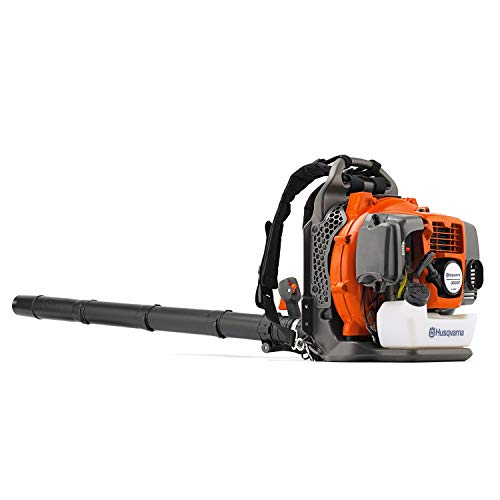
Husqvarna 350BT Backpack Blower
Rated airflow reaches 692 CFM, so a long driveway clears in one pass instead of three. X-Torq combustion trims fuel use against conventional two strokes, which shows on hour long sessions. Padded straps and a hip belt carry 22.5 pounds low, though the cruise lever sits where a forearm can nudge it.
Pros
- 692 CFM clears large lawns in fewer passes
- X-Torq engine stretches a tank over long runs
- Hip belt and padded straps carry the load low
Cons
- Loud enough that ear muffs are not optional
- Cruise lever shifts if your arm brushes it
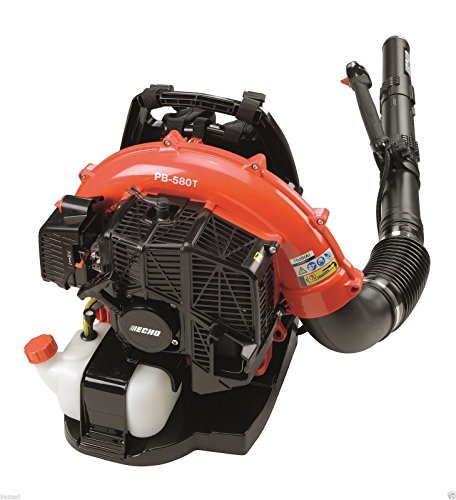
ECHO PB-580T Backpack Blower
Outlet speed of 216 mph lifts leaves that rain has pressed flat into turf. Throttle controls sit on the tube, so your control hand never leaves the pipe during a long shift. At 22.6 pounds dry, this is a machine you wear rather than carry.
Pros
- 216 mph outlet beats wet and matted leaf cover
- Tube mounted throttle sits under your thumb
- Commercial grade air filter handles dusty cleanup
Cons
- 58.2cc is more engine than most yards need
- Fuel burn climbs quickly at full throttle

Husqvarna 125B Handheld Blower
Weight of 9.4 pounds keeps this usable one handed across driveways, patios and a quarter acre lawn. Variable speed includes a cruise setting, so your trigger finger gets a rest on long runs. Airflow near 425 CFM stalls once leaves soak up rain and clump together.
Pros
- 9.4 pounds suits extended one handed work
- Cruise control setting saves trigger fatigue
- Tube length adjusts to the operator height
Cons
- 425 CFM falls short on wet matted leaves
- Tank runs dry partway through bigger jobs

ECHO PB-2620 Handheld Blower
Built for crews, this handheld gets a professional grade air filter and a two stage choke. Ratings of 456 CFM and 170 mph move more per pass than a typical homeowner handheld. At roughly 10 pounds, twenty minutes of one handed work starts to tell on the forearm.
Pros
- Filter and carburetor rated for daily crew use
- Starts reliably after a winter in the shed
- ECHO dealer network stocks service parts
Cons
- 10 pounds is heavy for a handheld
- Vibration builds at wide open throttle
Poulan Pro PR48BT Backpack Blower
A 48cc engine and 475 CFM bring genuine backpack output within reach of a homeowner budget. Load rides on both shoulders instead of one arm, which is the whole reason to leave handhelds behind. Fit and finish trail Husqvarna and ECHO, most visibly around the harness buckles.
Pros
- Shoulder carried load without a premium tier engine
- 200 mph speed handles leaf piles and gutter debris
- Variable throttle with a cruise control stop
Cons
- Harness hardware feels lighter duty than rivals
- Cold starts often need several extra pulls

Craftsman B215 Gas Leaf Blower
A 25cc engine pushing 430 CFM covers a small suburban lot and a two car driveway. Easy start technology lowers pull effort, which helps anyone moving over from a corded electric blower. Vibration and noise both run higher than on premium handhelds, so ear protection matters here.
Pros
- Low pull effort on cold starts
- 200 mph outlet is strong for 25cc
- Replacement parts stay easy to source
Cons
- More vibration through the handle than rivals
- Plastic housing shows wear within a season or two

Metabo HPT RB24EAP Gas Leaf Blower
Weighing 8.6 pounds with a published rating near 66 decibels, this is the neighbor friendly option. Displacement of 23.9cc still moves about 441 CFM across patios, decks and fence lines. Heavy leaf fall on more than a quarter acre will take several passes.
Pros
- 8.6 pounds is the lightest unit here
- Published 66 decibel rating undercuts rival handhelds
- Primer bulb and pull start keep starting simple
Cons
- 441 CFM limits reach on leaf heavy lots
- Small fuel tank means frequent refueling
How they stack up
| # | Model | Engine | Best for | Score | Price |
|---|---|---|---|---|---|
| 1 | Husqvarna 350BT Backpack Blower | 50.2cc X-Torq two stroke | Best overall | 9.4 | Check price |
| 2 | ECHO PB-580T Backpack Blower | 58.2cc two stroke | Best for large properties | 9.2 | Check price |
| 3 | Husqvarna 125B Handheld Blower | 28cc two stroke | Best value | 9.0 | Check price |
| 4 | ECHO PB-2620 Handheld Blower | 25.4cc two stroke | Best handheld for heavy use | 8.8 | Check price |
| 5 | Poulan Pro PR48BT Backpack Blower | 48cc two stroke | Best budget backpack | 8.6 | Check price |
| 6 | Craftsman B215 Gas Leaf Blower | 25cc two stroke | Best budget | 8.3 | Check price |
| 7 | Metabo HPT RB24EAP Gas Leaf Blower | 23.9cc two stroke | Best lightweight | 8.0 | Check price |
Frequently asked questions
How much CFM do I need in a leaf blower?
Roughly 400 CFM covers a small suburban lot plus hard surfaces. Half an acre or more of heavy leaf fall goes far faster at 500 CFM and above, which usually means a backpack.
Is a backpack leaf blower worth it for a homeowner?
Worth it once you clear more than half an acre or work past thirty minutes at a stretch. Harness straps remove the arm strain that ends most cleanups early.
What is the best gas leaf blower for wet leaves?
Speed matters more than volume against soaked leaves. ECHO PB-580T leads this group at 216 mph, enough to break leaves free of damp turf.
Do gas leaf blowers need mixed fuel?
All seven run two stroke engines on a 50 to 1 gas and oil mix. Unmixed gasoline starves the engine of lubrication and seizes it quickly.
Gas or battery leaf blower: which is better for a large yard?
Gas holds the edge on sustained airflow and refueling speed across acreage. Battery suits small lots, early mornings and towns that restrict gas equipment.
Why will my gas leaf blower not start after winter?
Stale ethanol fuel gumming the carburetor jet causes most spring no starts. Run the tank dry before storage, then fill with fresh or canned pre mixed fuel.
How loud are gas leaf blowers?
Expect 65 to 75 decibels at the operator position, varying with throttle and model. Metabo HPT RB24EAP sits at the quiet end with a published rating near 66 decibels.
Can a leaf blower clear gravel or mulch beds?
It can, and that is usually the problem. Drop to part throttle with a wide nozzle near gravel, or the bed ends up spread across the lawn.
Which gas leaf blower is best for a small yard?
Husqvarna 125B at 9.4 pounds and the 8.6 pound Metabo HPT RB24EAP both suit quarter acre lots. Neither needs a harness or much storage room.
How long does a gas leaf blower last?
Ten seasons is realistic on clean fuel with an occasional spark plug and air filter change. Neglected fuel systems are what usually end them early.
The bottom line
Husqvarna 350BT earns the recommendation for anyone clearing half an acre or more, since 692 CFM and a hip carried harness turn a two hour job into one. Crews and wet climate owners get more out of the 216 mph ECHO PB-580T. Quarter acre lots should skip backpacks entirely and take the 9.4 pound Husqvarna 125B.
Sierra Daniels
Sierra's background is in landscape design and nursery retail. She focuses on lawn and garden equipment, outdoor furniture and gear durability, weighing published specs against how materials actually hold up outside.