Garden Edging That Bends on Curves Without Cracking
Dimex EasyFlex Aluminum Landscape Edging Kit wins overall for curve-friendly, rust-resistant coil that skips digging. Amagabeli Garden Home Rubber Landscape Edging delivers the best value with flexible, crack-resistant interlocking rubber. Suncast Sawtooth Border Edging is the budget pick, using tool-free interlocking resin panels for a fast install.
Dimex EasyFlex Aluminum Landscape Edging Kit suits gardeners shaping curved beds who want a border that won’t kink. Its thin aluminum gauge can still dent under a mower wheel or trimmer.
Material, height and install method shift with every bed shape, so comparisons get complicated fast. We weighed roll length, gauge thickness and owner reports on freeze-thaw durability to rank these seven.
How to choose
Choosing an Edging Material for Your Yard Aluminum and steel cut a crisp line but cost more per foot than plastic or rubber. Gardeners reshaping beds each season lean toward rubber or polyethylene since both flex easily. Scalloped plastic edging looks decorative yet resists spreading grass roots poorly. Budget and bed shape typically settle the material question before height or color even come up.
Best Edging for Curved and Island Beds Circular planters and serpentine borders need edging that bends without creasing. Polyethylene terrace board and rubber sections both hold tighter radii than rigid steel panels. Aluminum coil bends too, though repeated tight curves can eventually work-harden the metal. Rubber or poly beats steel or wood for anyone landscaping a curved island bed.
Does Garden Edging Support a Mower Wheel? Lawns bordering gravel paths or driveways benefit from edging rated to carry a mower wheel. Flat-topped rubber curbing handles that load better than thin aluminum coil. Steel edging also holds a straight line under pressure, though its cut ends need careful handling during install. Scalloped plastic skips this category entirely, offering no wheel support at all.
No-Dig Edging for Renters and Temporary Beds Renters and gardeners testing a new bed layout often want edging that lifts out cleanly. Push-in stake systems on plastic and rubber lines skip trenching altogether. Permanent beds meant to last years do better with steel or deeper aluminum installs. Anyone unsure of a bed’s final shape should start removable before committing to metal.
The best picks, ranked

Dimex EasyFlex Aluminum Landscape Edging Kit
This aluminum coil comes in a 20 foot roll and stands 4 inches tall once staked. Pre-punched slots space roughly every 8 inches, letting stakes drive straight through without pre-drilling. Curved beds, walkways and mulch borders all take the bend without kinking.
Pros
- Bends into tight curves without kinking or creasing
- Resists rust better than bare steel over years outdoors
- Sits low and flush with turf for easier mowing
Cons
- Thin gauge dents if a mower or trimmer strikes it directly
- Some roll-only listings sell anchor stakes separately

Amagabeli Garden Home Rubber Landscape Edging
Recycled rubber sections click together into a continuous 20 foot border at 4 inches tall. Molded stakes ship in the kit, so no separate hardware purchase is needed. Cold weather does not crack this rubber the way it can crack rigid plastic edging.
Pros
- Recycled rubber flexes without cracking through freeze-thaw cycles
- Interlocking sections hide seams for a continuous line
- Costs less per foot than aluminum or steel edging
Cons
- Dark color fades slightly after years of UV exposure
- Sections separate if stakes aren’t driven in fully
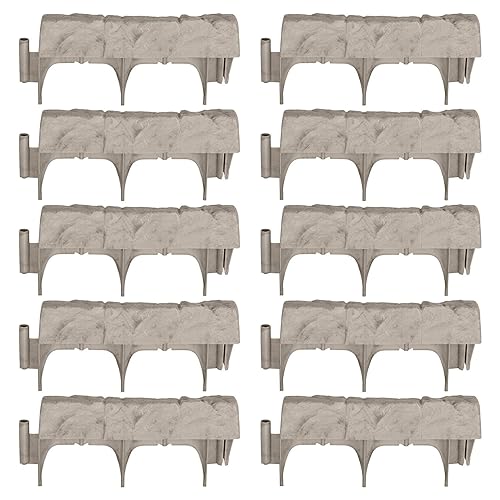
Suncast Sawtooth Border Edging
Scalloped resin panels interlock section to section, with packs typically covering 24 feet of border. Each segment stands about 5 inches and anchors with plastic stakes pressed straight into soil. Decorative sawtooth detailing adds curb appeal but no functional mower support.
Pros
- Lowest cost per foot among the edging styles compared here
- Snaps together by hand, no tools needed for install
- Available in multiple colors and profiles at most retailers
Cons
- Grows brittle and can crack after several winters outdoors
- Scalloped top provides zero support for mower wheels
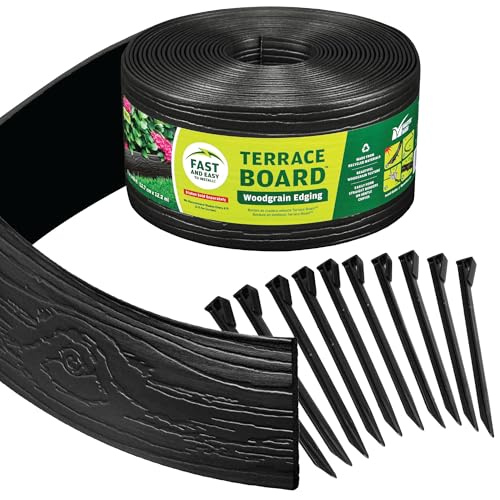
Master Mark Terrace Board
Polyethylene terrace board ships in 20 or 40 foot rolls, with height options at 4, 5 or 6 inches. Flexible plastic wraps around island beds and circular planters tighter than rigid panels allow. Stakes pass through a top flange spaced roughly every 12 inches.
Pros
- Holds tighter curves than rigid steel or wood edging
- Three height options match different bed depths
- Rolls stay lightweight, easy to carry and trim to length
Cons
- Top flange shows above soil if not tamped down flush
- Not rated to carry a mower wheel along a lawn edge

EcoBorder Rubber Curbing
A wide, flat top section on this recycled rubber curbing carries a mower wheel without sinking into soil. Sections run about 4 feet long and stand roughly 4 inches tall. Molded spikes interlock at each joint, built for straight lawn perimeters rather than tight curves.
Pros
- Flat top rated to support a mower wheel during edge trimming
- Rubber construction shrugs off freeze-thaw cracking
- Interlocking spikes hold sections aligned without extra stakes
Cons
- Bulkier profile resists bending around curves
- Costs more per foot than basic plastic edging

Emsco Group Bordermate Edging
Low-profile plastic sections push into soil on attached stakes, skipping any trenching or tools. A multi-pack typically covers about 20 linear feet at 4 inches tall. Sections lift out cleanly at move-out, leaving no buried edging behind.
Pros
- Installs and removes in minutes without a trench
- Low height keeps a subtle line along beds and walkways
- Small multi-packs make damaged sections cheap to replace
Cons
- Minimal barrier against grass roots spreading into beds
- Not durable enough for permanent driveway or patio borders

Vevor Steel Landscape Edging
Galvanized steel coil ships in rolls around 20 feet long, with height running 4 to 6 inches depending on the listing. Steel gauge holds a straighter line under soil pressure than plastic or rubber. Stakes for driving every 3 feet are typically sold separately.
Pros
- Steel holds a straight line under pressure better than plastic
- Galvanized coating resists rust longer than bare steel
- Handles long, permanent runs along driveways and large beds
Cons
- Cut edges run sharp, gloves recommended during install
- Stiffer and heavier to bend than aluminum or rubber
How they compare
| # | Model | Material | Best for | Score | Price |
|---|---|---|---|---|---|
| 1 | Dimex EasyFlex Aluminum Landscape Edging Kit | Aluminum | Best overall | 9.4 | Check price |
| 2 | Amagabeli Garden Home Rubber Landscape Edging | Recycled rubber | Best value | 9.1 | Check price |
| 3 | Suncast Sawtooth Border Edging | Plastic resin | Best budget | 8.8 | Check price |
| 4 | Master Mark Terrace Board | Polyethylene | Best for curved beds | 8.6 | Check price |
| 5 | EcoBorder Rubber Curbing | Recycled rubber | Best for lawn mower wheel support | 8.4 | Check price |
| 6 | Emsco Group Bordermate Edging | Plastic resin | Best for renters | 8.2 | Check price |
| 7 | Vevor Steel Landscape Edging | Galvanized steel | Best for permanent straight runs | 8.0 | Check price |
Good to know
What is the best garden edging for curved flower beds?
Master Mark Terrace Board and rubber options such as Amagabeli’s edging bend into tight curves without creasing, unlike rigid steel panels.
Is metal or plastic edging better for lawns?
Metal edging like the Dimex EasyFlex Aluminum Kit holds a straighter, more permanent line. Plastic options such as Suncast Sawtooth cost less but flex or crack sooner.
Can garden edging support a mower wheel?
EcoBorder Rubber Curbing carries a mower wheel thanks to its wide flat top, a job scalloped plastic or thin aluminum coil can’t do.
How long does rubber landscape edging last?
Recycled rubber edging such as Amagabeli’s resists freeze-thaw cracking for years, though prolonged UV exposure can fade its color slightly.
What is the best no-dig garden edging?
Emsco Group Bordermate and the Dimex EasyFlex kit both rely on push-in stakes that skip trenching entirely.
Does aluminum edging rust?
Aluminum resists rust better than bare steel, which is why the Dimex EasyFlex kit holds up along damp beds where steel options corrode over time.
How deep should garden edging be installed?
Most 4 to 6 inch edging sits with roughly half its height above soil, leaving enough buried depth for stakes to resist frost heave.
What is the best garden edging for renters?
Emsco Group Bordermate lifts out cleanly at move-out, since its stakes push into soil without digging a trench.
Garden edging vs landscape edging, is there a difference?
No, the terms describe the same product category. Both refer to material installed along a bed’s border to separate soil, mulch or turf.
How much garden edging do I need for a flower bed?
Measure the bed’s perimeter in feet, then round up to the next roll or pack size, since most edging like the Dimex kit or Vevor steel ships in 20 foot lengths.
The verdict
Dimex EasyFlex Aluminum Landscape Edging Kit remains the safest all-around pick, combining rust resistance with a curve-friendly bend for mixed bed shapes. Anyone edging a straight driveway border should reach for the Vevor Steel Landscape Edging instead, since its heavier gauge holds a line under more pressure. Renters or gardeners still testing a layout get more value from the Emsco Group Bordermate, which lifts out without leaving buried edging behind.
Sierra Daniels
Sierra's background is in landscape design and nursery retail. She focuses on lawn and garden equipment, outdoor furniture and gear durability, weighing published specs against how materials actually hold up outside.