PS5 Slim vs Switch OLED vs Steam Deck, Compared
PlayStation 5 Slim suits most living rooms, pairing DualSense controls with near-instant SSD load times. Families wanting portability get more use from the Nintendo Switch OLED. PC owners with an existing library should pick the Valve Steam Deck OLED instead.
PlayStation 5 Slim fits most living rooms. Its DualSense controller and NVMe SSD deliver near-instant load times, but the 1TB drive fills fast with modern game sizes. Families splitting time between couch and travel get more mileage from the Nintendo Switch OLED. Owners with years of Steam purchases save money picking a Valve Steam Deck OLED instead.
Storage sizes, teraflop counts, and subscription compatibility rarely line up with price tiers, which makes side-by-side shopping confusing. We compared official specs against owner feedback on load times, battery life, and controller comfort. That comparison decided where each console actually fits.
What to look for
What to consider before buying a console Start with where the console will live. A dedicated TV setup favors the PS5 Slim or Series X. Shared living spaces suit a hybrid like the Switch OLED better. Storage matters too, since modern installs often pass 50GB, and expansion options vary by brand.
Console vs handheld: how to decide Fixed consoles push more graphics power per dollar, since they skip the battery and built-in screen. Handhelds trade some of that power for play in bed, on a commute, or while traveling. Couch-first gamers rarely miss the portability.
Best picks for families and couch co-op Switch OLED remains the strongest family pick, since Joy-Cons split for instant two-player sessions without a second purchase. Xbox and PlayStation support local co-op too, but usually need a second gamepad bought separately.
For gamers who already own a PC library Anyone with years of Steam purchases gets more value from a Steam Deck OLED or ROG Ally X than starting over on a new ecosystem. ROG Ally X adds broader storefront support since it runs full Windows. Steam Deck favors battery life and a simpler interface instead.
Our top picks

Sony PlayStation 5 Slim
Sony shrank the original PS5 chassis without cutting the 1TB SSD or DualSense support. A custom NVMe drive keeps load times near instant across most titles. Owners who still buy physical games can attach an optional disc drive separately.
Pros
- Near-instant load times from the custom NVMe SSD
- DualSense adaptive triggers add feedback in supported titles
- Large first-party library from Sony’s own studios
Cons
- No backward compatibility with PS3 discs or earlier
- Disc drive is a separate purchase for digital-edition owners

Microsoft Xbox Series X
Xbox Series X runs on 12 teraflops of AMD RDNA 2 power, enough for steady frame rates at native 4K. Quick Resume holds several games in suspension, so players skip long reload waits. Game Pass Ultimate adds a rotating library on day one.
Pros
- Strongest raw graphics output in this lineup
- Quick Resume suspends multiple games at once
- Game Pass Ultimate adds new titles on release day
Cons
- Boxy tower shape needs more shelf clearance than rivals
- First-party exclusive catalog trails Sony’s lineup

Nintendo Switch OLED
Nintendo’s 7-inch OLED screen sharpens handheld play well beyond the original Switch. The console still docks to a TV for couch co-op sessions. Joy-Con controllers detach instantly for local multiplayer, no extra hardware needed.
Pros
- Switches between TV and handheld play instantly
- Joy-Cons detach for two-player games out of the box
- Deep library of family and party titles
Cons
- Graphics output trails the PS5 and Series X
- 64GB internal storage fills fast with modern install sizes

Valve Steam Deck OLED
Valve’s handheld runs SteamOS and pulls straight from an owner’s existing Steam library, so old purchases just work. A 7.4-inch HDR OLED panel with 90Hz refresh makes it the sharpest screen in this group.
Pros
- Plays existing Steam purchases without repurchasing
- OLED panel runs brighter and sharper than the LCD original
- Supports third-party controllers and external docks
Cons
- Battery life drops sharply in demanding AAA titles
- Some Windows-only games need extra setup through Proton
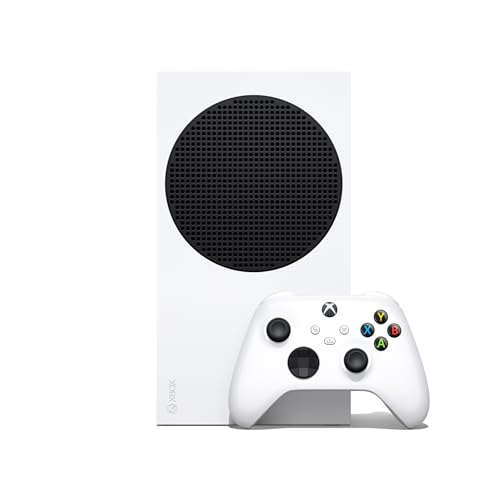
Microsoft Xbox Series S
Series S shares the Series X’s Game Pass library and fast load times in a smaller, disc-free box. Output tops out at 1440p upscaled to 4K, a better match for small TVs and monitors than large screens.
Pros
- Lowest entry cost into the Xbox and Game Pass ecosystem
- Compact shape fits tight entertainment centers
- Matches the Series X’s load-time speed
Cons
- 512GB fills quickly with current install sizes
- Graphics ceiling sits well below the Series X
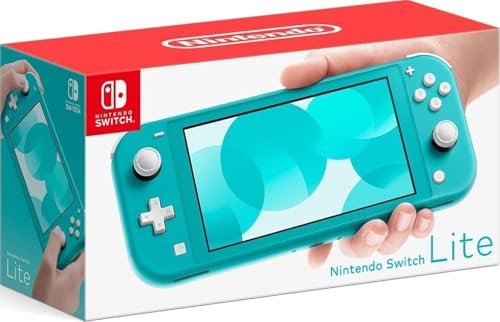
Nintendo Switch Lite
Nintendo dropped the dock and detachable controllers to build a lighter, cheaper handheld for on-the-go play only. It still runs most of the Switch software library, aside from games needing motion controls or TV mode.
Pros
- Lightest, most pocketable console in this lineup
- Runs most of the standard Switch game library
- Costs less than any docking Switch model
Cons
- Cannot connect to a television at all
- Skips motion-control and detachable Joy-Con games

ASUS ROG Ally X
ASUS built the ROG Ally X on full Windows 11, opening access to Steam, Epic, the Xbox app, and Game Pass on one handheld. An 80Wh battery fixes the short runtime that limited the original ROG Ally.
Pros
- Runs any PC storefront, not just Steam
- Doubles as a general-use Windows laptop
- Faster 120Hz refresh than the Steam Deck OLED
Cons
- Windows interface is less touch-friendly than SteamOS
- Runs warmer and louder under sustained load
The lineup, side by side
| # | Model | Storage | Best for | Score | Price |
|---|---|---|---|---|---|
| 1 | Sony PlayStation 5 Slim | 1TB custom NVMe SSD | Best overall | 9.4 | Check price |
| 2 | Microsoft Xbox Series X | 1TB NVMe SSD | Best for 4K power | 9.2 | Check price |
| 3 | Nintendo Switch OLED | 7-inch OLED touchscreen | Best for families | 9.0 | Check price |
| 4 | Valve Steam Deck OLED | 7.4-inch HDR OLED, 90Hz | Best for PC libraries | 8.8 | Check price |
| 5 | Microsoft Xbox Series S | 512GB NVMe SSD | Best budget current-gen | 8.5 | Check price |
| 6 | Nintendo Switch Lite | 5.5-inch fixed handheld screen | Best budget handheld | 8.2 | Check price |
| 7 | ASUS ROG Ally X | 7-inch FHD, 120Hz touchscreen | Best for Windows gaming | 8.0 | Check price |
Questions worth asking
Which game console is best for beginners?
Nintendo Switch OLED works well for new players. It blends TV and handheld modes with a large family-friendly library and simple setup.
Is the PS5 or Xbox Series X better for graphics?
Both run similar AMD hardware. Series X’s 12-teraflop GPU edges ahead in some native 4K benchmarks, while the PS5’s SSD tends to load faster in practice.
Can you play PC games on the Steam Deck OLED?
Yes. It runs SteamOS and pulls directly from an owner’s Steam library, plus many Windows-only titles through Proton, though a few need manual setup.
Is the Xbox Series S worth it over the Series X?
It costs less and shares the same Game Pass library. Its 512GB storage and 1440p ceiling suit smaller screens better than large 4K TVs.
Does the Switch Lite work with a TV?
No. The Switch Lite is handheld only, with no dock or video output, unlike the standard Switch or Switch OLED.
What is the difference between the Steam Deck and ROG Ally X?
Steam Deck runs SteamOS, built around Steam’s library. ROG Ally X runs full Windows 11, which opens more storefronts but drains battery faster.
How much storage do I need on a game console?
1TB is a safer baseline for current-generation consoles. Single AAA installs can exceed 100GB and fill smaller drives fast.
Are handheld consoles good for long-term use?
They hold up well for portable play, but batteries degrade over years of charging. Demanding games can drain a full charge in under two hours.
Which console has the strongest exclusive games?
PlayStation 5 Slim holds the deepest first-party library among fixed consoles. Nintendo Switch OLED leads for family and party exclusives instead.
The bottom line
PlayStation 5 Slim gives most households the best mix of speed and library depth, thanks to its SSD and DualSense design. Families splitting time between the couch and travel should pick the Nintendo Switch OLED instead. Anyone sitting on years of Steam purchases gets more value from a Steam Deck OLED than starting over on a new platform.
Marcus Chen
Marcus covered consumer electronics for enthusiast tech publications for six years before joining ChoiceCrest. He specializes in translating manufacturer spec sheets into plain-language buying advice, with a focus on audio, computing accessories and smart-home gear.


