Front and Rear Dash Cams Compared for Clarity
Vantrue N4 Pro records all three channels at a genuinely usable resolution, making it the most complete pick here. REDTIGER F7NP delivers 4K front footage for far less than premium brands charge. Rove R2-4K DUAL covers the essentials at the lowest cost and installs in minutes.
Vantrue N4 Pro stands out among dual dash cams because its rear channel actually resolves detail, not just movement. REDTIGER F7NP undercuts premium pricing while still shooting 4K up front. Rove R2-4K DUAL suits buyers who want two working cameras without a complicated install.
Dual-channel dash cams get bought badly more often than most car gear, since marketing leans almost entirely on the front camera’s megapixel count. The rear lens, which usually catches the incident nobody saw coming, often ships at a fraction of that resolution. We compared front and rear sensor resolution separately, low-light footage, whether parking mode needs a hardwire kit, maximum card size supported, and how much cable has to reach the back of the car.
The shortlist, ranked
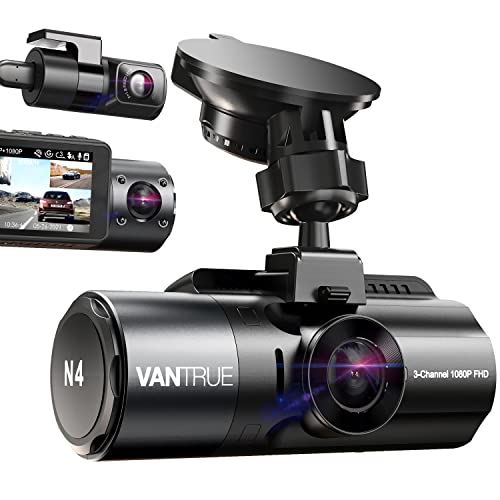
Vantrue N4 Pro 3-Channel Dash Cam
Vantrue adds a third, interior-facing lens to the standard front and rear pair, useful for rideshare drivers or anyone who wants cabin footage. All three channels record at a resolution that stays readable, not just the front one. A supercapacitor replaces the usual battery, so the unit tolerates a hot summer dashboard far better than cheaper models.
Pros
- All three channels record at a usable resolution
- Supercapacitor withstands heat that kills batteries
- Interior lens performs well in low light
Cons
- Priced above every other kit in this comparison
- Windscreen footprint is larger than single-camera units

REDTIGER F7NP 4K Dual Dash Cam
REDTIGER pairs a 4K front lens with a 1080p rear camera, undercutting established brands on price by a wide margin. Number plates stay legible on the front channel at distances that matter for insurance claims. The companion app works but feels less polished than Vantrue’s, and initial pairing takes a few extra steps.
Pros
- 4K front footage at a mid-range price
- Plates stay readable at useful following distances
- GPS included on most bundles
Cons
- App interface lags behind premium competitors
- Rear camera loses detail after dark

VIOFO A139 Pro 2CH Dash Cam
VIOFO tunes its sensor specifically for low light, and that shows the moment the sun goes down. Where rival cameras turn oncoming headlights into a smear, this one keeps plates legible on unlit roads. Housing sits discreetly behind the mirror, and the buffered parking mode captures the seconds before an impact rather than only after it.
Pros
- Strongest night footage in this comparison
- Compact housing stays out of the driver’s sightline
- Buffered parking mode captures pre-impact seconds
Cons
- Hardwire kit for parking mode sold separately
- Menu navigation takes time to learn

Thinkware Q200 2-Channel Dash Cam
Thinkware built its name on parking surveillance, and the Q200 carries that forward with energy-saving and motion-detection modes. A hardwired unit can watch a parked car for days without draining the battery flat. Everyday recording quality is solid rather than class-leading, and full installation takes longer than plug-and-play alternatives.
Pros
- Best parking surveillance logic in this lineup
- Energy-saving mode limits battery drain
- Impact detection triggers reliably
Cons
- Video quality trails the 4K competitors here
- Hardwire installation adds setup time

Rove R2-4K DUAL Dash Cam
Rove keeps installation simple enough to finish in under twenty minutes, which suits anyone who wants two working cameras without a learning curve. Front footage holds up well in daylight, and built-in GPS logs speed and location onto every clip. The rear camera is the compromise, adequate for context but not for reading distant plates.
Pros
- Fast to install with the supplied adapter
- GPS logging built in
- Daylight front footage looks sharp
Cons
- Rear camera detail falls short at distance
- Battery-based design ages worse than supercapacitors

WOLFBOX G840S Mirror Dash Cam
This unit replaces the rear-view mirror with a wide display showing the live rear camera feed, erasing the blind spot headrests normally create. It doubles as a reversing aid on cars that lack a factory camera. Some owners need a week to adjust to a mirror that shows video instead of a reflection, and direct sunlight can wash out the screen.
Pros
- Removes the rear blind spot while driving
- Doubles as a reversing camera
- Wide touchscreen stays easy to read
Cons
- Adjustment period before the display feels natural
- Glare in bright sun reduces visibility

70mai Dash Cam A500S
A small body tucks almost entirely behind the mirror, which suits drivers who dislike a visible gadget on the glass. GPS logging, ADAS alerts and a phone app for pulling clips come standard. Some bundles sell the rear camera separately, so confirm what ships in the box before ordering.
Pros
- Compact housing stays nearly invisible
- Phone app makes clip transfer simple
- ADAS alerts add a useful safety layer
Cons
- Rear camera not always included in the box
- Front resolution sits below the 4K units here
How they stack up
| # | Model | Channels | Best for | Score | Price |
|---|---|---|---|---|---|
| 1 | Vantrue N4 Pro 3-Channel Dash Cam | Front, interior and rear | Best overall | 9.4 | Check price |
| 2 | REDTIGER F7NP 4K Dual Dash Cam | Front and rear | Best value | 9.2 | Check price |
| 3 | VIOFO A139 Pro 2CH Dash Cam | Front and rear | Best night performance | 9.0 | Check price |
| 4 | Thinkware Q200 2-Channel Dash Cam | Front and rear | Best for parking surveillance | 8.8 | Check price |
| 5 | Rove R2-4K DUAL Dash Cam | Front and rear | Best budget | 8.6 | Check price |
| 6 | WOLFBOX G840S Mirror Dash Cam | Mirror mounted with display | Best for reversing visibility | 8.3 | Check price |
| 7 | 70mai Dash Cam A500S | Front, rear camera add on | Best compact option | 8.0 | Check price |
How to pick the right one
What to check before buying a dual dash cam Front camera resolution gets all the marketing attention, but the rear channel decides whether footage is useful after a low-speed collision. Storage card size, parking mode requirements and how much cable reaches the back of the car all shape the real cost of ownership. Compare rear resolution as its own spec rather than assuming it matches the front number. A system quoted only by its front resolution is usually hiding a weaker rear lens.
How does rear camera resolution affect usable footage? 1080p is roughly the floor for reading a plate at a normal following distance. Below that, footage shows a shape and a color rather than a number. REDTIGER F7NP pairs 4K front with 1080p rear, a common and reasonable combination. Anything advertised only by a combined resolution figure deserves a second look before purchase.
Does parking mode need a hardwire kit? A cigarette-socket adapter powers the camera only while the ignition runs, so parking surveillance needs a separate power source. Hardwire kits tap the fuse box and include a voltage cutoff that protects the car battery. VIOFO A139 Pro’s buffered mode records the seconds before an impact rather than starting after it. Factor kit cost and fitting time into the decision if parking coverage matters most.
How do you install a rear dash cam cable? The rear lens needs a thin cable routed from the windscreen to the tailgate, usually along the headlining and down a pillar. A hatchback or saloon takes about an hour with a trim removal tool. An SUV or estate with a powered tailgate adds a hinge crossing that needs a rubber conduit to avoid chafing. Check the supplied cable length against your vehicle before ordering, since a short cable leaves the job half finished.
Good to know
Do dual dash cams need a hardwire kit?
Only for parking mode. Driving footage records fine from the supplied cigarette socket adapter. Parking surveillance needs constant power from the fuse box with a voltage cutoff to protect the battery.
What resolution should a rear dash cam be?
1080p is the practical minimum for reading a plate at a useful distance. Many systems marketed on a 4K front camera pair it with a lower-resolution rear channel, so check that spec on its own.
Will a dash cam drain my car battery?
Not while driving. In parking mode a hardwired camera draws a small current, which is why hardwire kits include a cutoff that shuts the camera down before the battery runs low.
Front and rear vs mirror dash cam: which is better?
A mirror unit like the WOLFBOX G840S gives a live rear view that removes blind spots while driving. A standard two-camera setup is more discreet and usually records at a higher specification for the same money.
What size memory card does a dual dash cam need?
A high-endurance card of at least 64GB suits most two-channel systems, and 128GB fits better with 4K front recording. Standard consumer cards wear out quickly under continuous loop recording.
Are dash cams legal to use?
Recording the road ahead is legal in most places, though rules on mounting position and audio recording of passengers vary by region. Check local regulations before using an interior-facing camera like the one on the Vantrue N4 Pro.
Why does a dash cam shut off in hot weather?
Heat protection is the usual cause, and battery-powered units trigger it more often than others. Supercapacitor models such as the Vantrue N4 Pro and VIOFO A139 Pro tolerate dashboard heat noticeably better.
Can I install a rear dash cam camera myself?
Most cars allow it with a plastic trim tool and about an hour. Vehicles with powered tailgates need extra care where the cable crosses the hinge, and some owners hand that step to a professional.
Which dash cam has the best night footage?
VIOFO A139 Pro uses a sensor tuned for low light and keeps plates legible on unlit roads where other cameras produce headlight glare. It is the clearest quality gap in this comparison.
Our take
Vantrue N4 Pro remains the most complete system, since every channel records usably and its supercapacitor should outlast battery-powered rivals. REDTIGER F7NP suits drivers who want strong front footage without the extra cost, while VIOFO A139 Pro rewards anyone who regularly drives unlit roads. Whichever kit you choose, buy a high-endurance card and confirm the rear resolution before ordering.
Tony Russo
Tony trained as an automotive technician and spent years in service and parts retail before moving into writing. He focuses on garage tools, car care products and accessories from a hands-on maintenance perspective.


