Mini Fridges Built for Cramped College Dorm Rooms
The Midea WHS-160RB1 is the top pick for college dorms, balancing a 4.4 cubic foot capacity with a separate freezer compartment in a compact footprint. BLACK+DECKER’s BCRK17B suits buyers wanting a quieter single-door option, while hOmeLabs’s mini fridge fits anyone prioritizing a lower cost.
The Midea WHS-160RB1 leads this list because its 4.4 cubic foot capacity includes a separate freezer door, a configuration many single-door mini fridges skip entirely. Its main limitation is a slightly larger footprint than the smallest compact units built for tight dorm corners.
We compared listed capacity, freezer space, noise ratings and door configuration across each fridge rather than measuring sound levels ourselves.
The shortlist, ranked

Midea WHS-160RB1 Compact Refrigerator
A 4.4 cubic foot capacity on this fridge includes a separate freezer door, a rare feature at this size. Adjustable thermostat control lets students fine tune cooling for drinks versus perishable food. Reversible door hinges allow fitting the fridge into either side of a dorm room layout.
Pros
- Separate freezer door is uncommon at this compact size
- Reversible hinges adapt to either side of a dorm layout
- Adjustable thermostat allows fine tuning for different foods
Cons
- Larger footprint than the smallest single-door compact units
- Heavier than compact fridges without a separate freezer

BLACK+DECKER BCRK17B Compact Refrigerator
This single-door fridge runs quieter than units with a separate freezer compressor section, useful in shared dorm rooms. A small ice cube tray compartment covers minimal freezing needs without a full freezer door. Flush back design allows placing the fridge directly against a wall.
Pros
- Quieter operation suits shared dorm rooms well
- Flush back design fits directly against a wall
- Compact size fits tight corners other fridges cannot
Cons
- Small ice tray only, no real freezer space
- Limited capacity for stocking more than drinks and snacks
hOmeLabs Mini Refrigerator
This fridge covers basic dorm cooling needs at a lower cost than premium compact brands. Adjustable glass shelves allow rearranging space for taller bottles or containers. A small built in freezer compartment handles ice trays and small frozen items.
Pros
- Lower cost than premium compact refrigerator brands
- Adjustable glass shelves fit taller bottles and containers
- Small freezer compartment covers basic ice and frozen needs
Cons
- Freezer compartment is smaller than Midea’s separate freezer door
- Build feels less sturdy than higher cost compact models

Frigidaire EFR176-AMZ Compact Refrigerator
A door design with deep can and bottle storage on this fridge suits students who mainly stock drinks over food. The compact 1.6 cubic foot size fits easily on a dorm desk or stand. A small ice cube compartment covers minimal freezing needs.
Pros
- Deep door storage suits students who mainly stock drinks
- Compact footprint fits easily on a desk or stand
- Lower cost than larger two-door compact fridges
Cons
- Limited main compartment space for food storage
- Small freezer compartment is not suited to frozen meals
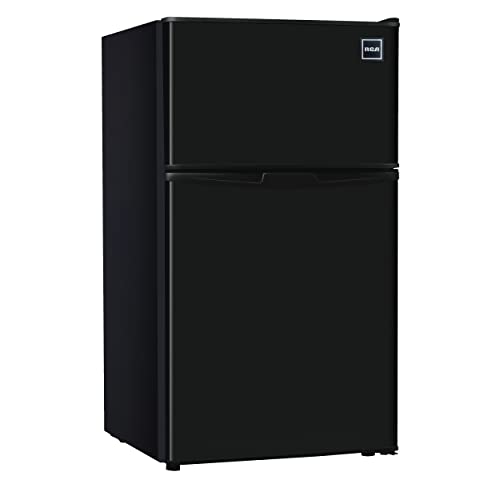
RCA RFR322 Mini Refrigerator
At 3.2 cubic feet, this fridge holds more food than compact drink-focused models while still fitting most dorm room size limits. A separate freezer compartment with its own door keeps frozen items apart from the main section. Reversible door hinges match the flexibility offered by Midea’s model.
Pros
- Larger capacity than drink-focused compact models
- Separate freezer door keeps frozen items apart from the main section
- Reversible hinges add placement flexibility in a dorm room
Cons
- Larger size uses more floor or desk space than smaller units
- Higher cost than basic single-door compact fridges
Galanz GLR31TBKER Mini Fridge
A retro-inspired rounded design on this fridge stands out visually compared to the boxier look of most compact refrigerators. The 3.1 cubic foot capacity balances style with practical storage space. LED interior lighting makes it easier to see contents in a dim dorm room.
Pros
- Retro rounded design stands out from boxier compact fridges
- LED interior lighting helps visibility in dim dorm rooms
- Balances style with a reasonably practical capacity
Cons
- Rounded design uses interior space less efficiently than boxy models
- Freezer compartment is smaller than dedicated two-door fridges
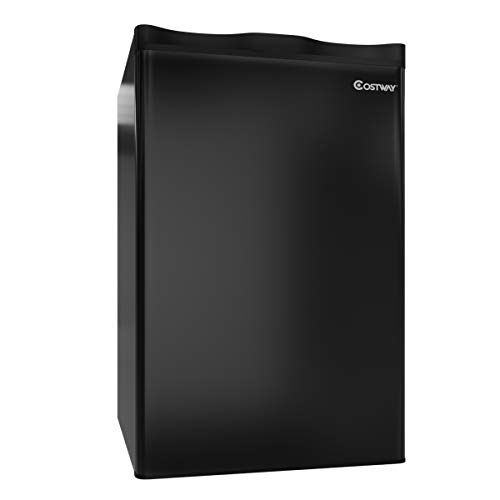
Costway Compact Refrigerator with Freezer
A true two-door configuration on this fridge separates the freezer entirely from the main cooling section, similar to Midea’s and RCA’s approach. The 3.5 cubic foot capacity splits across both compartments for balanced storage. Energy efficient compressor design keeps running costs lower than older compact fridge models.
Pros
- True two-door design keeps the freezer fully separate
- Energy efficient compressor lowers running costs over time
- Capacity splits evenly for balanced food and frozen storage
Cons
- Larger footprint than single-door compact fridges
- Costs more than basic single-door models without a true freezer
What to look for
What to look for in a college mini fridge Capacity determines how much food and drink actually fits, ranging from compact 1.6 cubic foot models like the Frigidaire EFR176-AMZ to larger 4.4 cubic foot units like the Midea WHS-160RB1. Freezer configuration matters for anyone wanting more than an ice tray, with separate freezer doors found on the Midea, RCA and Costway models. Noise level affects roommates directly, since compressor-based fridges can hum audibly in a shared room. Footprint and reversible door hinges decide how well the fridge fits into a specific dorm room layout.
Single-door versus two-door dorm fridges Single-door models, like the BLACK+DECKER BCRK17B and Frigidaire EFR176-AMZ, keep a smaller footprint but limit freezer space to a small ice tray. Two-door configurations, such as the Midea WHS-160RB1, RCA RFR322 and Costway model, add a genuinely separate freezer compartment at the cost of extra size. Students who only need cold drinks and snacks can stick with single-door options, while anyone wanting frozen meals should choose a two-door fridge.
Matching capacity to actual dorm storage needs Many colleges set a maximum cubic foot limit for dorm appliances, so checking housing rules before buying matters as much as comparing features. A 1.6 to 2 cubic foot fridge, like the Frigidaire or BLACK+DECKER models, suits students who eat most meals in a dining hall. A 3.2 to 4.4 cubic foot fridge, like the RCA, Costway or Midea models, better supports students who cook or store more groceries in their room.
Placement and noise considerations for shared rooms Flush back designs, like the BLACK+DECKER BCRK17B, allow pushing the fridge directly against a wall to save floor space. Reversible door hinges, available on the Midea and RCA models, let the door swing the direction that fits a specific room layout best. Compressor noise varies by model, so roommates sensitive to hums should prioritize quieter single-door designs over larger two-door units.
Side by side
| # | Model | Capacity | Best for | Score | Price |
|---|---|---|---|---|---|
| 1 | Midea WHS-160RB1 Compact Refrigerator | 4.4 cubic feet | Best Overall | 9.0 | Check price |
| 2 | BLACK+DECKER BCRK17B Compact Refrigerator | 1.7 cubic feet | Best for Quiet Operation | 8.6 | Check price |
| 3 | hOmeLabs Mini Refrigerator | 3.3 cubic feet | Best Budget | 8.4 | Check price |
| 4 | Frigidaire EFR176-AMZ Compact Refrigerator | 1.6 cubic feet | Best for Drink Storage | 8.5 | Check price |
| 5 | RCA RFR322 Mini Refrigerator | 3.2 cubic feet | Best for Larger Capacity | 8.7 | Check price |
| 6 | Galanz GLR31TBKER Mini Fridge | 3.1 cubic feet | Best for a Sleek Design | 8.3 | Check price |
| 7 | Costway Compact Refrigerator with Freezer | 3.5 cubic feet total | Best Two-Door Configuration | 8.6 | Check price |
Good to know
What size mini fridge is allowed in most college dorms?
Many colleges cap compact refrigerators around 4.5 cubic feet, a limit the Midea WHS-160RB1 stays just under at 4.4 cubic feet.
Do all mini fridges have a separate freezer?
No. Models like the BLACK+DECKER BCRK17B only include a small ice tray, while the Midea, RCA and Costway models include a true separate freezer door.
Are mini fridges loud in a shared dorm room?
Compressor noise varies by model, with compact single-door units like the BLACK+DECKER generally running quieter than larger two-door fridges.
Can a mini fridge fit under a dorm bed or desk?
Compact models like the Frigidaire EFR176-AMZ and BLACK+DECKER BCRK17B are sized to fit on a desk, stand or under some bed frames.
How much food can a 3 to 4 cubic foot fridge hold?
Enough for several days of groceries for one person, similar to the capacity offered by the RCA RFR322 or Costway two-door model.
Do reversible door hinges matter for dorm rooms?
Yes, for tight layouts. Reversible hinges, found on the Midea and RCA models, let the door open toward open floor space instead of a wall or furniture.
Is a two-door mini fridge worth the extra cost for a dorm?
For students wanting frozen meals or more than an ice tray, the true separate freezer in two-door models like the Costway fridge justifies the extra cost.
What is the smallest mini fridge suitable for a dorm?
The Frigidaire EFR176-AMZ at 1.6 cubic feet is among the smallest options here, suited to students who mainly store drinks.
Final word
The Midea WHS-160RB1 is the best overall pick for most college students, since its separate freezer door and reversible hinges fit more dorm layouts than smaller single-door units. Students who prioritize quiet operation in a shared room should choose the BLACK+DECKER BCRK17B instead, accepting its smaller ice tray in place of a full freezer. Anyone on a tight budget who just needs basic cooling should skip the larger two-door options and pick the hOmeLabs Mini Refrigerator.
Dana Whitfield
Dana spent eight years buying and merchandising for a regional kitchenware retailer before moving into editorial work. She has handled thousands of SKUs across cookware, small appliances and kitchen organization, and focuses on the practical differences that matter once a product is actually in daily use.