Is a French Press Still the Best Way to Brew Coffee?
The Bodum Chambord earns the top spot for reliable glass brewing at a modest price. Owners who hate sediment should choose the Espro P3, since its double micro filter seals against the glass. Anyone serving several cups over time gets more from the Frieling Double-Walled Stainless Steel French Press, which holds heat far longer.
Coffee drinkers argue over roast and grind, but the press itself decides how much sediment lands in the cup. Bodum’s Chambord stays the sensible default, with parts you can replace for years. Reach for the Espro P3 when grit ruins the last mouthful, and the Frieling stainless press when a second cup needs to stay hot.
French presses look nearly identical online, yet behave very differently at the table. Filter assembly determines how much sediment escapes into your cup, wall material determines how fast the brew cools, and beaker strength determines whether the press survives years of daily knocks. We compared filter designs, published capacities and insulation types, then weighed what owners report about leaks, cracks and cleaning before ranking seven current models.
Before you buy
Why does grind size matter more than the press itself? A french press needs a coarse, even grind that resembles sea salt. Fine grounds slip through the mesh and produce a muddy, bitter cup, and people often blame the press instead of the grinder. Supermarket pre ground coffee is usually milled too fine for this method. A burr grinder set coarse improves the cup more than buying a better press.
How does filter design affect sediment and bitterness? Single mesh screens let fine particles through and keep grounds in contact with water after plunging, so the brew keeps extracting. Double screens and sealed filters solve both problems at once. Quick drinkers can stick with standard mesh. A press left on the table for twenty minutes benefits from a sealing filter, since the last cup would otherwise turn harsh.
Should you choose glass or insulated steel? Glass lets you watch the bloom and usually costs less, and borosilicate beakers are replaceable on better brands. Insulated steel keeps coffee hot for a second cup and survives being dropped. Flavor barely differs between the two, so temperature needs and durability should drive the choice, not taste expectations.
What ratio, temperature and steep time work best? A common starting ratio is sixty grams of coffee per litre of water. Use water just off the boil rather than a rolling boil. Steep about four minutes, break the crust, skim the foam for a cleaner cup, then plunge slowly. Decant into a mug right after plunging unless the filter seals, since standard mesh keeps extracting in the beaker.
The top picks, ranked
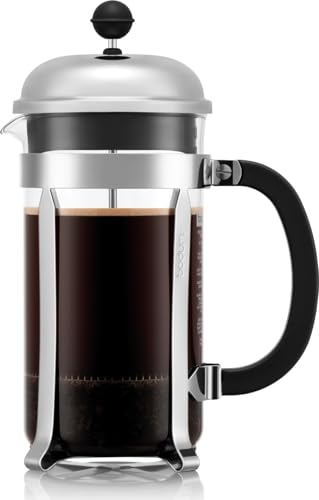
Bodum Chambord French Press
Borosilicate glass sits inside a steel frame, the formula most other presses copy. Three separate filter parts come apart fully for cleaning, and replacement beakers stay in stock for years after purchase. Sediment stays modest with a properly coarse grind.
Pros
- Replacement beaker and filter parts stay available
- Filter disassembles completely for cleaning
- Stocked in several capacities
Cons
- Glass beaker cracks if knocked
- No insulation, so coffee cools fast

Espro P3 French Press
A double micro filter seals directly against the beaker wall, trapping far more sediment than a single mesh. Extraction stops the moment you plunge, which matters if a cup sits for twenty minutes before you finish it. Rinsing the filter assembly takes a bit more effort than a standard mesh.
Pros
- Sediment drops sharply compared with single mesh
- Seal halts extraction so late cups stay balanced
- Handles a slightly finer grind than standard presses
Cons
- Filter assembly takes longer to rinse
- Plunging needs more force
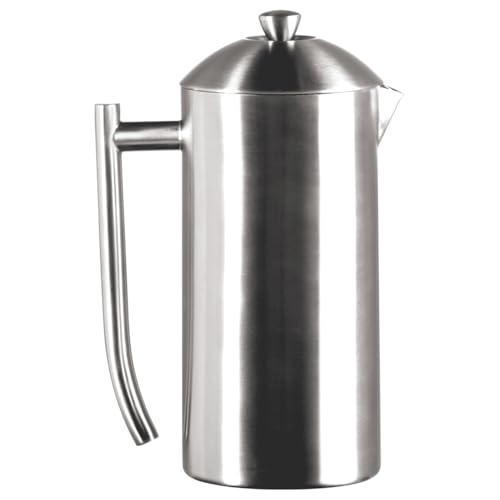
Frieling Double-Walled Stainless Steel French Press
Double walled stainless steel holds a brew hot through a second and third cup. Drop it on tile and it survives, unlike glass. A dual screen filter also catches more fines than a single mesh, though you lose the visual cue of watching the bloom.
Pros
- Holds temperature far longer than glass
- Resists breakage in a busy kitchen
- Dual screen filter reduces fines
Cons
- Steel body hides the brew as it steeps
- Costs more than glass presses

SterlingPro Double Wall Stainless Steel French Press
Double wall insulation and a two stage filtration screen arrive at a price closer to glass presses. That second screen visibly cuts sediment compared with a single mesh. Owners report the lid seal wears first, and replacement seals stay easy to find.
Pros
- Insulated build at a modest price
- Two stage filtration cuts sediment
- Replacement screens are easy to source
Cons
- Lid seal wears with heavy use
- Fit and finish trail premium steel presses
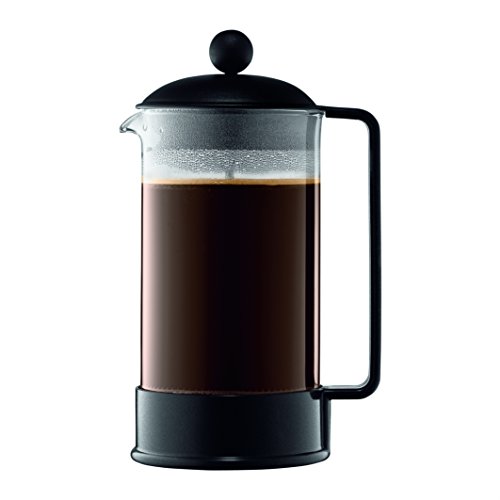
Bodum Brazil French Press
Same brewing geometry as the Chambord, built into a plastic frame instead of steel. Beaker and filter do the actual brewing work, so the cup tastes identical. Plastic simply looks less polished and cushions less if the press gets knocked.
Pros
- Brews the same as pricier Bodum models
- Light and easy to handle
- Low cost entry into press brewing
Cons
- Plastic frame feels cheap
- Less protection for the glass beaker
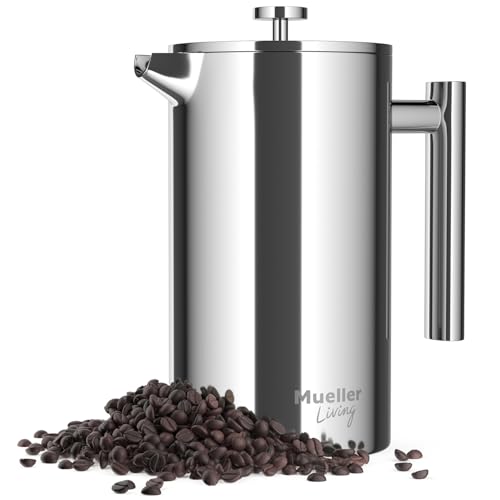
Mueller French Press Double Insulated
Insulated and sized for two or three coffee drinkers at once. Multiple filter screens ship in the box, useful when a lighter roast sheds extra fines. Wide bodies like this one can crowd a low cabinet shelf.
Pros
- Serves several cups from one brew
- Extra screens included in the box
- Handle stays cool when full
Cons
- Bulky to store
- Heavy to pour when completely full

Coffee Gator French Press
A small storage canister ships alongside this insulated press, useful for keeping ground coffee away from air. Filtration leans toward convenience rather than the cleanest possible cup. Sealed lid and steel body travel well between a camper van and an office desk.
Pros
- Includes a coffee storage canister
- Sealed lid suits carrying between rooms
- Sturdy enough for travel or office use
Cons
- More sediment than dedicated fine filters
- Canister holds less than a full bag
Compared at a glance
| # | Model | Beaker | Best for | Score | Price |
|---|---|---|---|---|---|
| 1 | Bodum Chambord French Press | Borosilicate glass | Best overall | 9.4 | Check price |
| 2 | Espro P3 French Press | Borosilicate glass | Best for a clean cup | 9.2 | Check price |
| 3 | Frieling Double-Walled Stainless Steel French Press | Double walled stainless steel | Best for heat retention | 9.0 | Check price |
| 4 | SterlingPro Double Wall Stainless Steel French Press | Double walled stainless steel | Best value insulated press | 8.8 | Check price |
| 5 | Bodum Brazil French Press | Borosilicate glass | Best budget | 8.6 | Check price |
| 6 | Mueller French Press Double Insulated | Double insulated stainless steel | Best for a full pot | 8.3 | Check price |
| 7 | Coffee Gator French Press | Insulated stainless steel | Best for storage and travel | 8.0 | Check price |
Questions worth asking
Why is my french press coffee gritty?
Almost always the grind is too fine, letting fine particles slip through the mesh. Grind coarser as the first fix. A double screen or sealed filter helps too, and skimming foam after the initial steep removes some fine material before plunging.
What coffee to water ratio should I use?
Around sixty grams per litre is a common baseline, close to two tablespoons of coarse grounds per cup. Adjust from there to taste, since darker roasts and older beans often need slightly more coffee.
How long should coffee steep in a french press?
About four minutes suits a medium roast, a bit less for dark roasts that extract quickly. Longer steeping pulls out more bitterness rather than more strength, so add coffee instead of extending the steep for a stronger cup.
Is a stainless steel press better than glass?
Stainless steel wins on durability and heat retention, useful for a slow second cup. Glass costs less, shows the brew and offers replaceable beakers. Neither produces a meaningfully different taste.
Can I use pre ground supermarket coffee?
You can, though most pre ground coffee is milled for drip machines and runs too fine for a press. Look for bags labeled coarse ground for french press or cold brew, or grind your own beans.
How do I clean a french press properly?
Empty grounds into a bin rather than a sink to avoid clogging pipes. Disassemble the filter and scrub the screens, since coffee oils build up between layers and turn rancid. Most parts go in the dishwasher, though a brush cleans the mesh better.
Should coffee stay in the press after plunging?
Not in a standard mesh press, since extraction keeps going and the cup turns bitter. Decant into a mug or thermal carafe right away. Presses with a sealing filter like the Espro P3 avoid this problem.
What size french press should I buy?
A one litre press is the common household size, serving roughly three to four mugs. Solo drinkers brew better with a smaller press, since a large press half filled submerges grounds unevenly.
Is the Espro P3 worth the extra cost over a Bodum?
The seal genuinely cuts sediment and stops late extraction, a real benefit if you drink slowly. Casual drinkers who finish coffee fast may not notice enough difference to justify the jump from a Chambord.
Which french press is best for camping or travel?
Frieling and other insulated steel presses travel well since they resist breakage and hold heat. Coffee Gator adds a storage canister, useful for keeping grounds fresh away from a kitchen counter.
The verdict
Bodum Chambord remains the press most kitchens should own, brewing well at a low price with every part replaceable. Sediment sensitive drinkers should choose the Espro P3 instead, and anyone who wants a hot second cup should reach for the Frieling Double-Walled Stainless Steel French Press.
Dana Whitfield
Dana spent eight years buying and merchandising for a regional kitchenware retailer before moving into editorial work. She has handled thousands of SKUs across cookware, small appliances and kitchen organization, and focuses on the practical differences that matter once a product is actually in daily use.


